

Quick Summary
In North Carolina custody cases, a third party may become relevant when a child has developed a strong relationship with someone who is not a biological parent. Courts review how that person contributes to the child’s stability, care, and daily life. Understanding third party custody NC helps you see when a stepparent or another adult may be considered meaningful in custody discussions and court evaluations.
Stepparent involvement can become relevant in custody disputes when a child forms a strong relationship with someone who is not a biological parent. North Carolina custody cases, courts may review whether a third party has played a meaningful role in the child’s daily life, care, or stability.
Understanding how third party custody NC works helps clarify when a non-parent relationship becomes legally relevant during custody evaluations.
Courts examine the child’s routine, caregiving history, and household structure when reviewing these relationships. North Carolina Divorce Attorneys at Martine Law often explain how courts analyze these factors within North Carolina family law proceedings.
When Third Parties Become Relevant In Custody Matters
A third party becomes relevant when someone outside the parents has been involved in the child’s daily life over an extended period. Courts review whether that involvement contributes to the child’s stability and well-being.
Under third party custody NC, a non-parent is not automatically given legal authority. Instead, judges review whether the relationship has affected the child’s environment or routine.
Situations that may bring third-party involvement into a custody discussion include:
- Providing regular childcare or supervision
- Helping maintain school or activity schedules
- Supporting the child emotionally during family transitions
- Offering housing stability within a blended household
North Carolina law allows courts to consider the child’s welfare when making custody decisions.
How Courts Define Meaningful Involvement With Children
Courts generally view involvement as meaningful when a third party regularly participates in a child’s daily life and caregiving routines. The focus is on consistent responsibility rather than occasional interaction.
Judges often examine how the relationship supports the child’s routine and development while also considering issues such as parent credibility when evaluating statements made during custody disputes.
When evaluating involvement, courts may review how the relationship supports the child’s routine and development. Examples of activities that may demonstrate meaningful participation include:
- Helping with homework and school-related routines
- Attending medical appointments or extracurricular activities
- Supervising the child while a parent is working
Providing emotional support and guidance within the household
These types of day-to-day responsibilities can help the court understand how the individual contributes to the child’s environment and whether the relationship plays a supportive role in the child’s life.
How Courts Evaluate Third Party Relationships
Even when a third party has developed a close relationship with a child, courts still review specific considerations before deciding whether the involvement is legally meaningful. Judges focus on how the relationship affects the child’s daily environment, stability, and caregiving structure.
Rather than looking only at emotional connections, courts examine practical involvement in the child’s life. This includes how consistently the person participates in routines, supervision, and household responsibilities.
Courts often review these factors in broader child-custody evaluations that determine how caregiving roles influence parenting arrangements.
Court Consideration | What Judges May Review |
Length of involvement | How long has the third party been part of the child’s daily life |
Participation in caregiving | Whether the individual assists with supervision, routines, or daily care |
Consistency of the relationship | If the involvement has remained stable over time |
Impact on the child’s stability | Whether the relationship contributes to emotional or household stability |
Role within the household | How the third party fits within the overall caregiving structure |
These considerations help courts determine whether the relationship meaningfully supports the child’s environment while respecting parents’ legal rights.
Role Stepparents May Play In Custody Context
A stepparent may become an important part of a child’s daily environment in a blended family. However, living in the same household does not automatically grant legal custody rights. Courts review how the stepparent participates in the child’s routine and whether the involvement contributes to the child’s stability and support system.
In discussions related to stepparent custody rights NC, judges may examine the extent of the stepparent’s caregiving role and the consistency of that involvement over time.
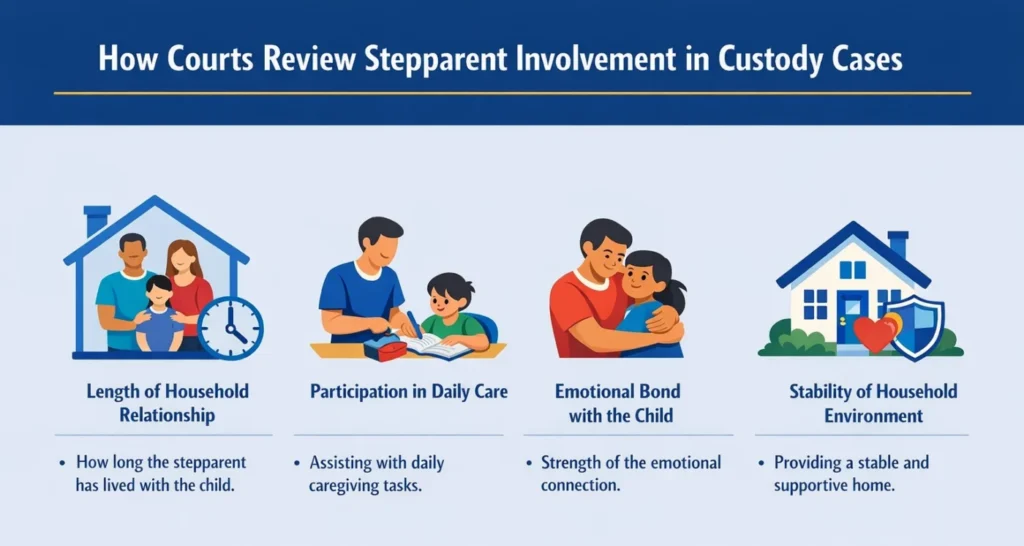
Source: North Carolina Judicial Branch – Child Custody Information
These factors help courts understand whether a stepparent’s involvement supports the child’s daily routine and stability while still recognizing the primary legal authority of the parents in custody decisions.
Situations Where Courts Consider Third Party Roles
Family structures can vary, and courts may review third-party involvement when caregiving responsibilities extend beyond the child’s parents. These situations help the court understand how the child’s support system operates within the household and whether other adults contribute to daily care or stability.
Examples of circumstances courts may review include:
- A stepparent regularly supervising the child
- Grandparents assisting with long-term childcare
- A relative temporarily caring for the child
- Another adult providing stability during a family transition
Changes in family structure may also occur when a parent relocates or when caregiving responsibilities shift within the household.
In some custody discussions, courts examine how these roles relate to the primary caretaker when reviewing past caregiving responsibilities and their influence on parenting arrangements.
Know More: The Primary Caretaker Factor: How Past Caregiving Roles Influence NC Custody Rulings
How Courts Balance Parental Rights With Third Parties
North Carolina courts give significant weight to the legal rights of biological or adoptive parents when reviewing custody matters. Even if a third party has played a meaningful role in a child’s life, courts carefully examine how that involvement fits within the broader parenting structure.
Judges review whether recognizing a third-party role supports the child’s welfare without interfering with parental authority. The goal is to understand how the child’s support system operates while maintaining the legal framework governing custody decisions.
Parental Rights Remain Central In Custody Decisions
North Carolina law generally recognizes that parents have a primary role in making decisions about their child’s care and upbringing. Because of this, courts do not automatically grant custody rights to a third party simply because that person has a close relationship with the child.
Instead, judges review how the relationship fits within the child’s household environment while preserving the legal authority of the parents.
Evaluating Caregiving Roles Within Household Structure
Courts also review how caregiving responsibilities are shared within the household. When a third party regularly participates in supervision, routines, or emotional support, judges may evaluate how that involvement contributes to the child’s daily environment.
In some cases, these caregiving roles may also affect how courts review parenting schedules and visitation arrangements, which are explained further in parenting time schedules. This review helps courts understand how responsibilities are distributed within the family structure.
Credibility Considerations In Custody Disputes
During custody disputes, courts may also consider how each party presents information about the child’s care and household routines. Statements about caregiving roles, supervision, and involvement may be reviewed alongside other evidence presented to the court.
These considerations help judges evaluate the overall parenting environment while reviewing custody arrangements.
Understanding the Third-Party Roles In Custody Evaluations
Stepparents and other adults may become part of a child’s support system in blended families. Courts review these relationships to understand how the child’s daily environment functions and whether the involvement contributes to stability.
The focus often remains on how routines, supervision, and emotional support are maintained within the household.
Understanding third party custody NC helps clarify when a non-parent relationship becomes relevant in custody discussions.
Although stepparents do not automatically receive legal rights, courts may still evaluate how their involvement affects the child’s routine, household structure, and overall support system when reviewing custody arrangements.
Understanding Custody Processes In North Carolina Courts
If you want to understand how custody factors are reviewed in North Carolina, North Carolina Divorce Attorneys at Martine Law can provide general information about how courts evaluate parenting environments and family structures. You may call +1 (704) 255-6992 or visit the Contact Us page.
FAQs
Can a stepparent request custody rights in North Carolina?
No. A stepparent does not automatically receive custody rights under North Carolina law. However, courts may review the relationship if the stepparent has played a consistent caregiving role in the child’s life. In some situations involving third party custody NC, judges evaluate the child’s environment, stability, and the nature of the caregiving relationship when determining whether third-party involvement becomes relevant in custody discussions.
How do courts evaluate a child’s support system during custody cases?
Yes. Courts may review a child’s support system when evaluating custody arrangements. Judges look beyond the parents to understand how the child’s daily environment functions. They may consider who assists with supervision, schooling, or emotional support within the household. These details help the court assess the child’s stability and determine whether the caregiving structure supports the child’s development and long-term well-being.
Can grandparents influence custody decisions in North Carolina?
Yes. Grandparents may influence custody discussions when they provide regular care or support within the household. Courts may review their involvement to better understand the child’s daily routine and caregiving environment. While grandparents do not automatically receive custody rights, their role can help explain how the child’s support system operates during a custody evaluation.
Does past caregiving affect custody rulings in North Carolina?
Yes. Courts often review past caregiving patterns to understand who has consistently supported the child’s daily needs. Judges may look at which adult handled supervision, school routines, and medical care. These patterns help courts evaluate stability and continuity, which can also relate to how existing parenting arrangements influence custody outcomes under the status quo applied in many cases.
