

Quick Summary
When parenting schedules involve distance or busy routines, digital communication may help maintain contact between parents and children. In some virtual visitation custody NC situations, courts recognize video calls, messaging, or phone conversations as useful ways to maintain consistent interaction. Although technology rarely replaces in-person visits, courts may treat digital communication as meaningful parenting contact when it supports stability and ongoing relationships.
In certain virtual visitation custody NC situations, courts recognize that digital communication may help parents maintain consistent contact with their children when in-person visitation is limited. Video calls, messaging applications, and scheduled phone conversations can allow children to stay connected with a parent between physical visits.
When digital communication helps maintain routine interaction and emotional connection, courts may consider it when reviewing parenting schedules. Judges may evaluate whether remote communication strengthens the parent-child relationship and whether both households can support reliable communication.
North Carolina Divorce Attorneys at Martine Law often help families understand how parenting schedules evolve when distance, work obligations, or travel make regular visits more complex. Understanding how courts view digital communication helps clarify when technology becomes a meaningful part of parenting time.
How Do North Carolina Courts Define Virtual Visitation?
Virtual visitation refers to digital communication between a parent and child that occurs through technology instead of physical presence. Courts may view this communication as an additional form of interaction that allows parents and children to maintain contact when they are not together.
Although traditional parenting time typically occurs through in-person visits, digital communication may help maintain a sense of routine between those visits. Courts reviewing custody arrangements sometimes consider how technology allows parents to remain involved in a child’s daily life even when distance limits physical contact.
Virtual communication usually supplements existing parenting schedules rather than replacing them. Courts often evaluate whether digital contact supports the child’s emotional well-being and helps maintain a consistent relationship with both parents.
When Do Courts Consider Digital Parenting Time Meaningful?
Judges sometimes recognize digital parenting time NC as meaningful when it strengthens the relationship between a parent and child. Courts may review how regular communication affects the child’s sense of stability and whether digital interaction helps maintain involvement in everyday life.
For example, courts may consider digital communication more relevant when parents live far apart, when a parent travels frequently for work, or when temporary relocation limits regular visits. Judges may also look at situations where scheduled visits occur less frequently and digital communication helps maintain consistent contact between those visits.
When these conditions exist, technology-based interaction can help children stay connected with a parent and maintain a sense of routine. As a result, courts may treat digital communication as a helpful addition to a parenting schedule when it supports ongoing parent-child interaction.
What Types of Communication Are Used for Virtual Parenting Time?
Virtual parenting arrangements often rely on simple technology that allows children and parents to communicate naturally.
Courts generally focus on communication tools that allow meaningful interaction rather than brief or inconsistent contact.
Common forms of digital parenting time NC may include video calls through common communication platforms, scheduled phone conversations, or messaging systems that allow parents and children to exchange updates throughout the week.
These tools may allow a parent to talk about school activities, provide guidance on homework, or simply maintain everyday conversation.
Although these interactions occur remotely, they can still support the parent-child relationship. Courts may recognize that consistent communication helps children feel connected to both parents even when physical visits occur less frequently.
What Factors Do Courts Review Before Allowing Virtual Visitation?
Courts typically examine several practical factors before recognizing digital communication as part of a parenting arrangement. Judges want to ensure that virtual interaction supports the child’s routine rather than creating additional conflict or disruption.
Courts may review factors such as:
Factor Courts Review | Why It Matters |
Child’s age and comfort with technology | Determines whether communication is realistic |
Strength of parent-child relationship | Shows whether communication supports bonding |
Distance between parents’ homes | Greater distance may increase need for digital contact |
Internet access and devices | Ensures communication is reliable |
Past communication between parents | Indicates whether the arrangement will function smoothly |
If digital communication improves consistency and helps maintain the relationship, courts may consider including it in the parenting schedule. However, judges also evaluate whether the arrangement is realistic and sustainable for both households.
Parents seeking guidance about custody structures may also review how formal child custody arrangements define parenting schedules and responsibilities.
How Can Virtual Communication Support Parent-Child Relationships?
Virtual communication can help parents remain present in their child’s life even when physical visits are separated by distance or time. Regular communication allows children to share everyday experiences with both parents and helps maintain familiarity between visits.
Digital interaction may support relationships in several ways:
- Allowing parents to discuss school activities or daily routines
- Providing emotional support during the week
- Maintaining communication when travel delays in-person visits
- Helping younger children stay connected between visits
- Encouraging consistent involvement in the child’s life
These forms of communication do not replace in-person parenting time, but they may help reinforce the relationship between visits. Courts sometimes view these interactions as beneficial when they help maintain stability and connection for the child.
In some cases, parenting schedules may also involve structured visitation arrangements when additional supervision or guidelines are required. Information about these arrangements can be reviewed through supervised visitation services
Digital communication may also appear in custody disputes involving online communication records. Know More – Admissibility of Social Media Evidence in NC Custody Cases
When Might Virtual Visitation Appear in Parenting Plans?
Courts may include digital communication provisions in parenting plans when regular in-person contact is difficult to maintain. In these situations, technology may help support ongoing interaction between parents and children.
Parenting plans sometimes include digital communication schedules that outline how often the parent and child may communicate. These provisions may specify video calls, phone conversations, or other forms of digital contact that occur between physical visits.
When courts include these arrangements, the goal is typically to maintain stability and consistent communication. Virtual interaction becomes one part of the overall parenting schedule rather than a replacement for traditional visitation.
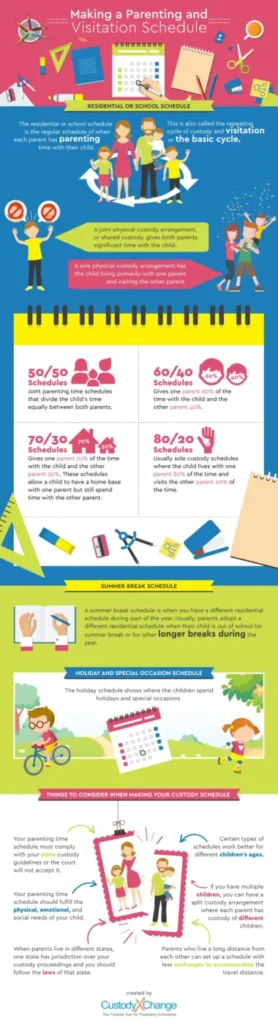
Source: Making a Parenting and Visitation Schedule
What Does Virtual Visitation Mean for Parenting Schedules in North Carolina?
Virtual communication has become an increasingly common element in modern parenting arrangements. When distance, travel, or scheduling challenges limit frequent visits, digital communication can help maintain regular interaction between parents and children.
Courts sometimes recognize that consistent digital contact supports stability and emotional connection, particularly when families live in separate locations.
Although virtual communication rarely replaces traditional parenting time, it may supplement existing schedules by allowing children to maintain regular conversations with both parents.
Courts reviewing these arrangements focus on whether the communication supports the child’s well-being and fits realistically into the family’s routine.
If you would like more information about how custody arrangements and parenting schedules operate in North Carolina, North Carolina Divorce Attorneys at Martine Law can provide general guidance about family law procedures.
You may call +1(704)-255-6992 or visit the Contact Us page for additional information about custody-related matters.
FAQs
Can virtual visitation be included in a North Carolina custody order?
Yes. Courts may include digital communication in custody arrangements when it helps maintain consistent contact between a parent and child. Judges evaluate whether virtual communication supports the child’s best interests and whether it works within the existing parenting schedule. Digital communication often supplements in-person visitation rather than replacing traditional parenting time.
Does digital parenting time replace in-person visitation?
No. Courts typically view digital communication as an additional form of contact rather than a substitute for in-person parenting time. Digital parenting time NC usually helps parents maintain communication between visits while preserving the importance of physical parenting interaction whenever possible. This supplementary digital contact allows children to see and speak with the non-custodial parent frequently and consistently, fostering emotional connection.
What technology is used for virtual parenting time?
Yes. Video calls, phone conversations, and messaging applications are commonly used forms of digital communication in parenting arrangements. Courts generally consider tools that allow meaningful conversation and interaction between the parent and child. Reliable technology and consistent scheduling often influence how effective these arrangements become.
Can parents request virtual visitation when they live far apart?
Yes. Parents who live in different locations may ask courts to consider digital communication as part of the parenting schedule. Judges may evaluate distance, communication reliability, and the child’s schedule before deciding whether technology should be included in the custody arrangement. Parents reviewing custody arrangements may also want to understand how courts gather information about a child’s preferences during custody cases.
