

Quick Summary
Digital property can influence how marital assets are reviewed during divorce. In digital assets divorce North Carolina matters, you may see courts examine cryptocurrency holdings, monetized online platforms, and digital accounts to determine whether they belong to the marital estate. Judges review ownership history, financial records, and account activity to evaluate how these virtual assets should be considered under North Carolina equitable distribution rules.
Digital property can become part of divorce proceedings when spouses hold cryptocurrency, operate online businesses, or maintain accounts that generate digital income. In digital assets divorce North Carolina cases, courts review when these assets were created, who controls them, and whether they hold financial value within the marital estate.
These issues matter because financial activity increasingly occurs online. Digital property may generate income, hold investment value, or represent intellectual property created during the marriage. Courts examine financial records, transaction histories, and account ownership when evaluating these assets. North Carolina Divorce Attorneys at Martine Law often explain how virtual property and online accounts may appear when courts review marital assets in divorce proceedings.
What Are Digital Assets in North Carolina Divorce Cases
Digital assets refer to property stored electronically or accessed through online platforms. These assets can include financial accounts, cryptocurrency investments, online intellectual property, or websites that generate revenue.
North Carolina courts follow equitable distribution rules when dividing marital property. If a digital asset was acquired during the marriage or increased in value while the spouses were married, courts may treat it as marital property. As a result, digital property can become part of the broader financial evaluation that occurs during property division in North Carolina divorce cases.
Examples of digital assets that courts may review include:
Digital Asset Type | Example of Financial Value |
Cryptocurrency accounts | Bitcoin, Ethereum wallets |
Monetized social media | Influencer or ad revenue |
Online trading platforms | Digital brokerage accounts |
Digital intellectual property | Courses, eBooks, digital artwork |
Revenue-generating websites | Ads, subscriptions, services |
These assets may represent financial investments or business activity that developed during the marriage, which can affect the overall value of the marital estate.
How Do Courts Classify Digital Assets Under North Carolina Law
Courts classify digital assets using the same framework applied to other marital property. Judges first determine whether the asset qualifies as marital property or separate property.
North Carolina courts review when the asset was created and whether marital funds contributed to its growth. If a cryptocurrency investment or online platform developed during the marriage, it may be included in equitable distribution.
Financial records used to trace ownership
Courts rely on documentation to determine ownership. Financial records help establish whether the asset belonged to one spouse individually or developed during the marriage.
Examples of records courts may review include account creation dates, transaction histories, digital wallet ownership, and revenue reports from online platforms.
Questions about classification sometimes arise when assets existed before marriage but later increased in value. Courts may review financial records that trace ownership history. A deeper explanation of this process appears in Tracing Separate Property NC Assets Inheritance.
How Are Online Accounts and Virtual Property Valued
Digital assets can require financial analysis because their value may fluctuate depending on market conditions or online activity.
In online accounts property division NC matters, courts often examine account balances, transaction histories, and income records from digital platforms. Cryptocurrency investments may rise or fall based on market prices, while online businesses may produce income through subscriptions or advertising.
Market factors affecting digital asset value
Several financial factors may affect how courts evaluate digital assets.
These factors often include market value of cryptocurrency, advertising revenue generated by digital platforms, subscription income, and intellectual property licensing.
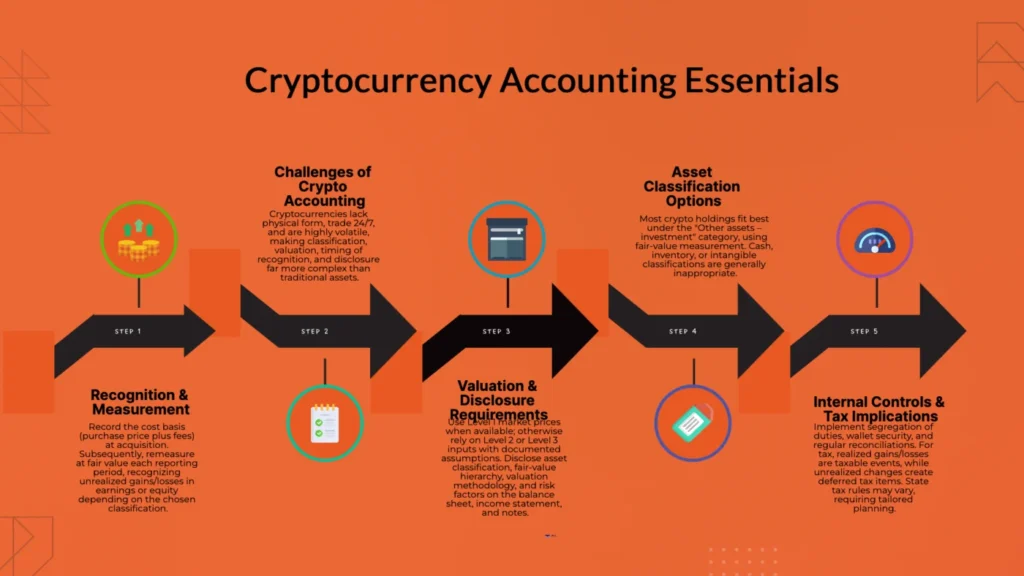
Source: Cryptocurrency Accounting
Because digital assets may change in value quickly, courts sometimes rely on financial documentation from a defined date during divorce proceedings.
Why Can Digital Assets Complicate Property Division
Digital assets can complicate divorce proceedings because they may not appear in traditional financial records. Online platforms or cryptocurrency wallets may exist outside typical bank statements or tax documents.
In online accounts property division NC disputes, courts may review digital platform statements, transaction histories, and financial records to confirm ownership and determine whether the assets belong to the marital estate.
Common issues may include:
- Cryptocurrency accounts that were not initially disclosed
- Revenue generated through online platforms or digital businesses
- Limited access to login credentials
- Ownership disputes involving monetized social media accounts
- Intellectual property rights connected to digital content
These situations may sometimes raise concerns about hidden marital assets during divorce when financial activity occurs through decentralized or online systems.
How Do Digital Assets Influence Divorce Financial Outcomes
Digital property can significantly affect the financial evaluation of marital property. Some digital assets produce ongoing income, while others may increase in value over time.
In digital assets divorce North Carolina cases, courts review how these assets contributed to the couple’s finances during the marriage. Cryptocurrency investments, monetized platforms, and online businesses may increase the total value of the marital estate.
Courts evaluate financial records, revenue history, and ownership documentation when determining how these assets influence property division. If one spouse retains control of a digital asset with substantial value, courts may adjust the division of other marital assets to maintain equitable distribution.
How Digital Property Division Shapes Divorce Outcomes
Digital property increasingly appears in divorce proceedings as financial activity shifts toward online platforms and digital investments. Cryptocurrency portfolios, monetized websites, and digital intellectual property may represent substantial financial value within the marital estate.
Courts analyze when these assets were created, whether marital funds contributed to their development, and whether they generated income during the marriage. When reviewing online accounts property division NC disputes, judges rely on financial documentation, account histories, and transaction records.
Because digital assets may fluctuate in value or produce ongoing income, accurate financial records often play an important role in determining how these assets affect equitable distribution.
What This Means For Digital Assets In Divorce
Digital property increasingly appears in divorce cases as financial activity shifts toward online platforms and digital investments. Cryptocurrency portfolios, monetized websites, and digital intellectual property may represent significant financial value within the marital estate.
Courts evaluate when these assets were created, whether marital funds contributed to their growth, and whether they produced income during the marriage. Accurate financial documentation and ownership records often help clarify whether digital assets belong in the marital estate.
Learning More About Digital Asset Division
If you want to explore how courts evaluate digital assets in divorce proceedings, North Carolina Divorce Attorneys at Martine Law can provide general guidance about how these issues appear in North Carolina family law cases. You may call +1(704)-255-6992 or visit the Contact Us page.
FAQs
Can cryptocurrency be divided during divorce in North Carolina
Yes. Cryptocurrency can be divided during divorce if it qualifies as marital property. Courts review purchase dates, digital wallet records, and transaction histories to determine when the investment was acquired. If the cryptocurrency was obtained or increased in value during the marriage, it may be included when courts evaluate digital assets divorce North Carolina property division.
Do online accounts count as marital property in divorce
Yes. Online accounts can qualify as marital property when they generate income or hold financial value. Courts examine account ownership history, revenue records, and financial documentation to determine whether the asset belongs to the marital estate. These issues often arise in online accounts property division NC disputes involving monetized social media accounts or online businesses.
What happens if a spouse does not disclose digital assets
Yes. Courts may require financial disclosure and documentation when digital assets are suspected but not initially reported. Judges may review platform records, account histories, and transaction data to confirm ownership. In some cases, discovery procedures may be used to identify hidden financial information. More information about this process appears in the article on discovery sanctions for hidden assets in North Carolina divorce.
Can digital intellectual property be divided during divorce
Yes. Digital intellectual property such as online courses, eBooks, or digital artwork may be evaluated during divorce proceedings. Courts analyze ownership records, creation dates, and revenue generated from the intellectual property. If the work was developed during the marriage, courts may consider its value when determining marital property.
Are digital assets treated like other marital property
Yes. Courts generally evaluate digital assets using the same legal principles applied to other property. Judges examine ownership history, financial contributions, and the asset’s value. Once classified as marital or separate property, digital assets may be included in equitable distribution calculations alongside other financial resources.
