

Quick Summary
In custody disputes, therapy information may sometimes become relevant to parenting evaluations. In therapy records in child custody North Carolina cases, courts must balance privacy protections with the need for evidence about a child’s well-being. Understanding how therapist-patient privilege and HIPAA release custody case NC procedures work helps you see how mental health documentation may be requested, reviewed, or protected during litigation.
Mental health documentation can become part of evidence when courts review parenting arrangements. In custody disputes, therapy records are requested if they are believed to relate to a child’s safety, emotional development, or parental decision-making.
Courts must carefully balance privacy protections with the need to evaluate relevant information during litigation.
In therapy records in child custody North Carolina proceedings, judges review whether therapist-patient privilege applies and a lawful disclosure mechanism exists. These issues often arise through HIPAA authorization forms or court orders.
North Carolina Divorce Attorneys at Martine Law explain how mental health privacy laws interact with family court procedures.
Why Mental Health Records Appear In Custody Disputes
Mental health documentation may become relevant when courts examine parenting capacity or a child’s emotional needs. If therapy sessions involve discussions about family dynamics, the information could relate to custody determinations.
Courts typically consider mental health records only when they may clarify issues affecting the child’s well-being. Situations that may lead to requests for therapy documentation include:
- Concerns about a child’s emotional health
- Allegations involving parental behavior or household stability
- Evidence connected to parenting evaluations
- Statements made during therapy about family interactions
In some situations, parents may present new information affecting a child’s well-being when asking the court to review existing parenting arrangements. Evidence related to a child’s emotional or psychological needs may sometimes arise in child custody modification proceedings.
However, the presence of therapy does not automatically mean records will be disclosed. Judges evaluate whether privacy protections apply before allowing access.
Understanding Therapist Patient Privilege In North Carolina
Therapist-patient privilege protects confidential communications between individuals and mental health professionals. This legal protection exists to encourage honest discussions during therapy.
Under North Carolina law, communications between psychologists and patients are generally confidential unless specific legal exceptions apply, as outlined in the state’s psychologist privilege statute.
In custody disputes, privilege may limit whether therapy records can be shared with the court. North Carolina courts may review several factors before allowing disclosure:
- Whether the information is directly relevant to custody issues
- Whether a parent or patient has waived the privilege
- Whether disclosure is necessary to evaluate the child’s best interests
Because privilege protections exist, therapy records are not automatically accessible in family court cases.
How HIPAA Authorization Affects Custody Record Access
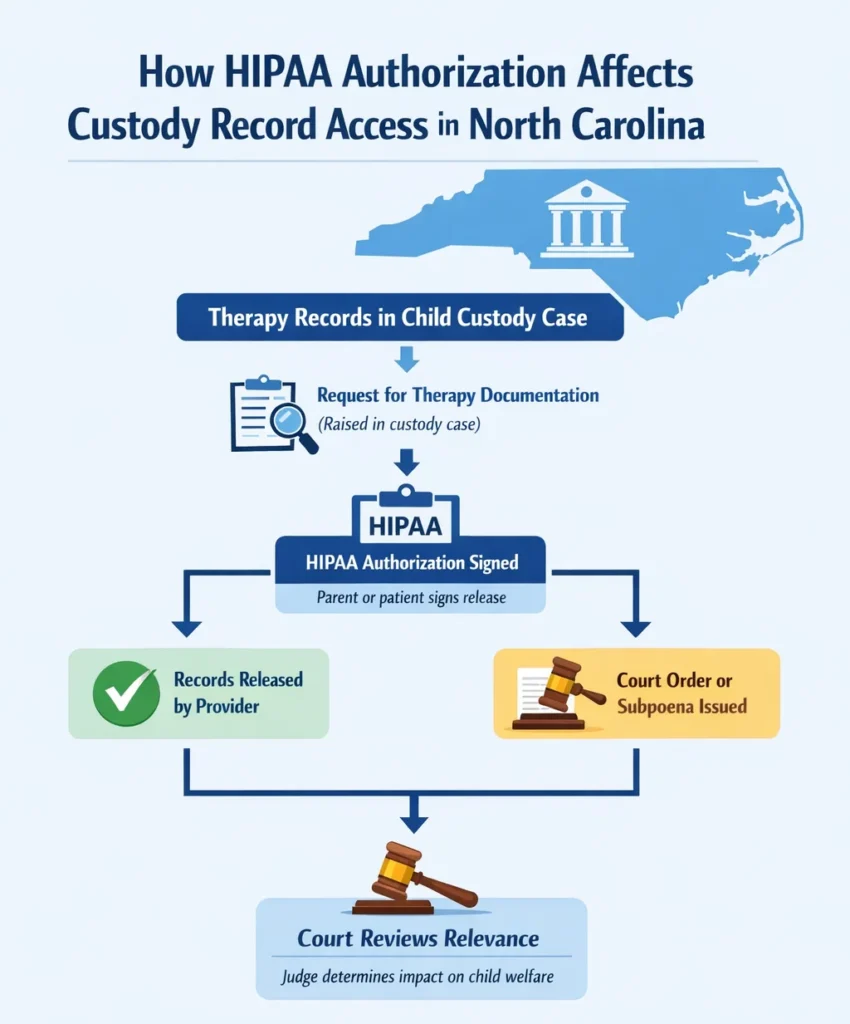
HIPAA rules regulate how healthcare providers may disclose mental health records during legal proceedings. In custody disputes, therapy records are typically released only when a patient signs an authorization form or when a court orders disclosure.
Source: U.S. Department of Health & Human Services HIPAA Privacy Rule
The infographic above illustrates how therapy records in child custody North Carolina cases may move through the legal process. Requests for therapy documentation often begin during custody litigation and may require either a signed authorization or court involvement.
In many HIPAA release custody case NC situations, a parent may sign a written authorization allowing a healthcare provider to disclose therapy records. If authorization is not provided, the requesting party may seek a subpoena or court order.
A judge may then determine whether the records are relevant to parenting concerns or the child’s welfare before they are used in custody proceedings.
When Courts May Review Therapy Documentation Evidence
Courts may review therapy documentation when the information directly relates to a child’s well-being or parenting concerns. Judges typically examine whether the records help clarify issues affecting custody decisions before allowing them to be introduced as evidence.
Reviewing therapy records does not occur automatically in custody disputes. Courts generally consider specific circumstances where the information may assist in understanding family dynamics or evaluating parenting factors.
Situation Raised in Custody Case | Why Courts May Review Therapy Records |
Allegations of abuse or neglect | To understand whether therapy discussions reveal concerns affecting the child’s safety or emotional welfare |
Parenting capacity concerns | To evaluate statements or observations related to a parent’s ability to meet the child’s needs |
Court-ordered psychological evaluations | To provide background context for professional assessments used in custody analysis |
Statements about family interactions | To clarify descriptions of household dynamics discussed during therapy sessions |
Even when therapy documentation is reviewed, courts often limit access to only the portions that relate to the custody issue being considered. This approach allows judges to evaluate relevant evidence while maintaining privacy protections surrounding confidential mental health communications.
Privacy Limits And Protections During Custody Litigation
Family courts recognize that therapy information is sensitive and may contain highly personal details about a child or parent. Because of this, judges often impose restrictions to protect confidentiality while still allowing relevant information to be reviewed during custody litigation.
When therapy documentation becomes part of a custody dispute, courts may limit how the records are accessed, shared, and presented during the case. These safeguards help ensure that sensitive mental health information is used only when necessary and only to the extent required to evaluate issues affecting the child’s welfare.
Common privacy safeguards may include:
- Limiting who may review therapy records, such as attorneys, mental health experts, or the judge
- Allowing only specific excerpts of therapy documentation to be introduced as evidence
- Sealing sensitive information so it does not appear in publicly accessible court filings
- Reviewing therapy records privately before deciding whether they should be admitted in court
These protections help courts balance the confidentiality of therapy communications with the responsibility to examine evidence that may affect a child’s well-being. In some custody disputes, disagreements about a child’s healthcare or treatment decisions may also arise between parents
Know More: Medical Decision-Making: Resolving Vaccination and Treatment Disputes in Shared Custody
How Judges Balance Privacy And Child Welfare
Custody cases often require courts to balance competing interests. Judges must consider both the confidentiality of therapy and the responsibility to protect the child’s welfare.
To evaluate this balance, courts may review:
- Whether the records directly relate to parenting concerns
- Whether alternative evidence is available
- Whether disclosure would harm the therapeutic relationship
- Whether the information assists the court in understanding the child’s needs
This balancing process allows courts to assess relevant information while preserving privacy whenever possible. Similar best-interest considerations also guide decisions involving school enrollment disputes between parents.
Role Of Mental Health Evaluations In Custody Cases
Mental health evaluations sometimes appear in custody disputes when courts request professional insight about parenting dynamics.
These evaluations differ from therapy records. A custody evaluation is typically conducted specifically for the court, while therapy records originate from confidential treatment.
Evaluations may include:
- Psychological assessments of parents or children
- Interviews conducted by court-appointed professionals
- Observations about family interactions
- Written reports summarizing professional findings
Because these reports are created for litigation purposes, they are generally treated differently from private therapy communications. In some custody disputes, courts may also consider professional evaluations when reviewing issues related to decision-making authority between parents, which may arise in legal custody matters.
Understanding Mental Health Privacy In Custody Litigation
Mental health privacy laws play an important role in family court proceedings. In therapy records in child custody North Carolina disputes, judges evaluate whether confidential therapy information relates to parenting issues or the child’s welfare. Courts balance therapist-patient privilege with the need to review evidence that may clarify family dynamics.
HIPAA regulations and privilege laws influence how mental health documentation may be requested, disclosed, and reviewed during litigation. While therapy records may sometimes appear in custody proceedings, courts often apply safeguards that limit how sensitive information is used.
Exploring Custody Evidence And Privacy Considerations
If you want to learn more about how custody procedures address sensitive evidence, you may speak with the North Carolina Divorce Attorneys at Martine Law. You can call +1 (704) 255-6992 or visit the Contact Us page..
FAQs
Can therapy records automatically be used in custody court?
No. Therapy records are not automatically available in custody litigation. Courts must first determine whether therapist-patient privilege applies and whether disclosure is legally justified. Judges evaluate whether the information is relevant to parenting ability or the child’s welfare before allowing any portion of therapy documentation to become evidence in the case.
Are children’s therapy sessions protected in custody disputes?
Yes. Children’s therapy sessions are generally protected by confidentiality rules similar to those that apply to adult patients. Courts review whether disclosure is necessary for custody decisions and whether the information directly relates to the child’s welfare. Even when records are reviewed, judges may limit access to only the portions relevant to the issues being considered.
Can therapy records influence a judge’s custody decision?
Yes. Therapy documentation may influence a custody decision if it relates directly to parenting capacity or the child’s emotional well-being. Judges usually review therapy records alongside other evidence, including evaluations and medical information. Disagreements about healthcare decisions between parents can also arise in custody cases, which are discussed in medical treatment disputes.
Do therapy records appear in every custody case?
No. Many custody disputes proceed without therapy records in child custody North Carolina, becoming part of the evidence. Therapy documentation is typically considered only when a party argues that mental health issues or statements made during treatment affect parenting ability or the child’s safety. Courts review whether the information is necessary before allowing records to be introduced in litigation.
