

Quick Summary
Stock options granted through employment may become part of marital property when divorce occurs. In stock options divorce North Carolina situations, courts review when the options were granted, how vesting schedules operate, and whether compensation relates to work performed during the marriage when evaluating equitable distribution.
Stock options and employer equity awards may be reviewed as marital property during divorce depending on when they were earned. In stock options divorce North Carolina cases, courts examine grant dates, vesting schedules, and employment agreements to determine whether future financial benefits relate to work performed during the marriage.
Because many equity awards vest years later, courts must evaluate how employment incentives connect to marital efforts. North Carolina Divorce Attorneys at Martine Law often explain how these compensation benefits may appear when courts review marital property.
What Are Stock Options In Divorce Cases
Stock options are employment benefits that allow an employee to purchase company shares at a predetermined price. Courts review these benefits in divorce to determine whether they represent marital property.
Employers often grant stock options as part of compensation packages for executives, technology professionals, or employees with long-term incentives. These awards may vest over several years, meaning the employee cannot exercise the option immediately after receiving it.
Under North Carolina equitable distribution law, property earned during the marriage may be considered marital property even if payment occurs later. If stock options were granted because of work performed during the marriage, courts may review whether they should be included in the marital estate.
For spouses involved in equity compensation divorce NC disputes, documentation about employment contracts and vesting schedules often becomes relevant. Courts may examine compensation records to determine how employment benefits connect to marital contributions.
How Do Courts Classify Equity Compensation
Courts classify property in divorce as marital, separate, or divisible property before determining how it should be divided. Equity-based employment benefits require careful classification because they may relate to both past and future work.
In many equity compensation divorce NC cases, courts review the purpose of the award and the timeline connected to the compensation. Stock options granted for work already performed during the marriage may be treated differently from incentives designed to reward future employment.
Courts often examine several factors when determining classification:
Factor Reviewed | Why It Matters |
Grant Date | Shows whether the benefit began during the marriage |
Vesting Schedule | Determines when options become exercisable |
Purpose of Award | Identifies past service vs. future incentive |
Employment Agreement | Explains compensation structure |
These records help the court determine whether the benefit represents earnings connected to the marriage or incentives tied to future employment performance. North Carolina equitable distribution law outlines how marital property is identified and classified before division.
When Do Future Earnings Become Marital Property
Future earnings can still relate to marital property if the right to receive those earnings was created during the marriage. Courts analyze when the employment benefit was earned rather than when it will be paid.
Stock options often vest gradually over time. If a company grants options during the marriage but requires several years of employment before they can be exercised, courts may evaluate how much of the award relates to work performed during the marriage.
This issue frequently appears in equity compensation divorce NC disputes involving long-term incentive plans. Judges review employment agreements and vesting schedules to determine whether the benefit compensates past service, future service, or both.
If the compensation partly reflects work completed during the marriage, a portion of the value may appear in equitable distribution. Courts may examine employment records, compensation statements, and company policies when making this determination.
More information about property division principles can also be found through the North Carolina Judicial Branch resources.
How Do Courts Value Stock Options
Stock options may require financial evaluation because their value depends on market conditions and vesting schedules. Courts review these factors to determine the potential value connected to marital property.
Several elements can influence valuation:
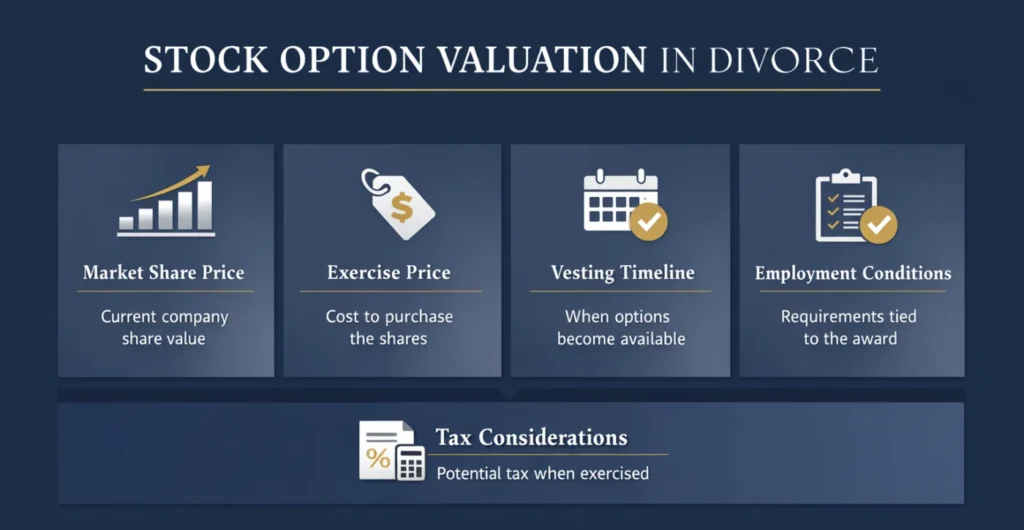
Source: IRS – Tax Treatment of Stock Options
Financial professionals may sometimes evaluate these elements when the compensation represents a significant portion of the marital estate.
Valuation becomes more complex when the company is privately held or when shares cannot be sold immediately. Courts review financial documentation and may examine employment agreements to determine how these assets should be addressed in property division.
Know More – Business Valuation in Equitable Distribution NC
How Are Unvested Stock Options Handled
Unvested stock options are compensation awards that cannot yet be exercised because employment requirements have not been met. Courts may still review these benefits when evaluating marital property.
Judges examine whether the options were granted during the marriage and whether they represent compensation for past work. If so, part of the award may still relate to the marital estate even if it has not yet vested.
Courts may address unvested options in different ways. In some situations, agreements between spouses outline how future payouts will be handled if the options eventually vest.
Evaluating Stock Options Divorce North Carolina Issues
Courts reviewing stock options divorce North Carolina situations often focus on employment documentation and compensation timelines. Judges may analyze grant dates, vesting schedules, and employer incentive policies to determine whether the compensation reflects marital efforts or future employment performance.
These evaluations help courts determine how the financial benefit connects to the marital estate before making equitable distribution decisions.
Why Equity Compensation Matters During Divorce
Equity-based employment compensation can represent significant financial value. These benefits may include stock options, restricted shares, or other incentives tied to company performance.
Because these assets may vest years after the divorce filing, courts must examine how the compensation relates to work performed during the marriage. Documentation about employment agreements, grant letters, and compensation policies often becomes important evidence.
Equity-based compensation may also fluctuate in value depending on company performance or market conditions. Courts consider these financial realities when determining how employment benefits appear in equitable distribution reviews.
Understanding how stock-based compensation works can help spouses identify assets that may appear in marital property evaluations.
How Courts Address Future Equity Compensation
Stock-based compensation can create complex questions during divorce because the financial value may not be realized until years later. Courts reviewing these benefits examine employment records, grant documentation, and vesting schedules to determine how the compensation relates to the marriage.
Stock options, restricted shares, and other incentives may represent income earned through employment during the marriage even if the payment occurs later. Judges analyze whether the compensation reflects past service or future performance requirements before determining how it should be classified in equitable distribution. Stock options also carry financial and tax considerations when exercised, which may affect how their value is evaluated.
These evaluations help courts determine whether the financial benefit belongs to the marital estate or remains separate property. By reviewing compensation agreements, grant dates, and vesting schedules, courts aim to understand how employment benefits connect to marital contributions.
Discussing Equity Compensation During Divorce Matters
Equity-based compensation can introduce additional financial considerations when property division occurs during divorce. Understanding how courts classify and evaluate stock options and employer equity awards may help clarify how these assets appear in equitable distribution reviews.
If questions arise about employment compensation during divorce proceedings, you may choose to speak with North Carolina Divorce Attorneys at Martine Law for general information about how courts evaluate marital property.
FAQs
Can a stepparent request custody rights in North Carolina?
Yes. Stock options may be considered marital property if they were granted because of work performed during the marriage. Courts examine grant dates, vesting schedules, and employment agreements to determine whether the benefit relates to marital efforts. If the compensation reflects work completed during the marriage, part of the value may appear in equitable distribution proceedings Separate vs Marital Property NC Trial
How do courts evaluate a child’s support system during custody cases?
Yes. Unvested stock options can still be reviewed during divorce if they were granted during the marriage. Courts evaluate whether the options represent compensation for work performed before separation. Even if the options vest in the future, the right to receive them may still relate to marital property.
Can grandparents influence custody decisions in North Carolina?
Yes. In stock options divorce North Carolina cases, courts review whether the options were granted during the marriage and whether they compensate work completed before separation. Judges examine vesting schedules, employment agreements, and grant documentation to determine whether these benefits belong to the marital estate under equitable distribution rules.
Does past caregiving affect custody rulings in North Carolina?
Yes. Courts evaluate equity compensation by reviewing market value, vesting timelines, and employment conditions tied to the award. Because these benefits may depend on future company performance or continued employment, financial documentation and compensation agreements often play an important role in determining how the asset is evaluated.
