

Quick Summary
When valuable belongings become disputed during divorce, courts review documentation to determine ownership and financial value. In personal property division North Carolina divorce proceedings, judges often evaluate purchase records, appraisal reports, and financial disclosures to determine whether items belong to the marital estate. These records help courts assess how personal property may be classified and evaluated under North Carolina equitable distribution rules.
Courts often require documentation when dividing valuable belongings during divorce because ownership and financial value must be verified before assets are distributed. In personal property division North Carolina divorce proceedings, judges review purchase records, financial disclosures, and ownership documentation to determine whether high-value items belong to the marital estate.
Disputes may involve jewelry, artwork, antiques, collectibles, or luxury household items. Attorneys at North Carolina Divorce Attorneys at Martine Law often explain how financial records help courts evaluate property during equitable distribution proceedings.
What Qualifies As Personal Property In Divorce
Personal property refers to movable assets owned by one or both spouses. Courts examine these belongings during divorce to determine whether they are marital property or separate property.
In North Carolina divorce proceedings, personal property can include vehicles, jewelry, collectibles, antiques, electronics, artwork, and luxury household items. Courts evaluate when the item was acquired and whether marital funds were used to purchase it.
Property is typically classified into three categories during equitable distribution:
Property Category | Key Description |
Marital Property | Acquired during the marriage |
Separate Property | Owned before marriage or received as gifts/inheritance |
Divisible Property | Value changes after separation |
These classifications affect how courts evaluate the overall marital estate. When documentation exists showing the purchase date or financial source of an asset, courts can more accurately determine how the property should be classified during divorce proceedings.
North Carolina law governing equitable distribution can be found in the North Carolina General Statutes.
Why Courts Require Documentation Of Valuable Assets
Courts require documentation to determine ownership history, classification, and financial value of personal belongings. Without records, disputes may arise about when an asset was acquired or whether marital funds were used.
Financial records, purchase receipts, and appraisal reports often help clarify these questions. Courts may review bank statements, credit card transactions, or insurance appraisals when evaluating high-value belongings.
When reviewing property division in North Carolina divorce cases, judges often rely on organized financial disclosures that identify valuable personal property within the marital estate.
An asset inventory divorce NC document may assist in organizing these disclosures. This type of inventory lists valuable belongings and provides supporting information such as estimated value, purchase date, and ownership claims from each spouse.
How Asset Inventories Help Courts Track Property
Asset inventories help courts track property that may be disputed during divorce proceedings. These records provide a structured list of personal belongings along with identifying details.
An asset inventory divorce NC record may include descriptions of valuable items, purchase documentation, and estimated values. When inventories are organized and supported by documentation, courts can more easily evaluate ownership claims.
What Information Courts Typically Review
Courts often review several types of details when evaluating property inventories. These records help establish ownership history and financial value.
Common information included in property inventories includes:
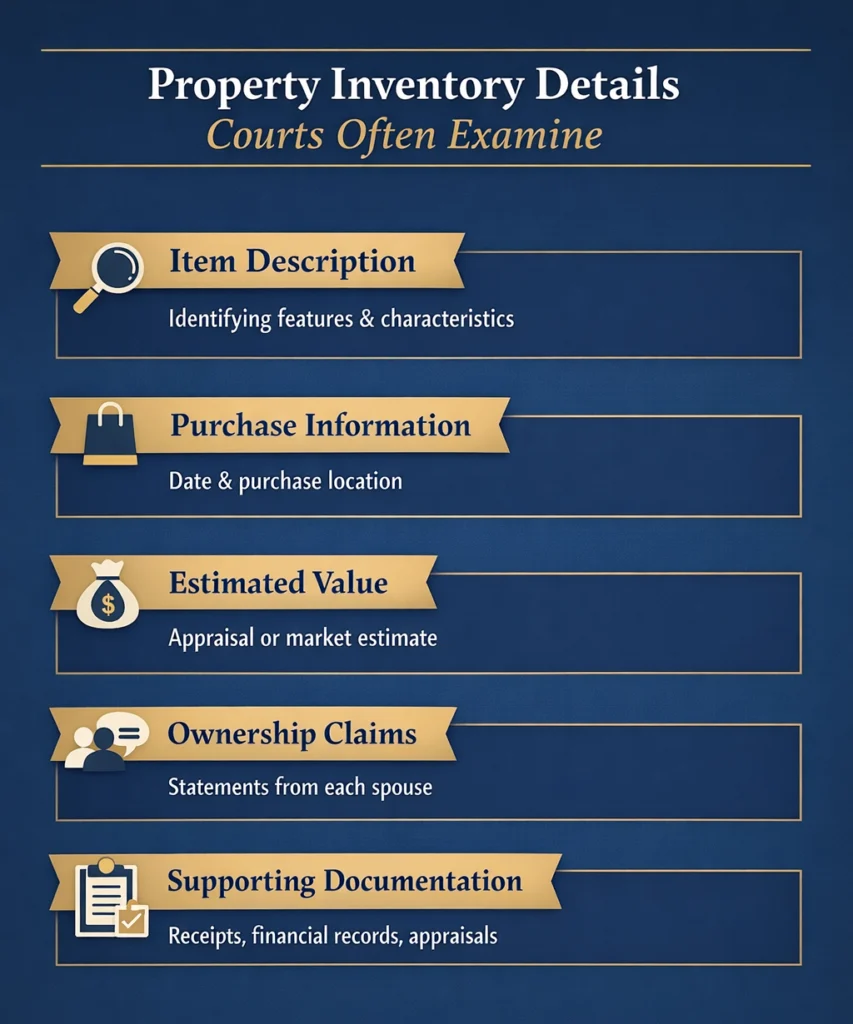
Source: IRS guidance on determining fair market value of property
These records may become part of financial disclosures submitted during divorce proceedings. When documentation is incomplete, courts may rely on testimony or other financial evidence to determine how property should be classified.
How Courts Determine Value Of Personal Property
During a divorce, courts must determine the value of personal property so marital assets can be divided fairly. Personal property may include items like cars, jewelry, furniture, electronics, or collectibles. Judges usually look at the current market value, which is the price someone would reasonably pay for the item today.
Courts may review several types of evidence, such as:
- Professional appraisals for valuable items
- Purchase receipts or records showing the original price
- Prices of similar items sold online or at auctions
- Insurance value reports
- Expert opinions when spouses disagree about the value
This process helps courts divide property fairly between both spouses.
What Happens When Ownership Of Property Is Disputed
Ownership disputes occur when spouses disagree about whether a particular item belongs to the marital estate or remains separate property.
Courts often review financial records and documentation when tracing separate property in North Carolina divorce matters. Purchase history, financial statements, and testimony about how the property was used during the marriage may all influence the court’s evaluation.
Judges may examine several factors when resolving disputes:
- When the item was acquired
- Whether marital funds were used
- Which spouse maintained or possessed the item
- Whether documentation supports ownership claims
These factors help courts determine whether the asset should be treated as marital property or separate property during equitable distribution proceedings.
Why Documentation Matters During Property Division
Documentation plays a critical role when courts review valuable belongings during divorce proceedings. Financial records allow judges to trace ownership history and verify whether property belongs to the marital estate.
In personal property division North Carolina divorce matters, documentation such as receipts, appraisal reports, and financial disclosures often influences how courts classify and evaluate property.
Financial documentation may also become relevant when courts review records associated with hidden asset investigations during divorce, particularly when financial disclosures appear incomplete. When financial records appear incomplete or inconsistent, courts may evaluate bank statements and other financial evidence to determine whether property was properly disclosed.
Preparing a detailed asset inventory divorce NC record can help organize financial disclosures and provide courts with a clear overview of valuable belongings within the marital estate.
How Courts Evaluate High-Value Property Records
Courts evaluating high-value property often compare financial documentation from both spouses. These records help establish the origin, ownership, and value of personal belongings.
Judges may review purchase receipts, insurance appraisals, financial statements, and bank transaction records. These documents can reveal when an asset was acquired and whether marital funds were used.
Courts may also examine financial patterns associated with property purchases. For example, bank records or credit card statements may confirm when a valuable item was purchased and which spouse contributed to the purchase.
When documentation clearly identifies ownership history and financial value, courts can more effectively evaluate how personal belongings relate to the marital estate during equitable distribution proceedings.
How Courts Handle Personal Property Documentation
Courts reviewing high-value personal belongings rely on documentation to understand the structure of the marital estate. Financial disclosures, valuation records, and ownership documentation all contribute to the court’s evaluation.
When documentation shows when property was acquired and how it was financed, judges can determine whether the asset belongs to the marital estate or remains separate property. Accurate financial records may also help courts evaluate the total value of marital property.
Disputes involving high-value belongings often arise when documentation is incomplete or when spouses disagree about ownership. Organized financial records, inventories, and valuation reports help courts evaluate these disputes within the framework of North Carolina equitable distribution law.
Discussing Asset Documentation With A Divorce Lawyer
If questions arise about documenting valuable belongings during divorce, you may consider speaking with a family law attorney. Legal guidance may help clarify how courts evaluate financial records, ownership documentation, and asset inventories when reviewing marital property disputes.
For more information, you may contact North Carolina Divorce Attorneys at Martine Law at +1(704)-255-6992 or visit the Contact Us page.
FAQs
Do courts require documentation for personal property during divorce?
Yes. Courts generally expect documentation when spouses claim ownership of valuable belongings during divorce proceedings. Financial records, receipts, and appraisal reports help judges determine when property was acquired and whether it belongs to the marital estate. Documentation may also help verify the value of property when courts evaluate equitable distribution of assets.
Can personal belongings become marital property in divorce?
Yes. Personal belongings can be classified as marital property if they were acquired during the marriage using marital funds. Courts reviewing personal property division North Carolina divorce cases examine financial documentation and ownership records to determine whether an item belongs to the marital estate or remains separate property owned by one spouse.
Do courts rely on asset inventories during divorce?
Yes. North Carolina Courts may review organized property inventories when evaluating financial disclosures during divorce proceedings. An asset inventory divorce NC document can help identify valuable belongings, purchase dates, and estimated values associated with property claimed by each spouse. These inventories often assist courts when reviewing ownership disputes or valuation questions.
What happens if spouses disagree about ownership of property?
Yes. Courts resolve ownership disputes by reviewing financial records, purchase documentation, and testimony presented by each spouse. Judges may examine when the property was acquired, how it was used during the marriage, and whether documentation supports a separate ownership claim. These factors help courts determine how property should be classified during equitable distribution proceedings.
Can missing documentation affect how property is divided?
Yes. Missing documentation can complicate how courts evaluate property during divorce proceedings. When financial records are incomplete, courts may rely on testimony or alternative financial evidence to determine ownership and value. Situations involving missing financial records in divorce cases often require additional documentation review to clarify whether assets belong to the marital estate or separate property.
