

Quick Summary
A marital home buyout NC situation occurs when one spouse keeps the marital residence and compensates the other spouse for their share of the home’s equity. Courts examine property value, mortgage balances, and refinancing ability when evaluating how housing assets should be divided. Because the marital residence is often a major asset, these financial evaluations influence how equity is distributed during equitable distribution proceedings in North Carolina divorce cases.
A marital home buyout in NC situation occurs when one spouse keeps the marital residence and compensates the other spouse for their share of the home’s equity. Courts review property value, mortgage balances, and refinancing feasibility when evaluating whether this arrangement fits within equitable distribution rules.
Housing assets often represent one of the most significant financial components of a marital estate. Because property ownership carries long-term financial obligations, courts review financial documentation and mortgage agreements carefully. North Carolina Divorce Attorneys at Martine Law often explain how courts analyze home equity and refinancing responsibilities when property division questions arise during divorce proceedings.
What Is A Marital Home Buyout
A marital home buyout occurs when one spouse keeps the marital residence while the other spouse receives compensation for their share of equity. Courts determine the value of that share by examining the home’s market value and subtracting the remaining mortgage balance.
Under North Carolina equitable distribution law, property acquired during the marriage may be classified as marital property. When the marital residence falls within this classification, courts examine financial contributions and ownership interests before approving a buyout arrangement.
Because the residence is often one of the most valuable assets in a marriage, buyout discussions frequently arise during home equity division NC divorce proceedings. Property valuation helps determine whether one spouse can retain the home while maintaining financial balance across the marital estate.
Courts often evaluate these questions while reviewing issues related to property division in North Carolina divorce cases.
For additional information about court procedures and property matters, the North Carolina Judicial Branch provides general guidance about civil court processes.
How Do Courts Calculate Home Equity
Courts calculate home equity by subtracting the outstanding mortgage balance from the property’s fair market value. This calculation identifies how much financial value exists in the home for distribution between spouses.
Judges rely on financial and real estate records to confirm property value. Appraisals, mortgage statements, and property tax documentation help establish the financial position of the marital home.
Documents courts commonly review include:
- Real estate appraisal reports
- Mortgage payoff statements
- Property tax records
- Deeds and purchase documents
These materials allow courts to evaluate whether a buyout arrangement accurately reflects the financial value of the property. In many home equity division NC divorce matters, the home’s valuation significantly influences the overall distribution of marital assets.
Courts evaluating property value during divorce also rely on the equitable distribution rules outlined in the North Carolina General Statutes governing marital property division.
When Do Courts Require Mortgage Refinancing
Mortgage refinancing is often necessary when one spouse retains the marital residence after divorce. The refinancing process removes the other spouse from the mortgage loan and assigns financial responsibility to the spouse keeping the home.
Lenders usually require refinancing because both spouses may be listed on the original loan agreement. Courts review whether the remaining spouse can qualify independently for a mortgage.
Several financial factors may affect whether refinancing is possible:
- Income sufficient to maintain mortgage payments
- Credit qualification requirements
- Current mortgage balance and loan terms
- Debt obligations affecting borrowing eligibility
These considerations help courts determine whether the spouse keeping the residence can reasonably maintain the property after divorce.
Property disputes involving valuation or ownership history sometimes arise during divorce proceedings. Courts examining these issues may also consider financial valuation topics discussed in resolving real estate valuation disputes in North Carolina divorce cases when evaluating property records.
Why Do Financial Records Matter In Buyouts
Financial documentation plays an important role in determining how housing assets are divided during divorce. Courts rely on financial records to understand property ownership history and mortgage obligations.
Mortgage statements, deeds, and purchase records help establish when the home was acquired and whether marital funds contributed to its equity. These records also clarify whether improvements to the home increased its value during the marriage.
Because the marital residence may represent a significant portion of marital wealth, courts carefully evaluate documentation during home equity division NC divorce proceedings. Accurate records allow judges to determine how equity developed and how the property should be treated during equitable distribution.
North Carolina courts rely on financial disclosures and documentation requirements described within state court procedures when evaluating property distribution matters.
How Do Buyouts Influence Divorce Property Outcomes
A marital home buyout can affect the overall division of marital assets. When one spouse keeps the residence, courts review the entire marital estate to maintain financial balance.
If the home contains substantial equity, courts may adjust the distribution of other assets such as retirement accounts, savings, or investments. These adjustments help ensure that the final property division aligns with equitable distribution principles under North Carolina law.
Courts may also review broader legal procedures connected to absolute divorce proceedings in North Carolina when determining how property division decisions fit within the overall divorce process.
Housing valuation issues often arise during contested divorce proceedings in North Carolina when spouses disagree about how equity should be divided.
How Courts Evaluate Housing Equity In Divorce
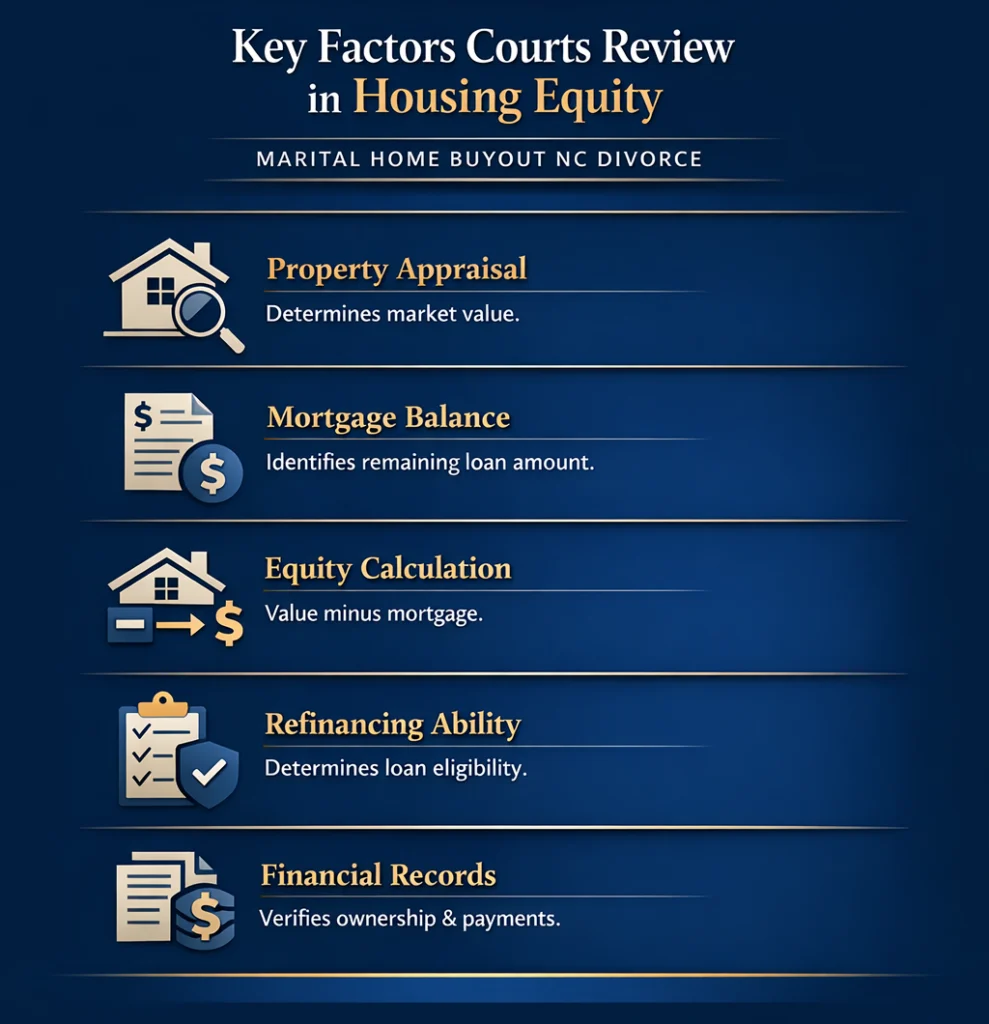
Housing assets frequently require detailed financial evaluation during divorce proceedings. When courts review a marital home buyout NC arrangement, they examine the property’s market value, mortgage balance, and refinancing feasibility.
Source: North Carolina equitable distribution law governing property division
These evaluations help determine whether one spouse may retain the residence while compensating the other spouse for their share of equity. Because housing assets often represent a substantial portion of the marital estate, property valuation and financial documentation play an important role in equitable distribution.
Courts rely on appraisals, financial disclosures, and mortgage records to determine how housing assets should be addressed during divorce. These evaluations help ensure that the property division reflects the financial structure of the marital estate under North Carolina law.
Discuss Property Division Questions With A Lawyer
Questions about housing equity and refinancing sometimes arise when spouses determine how to divide marital property. If you want general information about property division procedures in North Carolina divorce cases, you may contact North Carolina Divorce Attorneys at Martine Law at +1(704)-255-6992 or visit the Contact Us page for additional information.
FAQs
Can one spouse keep the marital home after divorce in North Carolina?
Yes. One spouse may keep the marital home if the divorce settlement or court order assigns ownership of the property to that spouse. Courts review property value, mortgage balances, and financial feasibility before approving the arrangement. Judges evaluate equity calculations and refinancing ability to determine whether the home can reasonably remain with one spouse after divorce.
Does a marital home buyout require refinancing?
Yes. A marital home buyout frequently requires refinancing because lenders usually require the borrower responsible for the loan to hold the mortgage independently. Courts examine income documentation, credit qualifications, and mortgage balances when determining whether refinancing is feasible. If refinancing cannot occur immediately, courts may allow time within the property settlement for refinancing to occur.
How do courts determine property equity during divorce?
Yes. Courts determine property equity by subtracting the remaining mortgage balance from the home’s fair market value. Appraisals, mortgage statements, and tax records help establish the property’s value. These financial records allow judges to evaluate how equity should be distributed between spouses during the equitable distribution process in North Carolina divorce proceedings.
What documents help establish home value in divorce?
Yes. Financial documentation helps courts determine the value of the marital home during divorce proceedings. Mortgage statements, property deeds, purchase records, and appraisal reports clarify the financial position of the property. Courts rely on these materials to determine how the home should be treated within the marital estate. Missing documentation can create issues similar to those described in missing financial records in North Carolina divorce cases.
