

Quick Summary
In emergency contact custody North Carolina disputes, inconsistent school or medical records may raise questions about decision-making authority and parental communication. Courts reviewing legal custody often look at whether parents cooperate on important matters such as school records, healthcare access, and emergency contacts.
Parents often complete emergency contact forms for schools, childcare providers, and medical offices without realizing these records may later appear in custody proceedings. When records list different parents as the primary or only emergency contact, questions can arise about communication, decision-making, and cooperation between parents.
In emergency contact custody in North Carolina disputes, courts may review documentation from schools, hospitals, and childcare providers to see how parents make decisions affecting a child’s safety and welfare.
These details rarely determine a case on their own, but they can illustrate how parental responsibilities function in everyday situations.
Legal custody involves the authority to make decisions about education, healthcare, and safety. When emergency contact listings are inconsistent, courts may consider what those records suggest about coordination between parents.
North Carolina Divorce Attorney at Martine Law works with individuals seeking clarity on custody-related procedures and documentation that may appear during court review.
Why Emergency Contact Listings Matter In Custody
Emergency contact forms can reveal how parents manage practical responsibilities for their child. In custody cases, these records sometimes appear as supporting evidence showing which schools or medical providers rely on during urgent situations.
In emergency contact custody in North Carolina, courts may review emergency listings to determine whether both parents are involved in important decisions or if one parent is routinely excluded.
Legal custody often involves shared decision-making, and documentation from third parties can provide insight into how that process functions.
For example, courts may look at whether:
- Both parents appear on the school emergency forms
- A parent removed the other without notice
- Contact information changed during a custody dispute
- Schools were instructed to contact only one parent
These details help illustrate how communication and authority are handled in daily life.
Common Reasons Emergency Contact Records Become Inconsistent
Emergency contact lists can change for practical reasons. However, repeated or unexplained changes may create confusion about parental authority and responsibility.
Common situations include:
- Schools updating records after a move
- Parents submitting separate forms with different information
- One parent modifying emergency contacts during a dispute
- Medical offices using outdated paperwork
When evaluating emergency contact custody in North Carolina cases, judges may review whether these changes occurred accidentally or reflect deeper conflict about parental decision-making.
Situations Where Emergency Contact Records May Change
Emergency listings sometimes shift because of routine updates rather than legal disputes. However, when temporary legal changes occur, such as emergency orders, schools or medical providers may update contact records based on the most recent court directive.
Common examples include:
- A new school year requires updated forms
- Changes in phone numbers or addresses
- Childcare programs requesting different contact priorities
However, if those changes remove a parent or limit access without explanation, the situation can raise questions related to removing parent as emergency contact NC issues during custody litigation.
How Courts Interpret Emergency Contact Evidence
Courts rarely rely on a single document when determining custody issues. Instead, emergency contact records are considered alongside other information about parenting responsibilities and communication patterns.
Judges may review whether the records suggest:
- Cooperation between parents
- Attempts to limit access to information
- Confusion about who holds decision-making authority
- Miscommunication with schools or medical providers
North Carolina law places significant emphasis on a child’s best interests when courts make custody determinations. The legal framework guiding these decisions appears in the state’s custody statutes, which guide courts when evaluating evidence related to parental decision-making.
In some situations, concerns about removing a parent as emergency contact NC may arise if records suggest one parent is restricting the other’s involvement without court approval.
Legal Custody And Decision Making Authority Comparison
Legal custody determines who has the authority to make major decisions for a child. Emergency contact records sometimes reflect how that authority is exercised in everyday settings.
In some family law matters, related legal processes such as absolute divorce may also affect how parental responsibilities are structured, although divorce itself does not automatically determine legal custody arrangements.
Custody Type | Decision Authority | Emergency Contact Implications |
Joint Legal Custody | Both parents share decisions | Both parents are usually listed on forms |
Sole Legal Custody | One parent makes decisions | One parent may control the records |
Temporary Orders | Authority may shift temporarily | Schools may update contact lists |
Pending Disputes | Authority may be unclear | Records sometimes conflict |
Because legal custody involves education and healthcare decisions, emergency contact documentation may help courts see whether both parents remain involved in those areas.
Practical Risks When Emergency Listings Conflict
Conflicting emergency contact records can create practical and legal challenges. Schools, hospitals, and childcare providers depend on these lists to contact parents quickly in urgent situations.
Potential concerns courts may review include:
- Delays in contacting a parent during emergencies
- Confusion about who can make medical decisions
- Disputes about school communications
- Evidence of limited parental cooperation
In some custody disputes, repeated changes tied to removing parent as emergency contact NC issues may prompt a closer review of how parents share information and authority. These concerns can also relate to broader legal custody questions about which parent has authority to make decisions affecting the child.
After reviewing these factors, some people find it helpful to speak with a family law attorney about how the rules apply to their situation.
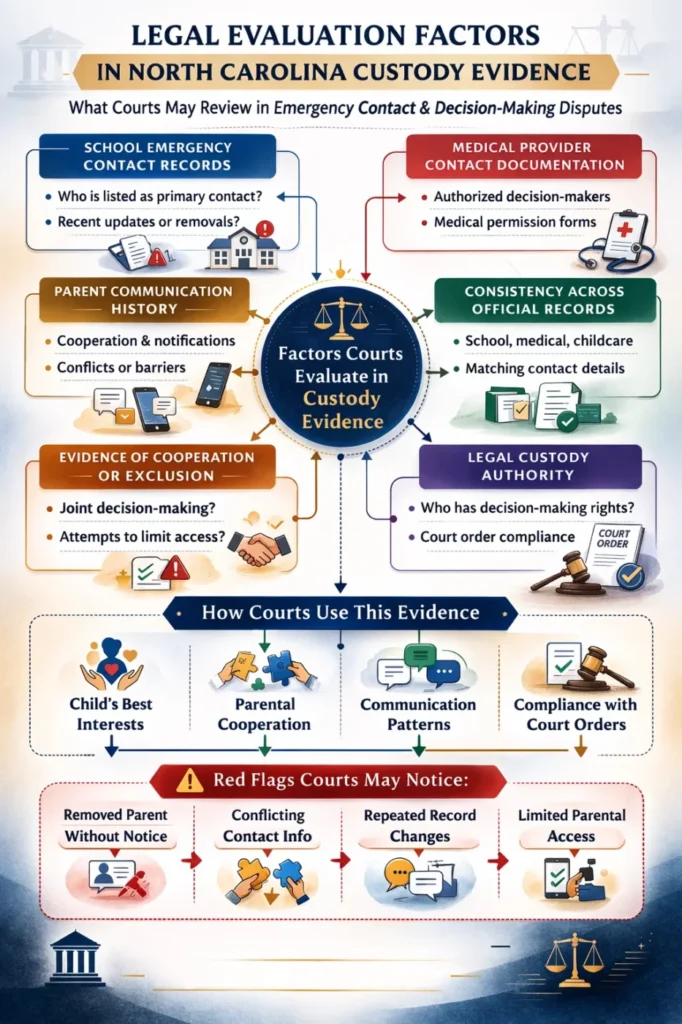
Factors Courts Evaluate In Custody Evidence
Courts reviewing custody disputes often consider multiple forms of documentation to understand how parental responsibilities are handled in everyday situations.
Emergency contact records from schools, medical providers, and childcare programs may help illustrate how communication and decision-making occur between parents.
Source: North Carolina Judicial Branch – Child Custody Court Procedures
Common records courts may review include:
- School emergency contact records
- Medical provider contact documentation
- Parent communication history
- Consistency across official records
- Evidence of cooperation or exclusion
- Alignment with legal custody authority
These factors are typically considered together rather than in isolation. Courts often review documentation alongside broader best-interest standards and custody procedures, which guide how evidence is evaluated during custody proceedings.
Documentation That May Appear In Custody Hearings
When reviewing custody evidence, courts sometimes examine records from multiple institutions. Emergency contact listings may appear among other supporting documents.
Examples include:
- School enrollment forms
- Childcare provider records
- Medical intake forms
- Communication logs between parents and schools
Courts may also consider whether the records align with official custody orders or parenting plans filed through family courts operated by the North Carolina Judicial Branch.
Know More – The Status Quo Effect: How Temporary Parenting Schedules Determine Final Custody in NC
Final Thoughts On Emergency Contact Custody Issues
In custody disputes, everyday documents may become part of the evidence that courts review. Emergency contact listings from schools or medical providers can show how parents communicate, share responsibilities, and handle decision-making for their child.
In emergency contact custody North Carolina cases, inconsistent records rarely determine the outcome alone. However, they may provide context about cooperation, access to information, and how parenting responsibilities function in daily life.
When records suggest confusion or exclusion between parents, courts may review whether legal custody responsibilities are being followed.
Understanding how documents such as school forms or medical contact lists appear in custody hearings can help parents maintain clearer communication and avoid misunderstandings.
Speak With A Family Law Attorney
If questions arise about custody records or legal decision-making, North Carolina Divorce Attorneys at Martine Law can explain how courts review these issues. Call +1 (704) 255-6992 or visit the Contact Us page.
FAQs
Can emergency contact records influence custody decisions in North Carolina?
Yes. Courts may review school or medical contact records when evaluating parenting responsibilities. In emergency contact custody North Carolina disputes, these documents may help show whether both parents remain involved in communication and decision-making. Judges typically consider them alongside other evidence, such as parenting schedules, custody orders, and communication records, to understand how parents manage legal custody responsibilities.
Can one parent remove the other from emergency contacts?
Yes. A parent may sometimes update school or medical forms, but issues related to removing a parent as emergency contact NC can arise if the change conflicts with a custody order or shared decision-making rights. Courts may review whether the change was administrative, accidental, or intended to limit a parent’s access to information or emergency communication.
Do schools have to list both parents as emergency contacts?
No. Schools usually follow the information provided on enrollment forms and any custody documentation submitted by parents. If both parents share legal custody, many schools list both as emergency contacts unless a court order restricts communication. Issues related to legal custody may affect which parent schools contact during emergencies. Updating school records regularly helps ensure emergency information remains accurate and consistent.
What other records can appear in custody cases?
Yes. Custody disputes often involve multiple types of records that show how parenting responsibilities are handled. Courts may review school documents, healthcare forms, childcare enrollment records, and communication history between parents and institutions. These records help judges evaluate whether both parents remain involved in decisions affecting the child’s education, safety, and daily care.
