

Quick Summary
If you continue living in the same home after separating, courts may closely review whether the separation truly began. In separation under same roof NC situations, judges examine daily routines, finances, and household arrangements to determine whether spouses lived separate lives while sharing a residence. These factors may influence how courts interpret the required separation period under North Carolina divorce law.
Living together after separation can affect how courts evaluate whether the separation period required for divorce has actually begun. In separation under same roof NC situations, judges often review whether spouses continued functioning as a household or began living independently while remaining in the same residence.
North Carolina law requires spouses to live separate and apart before filing for divorce. When couples remain in the same home, courts may analyze daily routines, financial conduct, and living arrangements to determine whether legal separation truly occurred. North Carolina Divorce Attorneys at Martine Law often explain how shared living situations may appear during divorce proceedings when separation timelines are questioned.
North Carolina Divorce Attorneys at Martine Law regularly review enforcement records and explain how courts may weigh compliance history when assessing custody arguments.
What Does Separation Under Same Roof Mean
Separation under the same roof refers to spouses continuing to live in the same home while claiming the marriage has ended. Courts must determine whether spouses truly lived independent lives despite sharing a residence.
In North Carolina, divorce law expects spouses to live separately once separation begins. However, financial constraints or temporary arrangements sometimes cause couples to remain in the same residence. When this occurs, courts review whether the household continued functioning like a marriage. Because of this review process, the impact of living together after separation NC can become a central issue in divorce eligibility.
How Courts Evaluate Shared Household Separation
Courts focus on whether your daily life resembles a marital household or two separate living arrangements. Judges often analyze patterns rather than a single event.
Typical indicators courts may review include:
- Separate bedrooms and sleeping arrangements
- Independent finances or banking activity
- Individual daily schedules and meals
- Reduced household coordination between spouses
These factors help determine whether the relationship ended in practice or continued despite claims of separation.
How Does North Carolina Define Legal Separation
North Carolina law requires spouses to live separate and apart for a continuous period before filing for divorce. Separation generally means physical separation combined with the intent to end the marriage permanently.
When spouses remain in the same residence, courts may examine the living arrangement carefully. Judges typically evaluate whether the spouses maintained independent lives or continued sharing responsibilities and routines. Because of this, the impact of living together after separation NC may become relevant when determining whether the separation period actually began.
Under North Carolina law, an absolute divorce requires spouses to complete the required separation period before filing a case. You can review the statutory requirement for divorce eligibility in North Carolina General Statute §50-6.
Why Might Living Together Affect Divorce Eligibility
Living together after separation can create uncertainty about whether the legal separation requirement has been satisfied. Courts must evaluate whether the marital relationship truly ended or whether spouses continued functioning as a household.
Divorce eligibility in North Carolina depends on completing the statutory separation period. If the court determines that spouses were still operating as a married couple, the separation period may not be recognized. In those circumstances, the impact of living together after separation NC may influence when a divorce case can legally begin.
Courts may review financial activity, daily interactions, and shared responsibilities to determine whether the relationship had effectively ended. Even routine household cooperation, such as shared expenses or coordinated schedules, can become relevant during this evaluation.
Know More – Tracing Separate Property NC Assets Inheritance
What Evidence Do Courts Review During Disputes
Courts rely on evidence when determining whether spouses were actually separated while living in the same residence. Because each household arrangement is different, judges typically review patterns of behavior rather than a single factor.
Evidence may help demonstrate whether spouses maintained independent lives or continued their marital relationship. In many cases, courts analyze documentation, testimony, and financial records to understand how the household functioned after the claimed separation date.
Courts often review the following types of evidence:
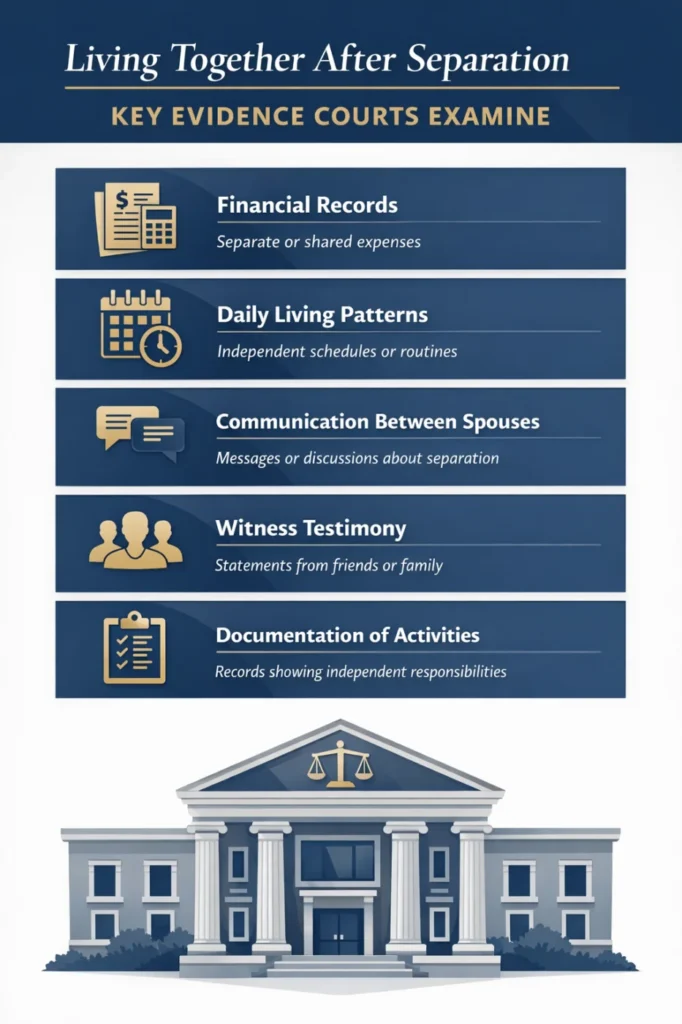
Source: North Carolina Rules of Evidence overview (court evidence principles)
How Can Shared Living Arrangements Affect Divorce Timelines
Shared living arrangements may affect divorce timelines if courts question when the separation actually began. Judges must determine the true start of the separation period before a divorce filing may proceed.
If spouses continued functioning as a marital household, the court may determine that separation did not begin until later. This determination can change the legal timeline for filing a divorce. When courts analyze these situations, they may also examine whether spouses considered legal options involving divorce from bed and board when disputes about living arrangements arise.
Because the separation timeline affects divorce eligibility, documentation and consistent living arrangements often become important when courts review separation disputes.
What Does Living Together After Separation Mean for Divorce
Living together after separation can influence how courts interpret whether the separation period required for divorce has truly begun. Judges generally review how spouses lived during the claimed separation period, including their financial behavior, daily routines, and living arrangements.
When spouses maintain independent lives while sharing a residence, courts may evaluate whether those arrangements reflect a genuine separation or a temporary living situation. Evidence such as separate finances, independent schedules, and minimal household coordination may help clarify whether the marital relationship ended.
Understanding how courts evaluate shared living arrangements can help explain why documentation, consistent routines, and clear communication often become important during divorce proceedings. These factors allow courts to determine whether the separation period required under North Carolina law has been satisfied.
Know More – Absolute Divorce Affects Future Settlements NC
What This Means for Your Divorce Timeline
Living arrangements after separation can affect how courts evaluate divorce eligibility in North Carolina. When spouses continue sharing a residence, judges often examine whether the marital relationship actually ended.
Courts typically review daily routines, financial independence, and communication patterns to determine whether spouses lived separate lives. Because North Carolina law requires a defined separation period, establishing when separation truly began becomes an important part of the divorce process.
If a court determines that spouses continued functioning as a household, the separation timeline may change. As a result, documentation and consistent living arrangements can influence how judges evaluate separation disputes.
Guidance On Separation Under Same Roof Situations
If you want to understand how separation timelines may apply to your circumstances, learning more about North Carolina divorce procedures can provide helpful context. North Carolina Divorce Attorneys at Martine Law can explain how courts evaluate separation timelines and shared living arrangements.
For general guidance about divorce procedures, you may call +1(704)-255-6992 or visit the Contact Us page to review available information about family law matters in North Carolina.
FAQs
Can spouses live in the same house and still be separated in North Carolina?
Yes. Spouses may technically remain in the same residence while claiming separation, but courts closely evaluate the living arrangement. Judges typically review whether spouses lived independent lives or continued functioning as a household. Financial behavior, daily routines, and testimony about living arrangements may help courts determine whether the marital relationship had actually ended.
Does separation under the same roof automatically invalidate divorce eligibility?
No. Living in the same home does not automatically prevent divorce eligibility. However, courts may carefully review the situation. In separation under same roof NC circumstances, judges analyze whether spouses continued operating as a married household. If the court determines the marital relationship continued, the separation period required for divorce may not yet have started.
Do courts require evidence of separate living arrangements?
Yes. Courts usually require clear and convincing evidence showing how spouses lived during the claimed separation period. Judges may review financial records, communication history, and witness testimony describing the household arrangement. Documentation helps courts determine whether spouses were living independent lives or continuing their marital relationship while sharing the same residence.
Can financial activity affect how courts interpret separation?
Yes. Financial behavior can influence how courts evaluate whether separation occurred. Shared expenses, joint purchases, or continued financial coordination may suggest that the marital relationship continued. Financial records sometimes become important evidence when courts analyze how spouses managed responsibilities after claiming separation.
Property classification issues may also arise during divorce proceedings. Courts sometimes review whether assets were marital or separate property.
Can the separation date become disputed during divorce proceedings?
Yes. Separation dates sometimes become disputed when former spouses disagree about when the relationship actually ended. Courts may review communication, financial records, and testimony about living arrangements to determine the correct separation date. If the court determines that separation began later than claimed, the timeline for filing a divorce may change.
