

Quick Summary
When parents disagree about therapy for a child, therapy decisions in custody NC disputes usually depend on the custody order and legal decision-making authority. If parents share legal custody, counseling typically requires agreement between them. Courts may review the child’s needs, professional recommendations, and the existing order when evaluating child counseling in custody NC disagreements.
In North Carolina custody disputes, the parent with legal decision-making authority typically decides whether a child may attend counseling. When parents share legal custody, both usually must agree before therapy begins.
If they cannot reach agreement, a court may review the situation and determine whether counseling is appropriate. Because therapy decisions in custody NC cases involve healthcare authority, judges often examine custody orders and the child’s needs.
Counseling concerns sometimes arise after separation when teachers, doctors, or parents observe emotional or behavioral changes. North Carolina Divorce Attorneys at Martine Law often explain how custody orders guide these decisions.
Why Does Child Counseling Become an Issue?
Child counseling may become an issue when parents interpret a child’s emotional or behavioral needs differently. After separation, children sometimes experience adjustment difficulties that lead one parent to seek professional support.
Several situations commonly lead to discussions about child counseling in custody NC matters:
Situation | Why Counseling May Be Suggested |
Emotional stress after separation | Child shows anxiety or mood changes |
School or academic concerns | Teachers notice behavioral patterns |
Medical or mental health recommendations | Doctors suggest therapy support |
Parent-child communication issues | Counseling may improve interaction |
These situations can lead to disagreements when parents evaluate the child’s needs differently. When the disagreement affects healthcare decisions, it may become part of a custody discussion.
How Does Legal Custody Affect Therapy Decisions?
Legal custody determines which parent has authority to make major decisions affecting the child’s upbringing. In North Carolina, these decisions often include medical care, education, and mental health treatment.
When parents share joint legal custody, they generally must cooperate on major decisions affecting the child. Counseling for a child often falls within this category because it involves mental health treatment and ongoing medical records. Issues related to decision-making authority are often addressed within formal custody orders that outline how parents should handle healthcare and education decisions.
What Happens When Parents Disagree About Counseling?
Disagreements about therapy may arise when parents have different views about whether counseling is necessary. One parent may believe therapy supports the child’s emotional development, while the other may question the need for professional treatment.
These disagreements may involve therapist selection, scheduling of sessions, or responsibility for counseling costs. When parents cannot resolve these matters through communication, the dispute may become part of custody proceedings. In some cases, courts examine broader parenting dynamics and decision-making authority, similar to situations discussed in Know More – Shared Legal Custody and Medical Decisions.
What Factors Do Judges Consider In Disputes?
When counseling disagreements reach the court, judges evaluate several factors related to the child’s wellbeing and the parents’ ability to cooperate. Courts focus on whether counseling may support the child’s emotional development and family stability.
Judges may consider factors such as:
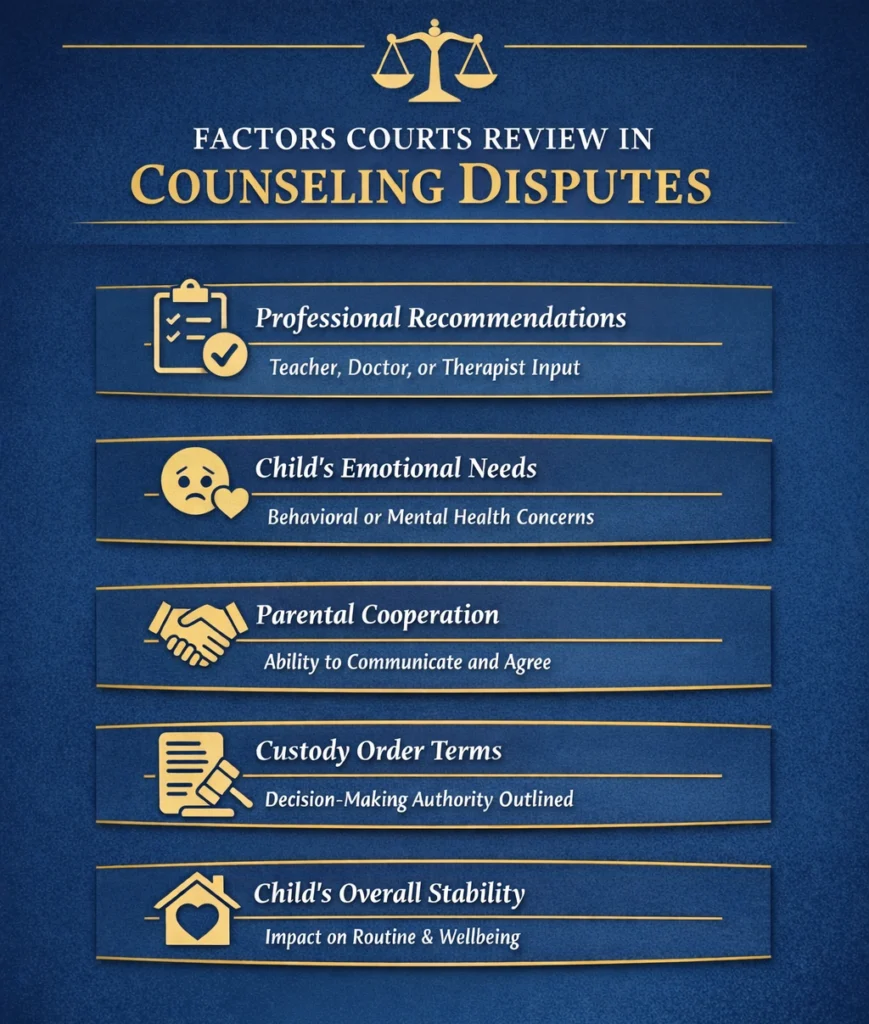
Source: North Carolina Department of Health and Human Services – Child and Family Services
These considerations help the court determine whether therapy may benefit the child and whether decision-making authority should remain shared.
Can Custody Orders Address Counseling Decisions?
Custody orders may include provisions that explain how parents should handle healthcare and counseling decisions. These provisions clarify how decision-making authority applies when therapy becomes necessary.
Some custody orders require parents to agree before starting counseling, while others grant one parent final authority over medical decisions. If disagreements arise after a custody order is issued, parents may sometimes return to court to request clarification or adjustments through child custody modifications when circumstances affecting the child’s wellbeing change.
Including these provisions in a custody order may reduce confusion when disagreements arise. Parents can refer to the order to determine whether counseling decisions require joint approval or whether one parent has authority to proceed.
How Can Counseling Affect Parenting Plans?
Counseling may influence the way parenting plans operate in everyday life. Therapy sessions usually occur on a scheduled basis, which requires coordination between parents.
For example, therapy appointments may occur during one parent’s scheduled parenting time. Parents may therefore need to coordinate transportation, scheduling, and communication with the therapist.
Counselors sometimes provide recommendations related to family communication or routines that support the child’s wellbeing. While therapy itself does not determine custody outcomes, it may affect how parents organize schedules and communicate about the child’s care.
How Are Counseling Disputes Documented In Court?
When counseling disagreements become part of a custody dispute, documentation often helps clarify the child’s circumstances. Courts review records that explain why therapy was recommended and how the disagreement developed.
These records may include school reports, medical evaluations, or written recommendations from therapists. Communication between parents about counseling may also appear in custody proceedings when the court evaluates cooperation and decision-making authority.
Documentation allows judges to review objective information about the child’s needs and determine whether counseling may support the child’s emotional wellbeing.
How Courts Approach Counseling Decisions In Custody
Counseling decisions can become an important issue when parents share decision-making authority for their child. In North Carolina custody cases, legal custody determines who may authorize healthcare and mental health treatment. When parents share legal custody, counseling often requires agreement between both parents.
When disagreements arise, courts examine the child’s emotional needs, professional recommendations, and the existing custody order. Judges may also review documentation such as school reports, medical evaluations, and communication between parents. These records help the court determine whether counseling may support the child’s wellbeing.
Custody orders sometimes include provisions explaining how healthcare decisions should be handled in the future. These provisions can clarify whether counseling requires joint approval or whether one parent has authority to proceed.
Understanding how child counseling in custody NC disputes are evaluated helps parents navigate disagreements about mental health decisions while maintaining stability for the child.
Understanding Custody Decisions with Legal Guidance
Questions about counseling sometimes arise when parents share legal custody and disagree about healthcare decisions for their child. Understanding how custody orders address decision-making authority may help clarify how therapy requests should be handled.
If questions develop regarding counseling decisions, custody orders, or parenting plans, you may speak with North Carolina Divorce Attorneys at Martine Law for general information about family law procedures. You may call +1(704)-255-6992 or visit the Contact Us page to request additional information about custody matters in North Carolina.
FAQs
Can one parent decide on therapy for a child?
Yes. A parent with sole legal custody usually may authorize therapy without the other parent’s permission. When parents share legal custody, counseling decisions typically require agreement between both parents. If disagreement continues, a judge may review the custody order and determine whether counseling should proceed based on the child’s circumstances.
Do parents have to agree on counseling?
Yes. Parents who share joint legal custody generally must agree on major healthcare decisions, including therapy. Counseling often falls within these decisions because it involves mental health treatment and ongoing medical records. When parents cannot reach agreement, the issue may become part of a custody dispute. Courts may review the custody order and the child’s needs, especially in situations involving a legal custody decision-making impasse in North Carolina.
Can a court require counseling for a child?
Yes. A court may require counseling when a judge determines that therapy may support the child’s wellbeing or address communication concerns within the family. Counseling requirements may appear in custody orders when the court believes professional support could benefit the child. Judges may also outline how therapy should occur and how parents should cooperate regarding scheduling or sharing treatment information.
What if parents disagree about counseling providers?
Yes. Courts may review disagreements about therapist selection when parents cannot agree on a counseling provider. Judges may examine the therapist’s qualifications, the child’s needs, and how counseling fits within the parenting schedule. Courts also consider whether the chosen provider allows both parents to remain informed about the child’s treatment while maintaining appropriate confidentiality for therapy sessions.
