

Quick Summary
Relocation can affect parenting schedules and how custody arrangements function in North Carolina. In child relocation custody North Carolina situations, courts review whether distance changes a child’s stability, school routine, and relationship with each parent. When a parent moves out of state, judges may reconsider parenting time structures and visitation schedules to maintain meaningful contact while supporting the child’s stability and long-term well-being.
Parenting schedules are often built around proximity, school routines, and regular exchanges between parents. When one parent moves to another state, those arrangements may become difficult to maintain.
Travel distance, new schools, and changes in daily routines can affect how often a child spends time with each parent. In many child relocation custody North Carolina situations, courts review whether relocation alters stability or affects the child’s relationship with both parents.
Understanding how courts evaluate these changes helps explain why parenting schedules and custody arrangements may sometimes be reconsidered after a family relocates.
North Carolina Divorce Attorney at Martine Law helps parents understand how these issues are reviewed under state custody law.
How North Carolina Courts Review Relocation Custody Issues
When a parent relocates to another state, the court may review whether the move changes the child’s circumstances. Custody orders are designed around stability and consistent involvement from both parents.
When relocation affects those patterns, judges may evaluate whether the existing parenting schedule still supports the child’s best interests.
In child relocation custody North Carolina cases, courts often review the impact of distance on parenting time, school routines, and emotional connections. Judges consider whether the move disrupts the child’s daily life or limits meaningful contact with one parent.
North Carolina courts apply established legal standards when evaluating custody disputes. Judges may examine parenting involvement, school stability, and the child’s daily routine when determining whether relocation requires changes to an existing order.
These considerations align with the state’s custody guidelines, which explain how courts review parenting arrangements and resolve disputes involving children.
Ways Relocation Can Influence Parenting Time Arrangements
Parenting plans typically assume that parents live within a reasonable distance of each other. When one parent moves far away, regular exchanges and weekly schedules may no longer work. These situations often require adjustments to existing parenting time schedules to reflect travel distance and school routines.
In moving out of state child custody NC situations, courts may adjust parenting time to account for travel distance, school schedules, and the child’s routine. Instead of frequent weekly visits, judges may approve longer but less frequent parenting periods to maintain meaningful contact with both parents.
The table below shows common ways parenting schedules may change after relocation.
Parenting Schedule Before Relocation | Possible Adjustment After Relocation |
Weekly parenting exchanges | Fewer exchanges with longer visits |
Alternate weekend visitation | Extended school break or holiday visits |
Short weekday parenting time | Longer summer parenting periods |
In-person contact several times weekly | Scheduled video calls or virtual communication |
These adjustments help preserve the child’s relationship with both parents while recognizing the practical challenges created by distance and travel.
Factors Courts Evaluate When Parents Relocate Cases
Relocation cases often require courts to review how a proposed move affects the child’s environment and daily life. Judges examine several practical factors to determine whether relocation may influence existing custody arrangements or parenting schedules.
Below is a visual overview of the key considerations courts may review in relocation custody disputes.
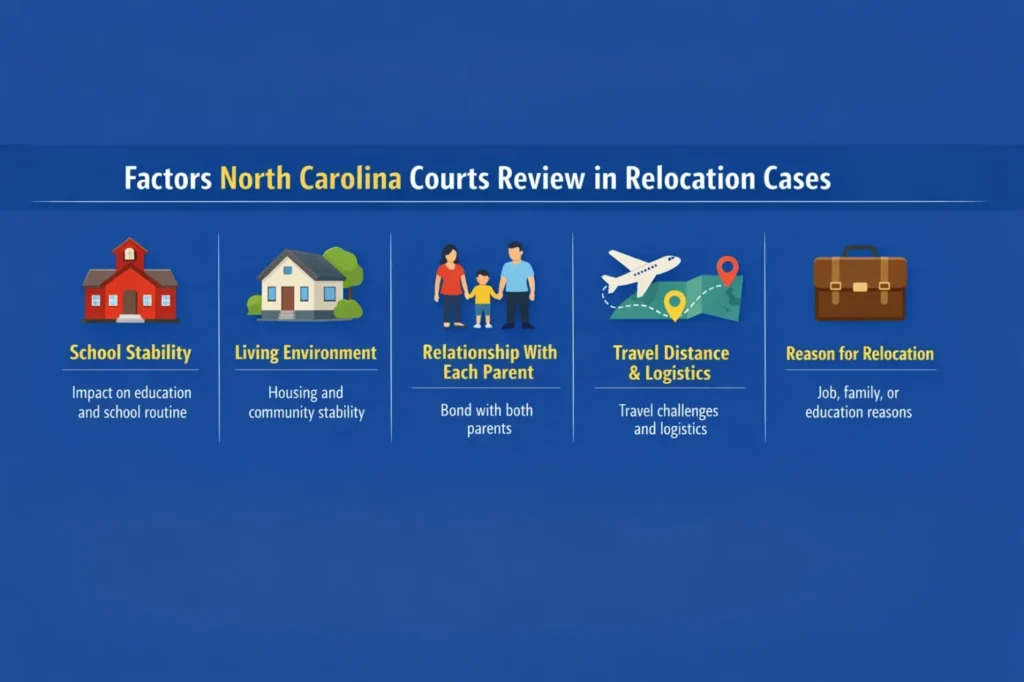
Source: North Carolina General Statutes §50-13.2
Stability of the Child’s Living Environment
A child’s school routine, housing situation, and community connections may be reviewed when relocation is proposed. Courts consider whether the move creates disruption or supports long-term stability in the child’s daily environment, including consistency in education and social relationships that often influence broader custody decisions.
Relationship Between the Child and Each Parent
Courts also evaluate the strength of the child’s relationship with each parent. If relocation significantly reduces contact with one parent, judges may consider whether alternative parenting schedules or travel arrangements can preserve meaningful involvement.
Practical Reasons That May Support Relocation
Parents sometimes relocate for employment opportunities, family support, or educational programs.
While courts review these circumstances, the primary focus remains the child’s overall well-being and whether the move supports stability and continued relationships with both parents.
North Carolina custody decisions are also guided by state law. Courts apply legal standards outlined in the state’s custody statutes, which include provisions that help judges evaluate parenting arrangements and determine whether custody changes are appropriate.
How Relocation Cases Can Affect Negotiation Leverage
Relocation sometimes shifts the balance of discussions between parents. When one parent proposes moving to another state, the other parent may ask the court to review the existing custody arrangement.
In moving out of state child custody NC disputes, the non-relocating parent may request modifications to protect regular contact with the child. This may involve changes to parenting time schedules or adjustments to decision-making responsibilities.
Relocation can create new considerations for both parents because parenting schedules may need to adapt to travel requirements and school commitments.
Courts ultimately evaluate whether any proposed modification supports the child’s stability and relationships, including factors related to the child’s routine and caregiving environment, discussed in custody stability.
Know More: The Status Quo Effect: How Temporary Parenting Schedules Determine Final Custody in NC
When Relocation May Lead to Custody Modifications
Relocation often appears in cases where parents request modifications to an existing custody order. When a significant change affects the child’s circumstances, either parent may ask the court to review the arrangement.
In moving out of state child custody NC situations, the proposed relocation may be considered a substantial change if it affects parenting schedules, travel practicality, or school routines. Courts then evaluate whether adjusting the custody order better supports the child’s needs.
Judges typically review several practical considerations, including:
- how travel affects the child’s routine
- whether parenting time remains balanced
- whether the child can maintain consistent relationships with both parents
Because relocation may require parents to revisit legal responsibilities and scheduling arrangements, courts may also review broader evidence affecting parenting arrangements, including issues discussed in custody evidence, when evaluating disputes between parents.
Understanding Relocation Effects in North Carolina Custody Cases
Relocation can influence parenting schedules, travel arrangements, and how parents maintain involvement in a child’s life. Courts reviewing child relocation custody North Carolina cases focus primarily on how distance affects stability and the child’s relationship with each parent.
Judges evaluate whether relocation changes school routines, travel demands, or parenting involvement. Parenting schedules may be adjusted to preserve meaningful contact while recognizing the practical challenges created by distance.
Issues such as communication expectations, transportation planning, and decision-making authority may also affect how parenting responsibilities are shared between parents when distance increases.
Understanding Relocation Issues in North Carolina Custody Cases
Relocation cases often involve detailed evaluation of parenting schedules, travel logistics, and the child’s ongoing relationship with both parents. Courts reviewing child relocation custody North Carolina disputes focus primarily on stability and the practical effects of distance on the child’s daily life.
Judges may review school schedules, transportation arrangements, and communication plans to determine whether relocation supports the child’s long-term interests.
In many situations, parents propose updated parenting plans that address travel, holiday schedules, and extended visitation periods.
These discussions often focus on how parenting plans can adapt to distance while still supporting meaningful involvement from both parents and maintaining stability in the child’s routine.
How Relocation Considerations Shape North Carolina Custody Decisions
Relocation disputes often require courts to balance the practical reasons for a move with the child’s stability and relationships with both parents.
In child relocation custody North Carolina cases, judges review whether distance affects school routines, parenting involvement, travel demands, and the ability of each parent to maintain consistent contact with the child.
When relocation significantly changes parenting schedules, courts may consider whether adjustments to custody arrangements better support the child’s well-being.
Evaluating these factors helps courts determine how parenting plans can adapt to distance while preserving stability and meaningful relationships.
Situations Where Legal Guidance May Provide Clarity
Relocation cases can raise questions about parenting schedules, transportation planning, and how custody arrangements may change when distance becomes a factor. For additional guidance about relocation and custody issues, you may contact North Carolina Divorce Attorneys at Martine Law at +1 (704) 255-6992 or visit the Contact Us page.
FAQs
Can a parent move out of state without changing the custody order?
Yes. A parent may relocate without automatically changing an existing custody order. However, if the move affects parenting schedules or the child’s relationship with the other parent, the court may review the arrangement. In some situations, judges may also consider temporary custody when determining whether parenting time or visitation schedules should be adjusted after relocation.
Does a relocating parent need court approval before moving?
No. Court approval is not always required before a parent relocates. However, if the relocation affects an existing custody order or parenting schedule, the other parent may request a court review. Judges may examine whether the move changes the child’s daily routine, travel requirements, or the ability of both parents to maintain consistent involvement.
How do courts handle travel costs after relocation?
Yes. Courts may address travel expenses when relocation creates longer distances between parents. In child relocation custody North Carolina situations, judges may divide transportation responsibilities or allocate travel costs based on circumstances. Courts may consider factors such as income differences, distance, and the reason for relocation when determining how visitation exchanges and travel arrangements should be managed.
Can relocation affect joint custody arrangements?
Yes. Relocation can affect how joint custody arrangements operate because distance may limit frequent exchanges or shared parenting responsibilities. Courts may review whether the existing structure still allows both parents to remain actively involved. In some cases, parenting schedules are adjusted to include longer visitation periods during school breaks, holidays, or extended stays.
Can a child’s preference influence relocation custody decisions in North Carolina?
Yes. A child’s preference may sometimes be considered when courts evaluate relocation disputes. Judges may give greater weight to the opinions of older or more mature children who can explain how a move may affect their daily routine or relationships. However, a child’s preference is only one factor among many considered when determining what arrangement serves the child’s best interests.
