

Quick Summary
If you are involved in a custody dispute, drug testing in child custody cases NC may influence how courts review parenting time and child safety. Judges sometimes consider test results when evaluating a parent’s ability to provide stable care. Because alcohol testing in child custody cases may also appear during custody disputes, understanding how these results are interpreted can help you better prepare for parenting schedule decisions.
When custody disputes arise, courts may review substance-related evidence when determining parenting time arrangements. In some cases, drug testing in child custody cases in NC becomes part of the information judges consider when evaluating whether a parent can provide a safe and stable environment. Test results alone do not decide custody outcomes, but they may influence how parenting schedules are structured.
Courts focus on the child’s best interests and may also review alcohol testing in child custody cases alongside testimony and caregiving history. North Carolina Divorce Attorneys at Martine Law assist individuals in understanding how factors may be evaluated during proceedings.
Why Might Courts Consider Drug Testing During Custody Cases?
Courts may consider testing when questions arise about a parent’s ability to maintain a safe and stable environment for a child. These situations typically occur when evidence suggests that substance use could affect caregiving responsibilities or judgment.
Judges generally review testing when there are documented concerns or disputes raised during the custody process. In North Carolina family courts, the goal is not punishment but ensuring that parenting arrangements support the child’s safety and consistent care.
Situations where courts may review testing include:
- Allegations of substance misuse raised during custody proceedings
- Past legal incidents involving drugs or alcohol
- Observations from professionals such as social workers or guardians
- Requests from one parent asking the court to verify safety concerns
- Evidence that substance use could interfere with caregiving duties
Parents navigating these concerns often review legal guidance related to child custody and parenting time to better understand how courts evaluate parenting responsibilities in North Carolina.
What Types of Drug or Alcohol Tests Are Used in Custody Cases?
Family courts may rely on different testing methods depending on the concerns presented in a case. Each type of test provides different information about substance use patterns and timing.
Common testing methods include urine testing, which typically detects recent drug use. Hair follicle testing may reveal longer-term patterns of substance use because substances remain detectable in hair for a longer period. Courts may also review blood or breath testing when alcohol use becomes a concern during a custody dispute.
In some circumstances, alcohol testing in child custody cases may involve monitoring tools designed to detect recent alcohol consumption. Courts examine the reliability and timing of these tests before deciding how much weight they should carry during custody hearings.
More information about family court procedures can be reviewed through the North Carolina General Statutes regarding custody.
How Can Drug Test Results Affect Parenting Time Decisions?
Test results may influence parenting arrangements when the court believes the results are relevant to the child’s well-being. However, judges usually evaluate these results alongside other evidence rather than relying on a single factor.
When substance concerns are confirmed or strongly supported by evidence, parenting time may be adjusted to address safety considerations. Courts often attempt to maintain meaningful relationships between parents and children while also protecting the child’s daily stability.
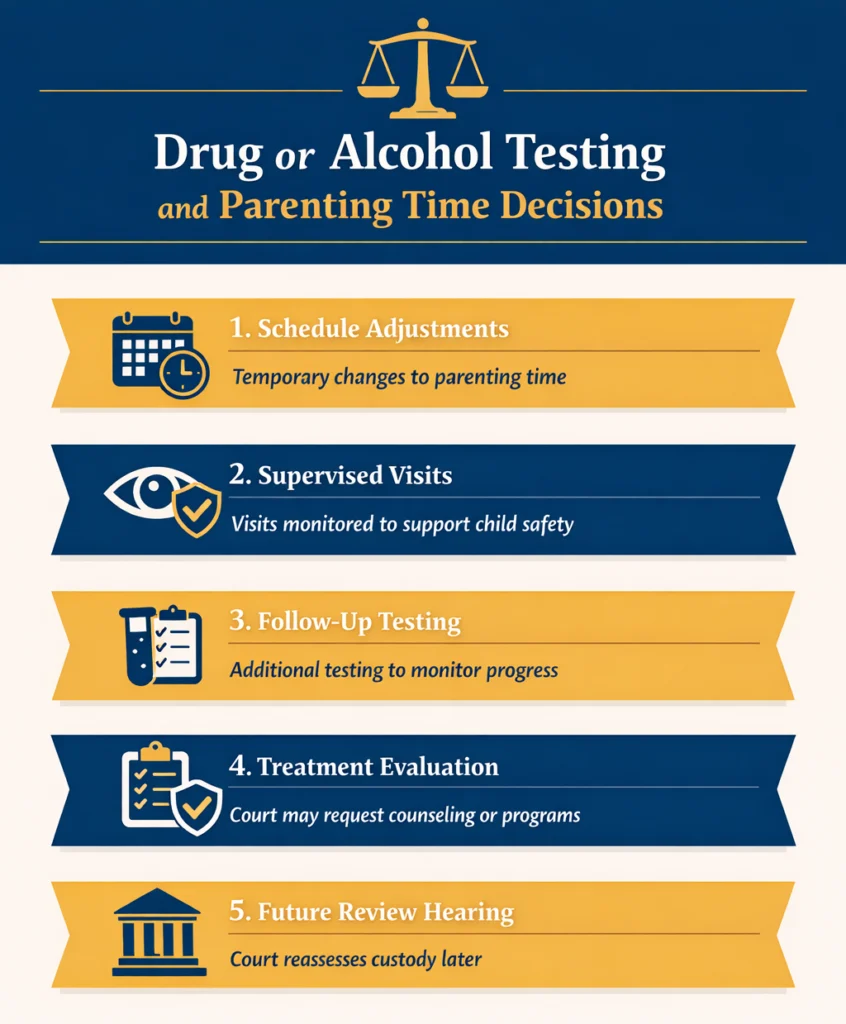
Possible court responses may include:
Role Stepparents May Play In Custody Context
A stepparent may become an important part of a child’s daily environment in a blended family. However, living in the same household does not automatically grant legal custody rights. Courts review how the stepparent participates in the child’s routine and whether the involvement contributes to the child’s stability and support system.
In discussions related to stepparent custody rights NC, judges may examine the extent of the stepparent’s caregiving role and the consistency of that involvement over time.
Source: North Carolina General Statutes §50-13.2(a)
In some cases, courts may also evaluate whether visits should occur under added structure while safety concerns are reviewed. Parents in these situations may want to review how supervised visitation is handled in North Carolina when courts determine that additional safeguards may be necessary for the child.
How Do Judges Evaluate Drug Testing in Child Custody Cases NC?
When drug testing in child custody cases NC becomes part of a custody dispute, judges usually examine the reliability of the evidence and the overall parenting situation. Test results alone rarely determine custody outcomes because courts consider a variety of factors before making decisions.
Judges may evaluate whether the test was court ordered, whether the testing process followed accepted procedures, and whether the results show a consistent pattern rather than an isolated incident. Courts also review testimony, caregiving history, and other evidence to determine whether substance use affects parenting responsibilities.
In some cases, alcohol testing in child custody cases may appear alongside other evidence, such as witness statements or medical records. The court evaluates whether the information demonstrates an ongoing concern that could influence the child’s safety or daily routine. Courts may also review additional behavioral evidence when assessing credibility, similar to how parent behavior can affect custody credibility during litigation when determining how different types of evidence relate to parenting responsibilities.
How Courts Balance Parental Rights With Third Parties
North Carolina courts give significant weight to the legal rights of biological or adoptive parents when reviewing custody matters. Even if a third party has played a meaningful role in a child’s life, courts carefully examine how that involvement fits within the broader parenting structure.
Judges review whether recognizing a third-party role supports the child’s welfare without interfering with parental authority. The goal is to understand how the child’s support system operates while maintaining the legal framework governing custody decisions.
Parental Rights Remain Central In Custody Decisions
North Carolina law generally recognizes that parents have a primary role in making decisions about their child’s care and upbringing. Because of this, courts do not automatically grant custody rights to a third party simply because that person has a close relationship with the child.
Instead, judges review how the relationship fits within the child’s household environment while preserving the legal authority of the parents.
Evaluating Caregiving Roles Within Household Structure
Courts also review how caregiving responsibilities are shared within the household. When a third party regularly participates in supervision, routines, or emotional support, judges may evaluate how that involvement contributes to the child’s daily environment.
In some cases, these caregiving roles may also affect how courts review parenting schedules and visitation arrangements, which are explained further in parenting time schedules. This review helps courts understand how responsibilities are distributed within the family structure.
Credibility Considerations In Custody Disputes
During custody disputes, courts may also consider how each party presents information about the child’s care and household routines. Statements about caregiving roles, supervision, and involvement may be reviewed alongside other evidence presented to the court.
These considerations help judges evaluate the overall parenting environment while reviewing custody arrangements.
What Happens After a Positive Drug or Alcohol Test in Custody Cases?
A positive test does not automatically eliminate parenting rights. Instead, courts typically consider how the result fits within the broader context of the case.
If the court believes substance use may affect caregiving ability, it may take steps to ensure the child remains safe while still preserving the parent-child relationship whenever possible. This approach reflects the court’s focus on balancing child safety with maintaining family connections.
Possible responses may include temporary parenting schedule adjustments, additional evaluations, or follow-up testing to monitor improvement. Judges may also review whether the parent is actively addressing concerns through counseling or treatment programs.
Over time, courts may reassess parenting arrangements if evidence shows improved stability and responsible caregiving.
When Might Drug or Alcohol Test Results Not Change Custody Orders?
In some situations, testing results may not significantly affect parenting time. Courts often consider the full context of the case before making custody adjustments.
For example, a single disputed test or a result that does not appear connected to caregiving responsibilities may carry less weight in a custody decision. Judges also review evidence of recovery, treatment participation, or other steps demonstrating responsible parenting.
When courts determine that substance concerns do not affect the child’s well-being or daily care, parenting arrangements may remain unchanged. The court’s primary focus remains on the child’s stability rather than isolated issues that do not impact parenting ability.
How Do Drug or Alcohol Test Results Appear During Custody Hearings?
Testing evidence may appear in custody hearings through several types of documentation or testimony. Courts review these materials carefully to determine whether the information is reliable and relevant.
Test results may be presented through laboratory reports, medical records, or documentation from monitoring programs. Expert witnesses or professionals involved in testing procedures may also provide testimony explaining the meaning and limitations of the results.
Judges evaluate whether the evidence meets legal standards and whether it contributes to understanding the parent’s caregiving capacity. When substance testing becomes part of the case, the court typically examines how the information fits within the overall custody evidence presented during the hearing.
What This Means for Parenting Time Decisions in North Carolina
Drug or alcohol testing sometimes becomes part of custody disputes when questions arise about a child’s safety or caregiving stability. Courts reviewing drug testing in child custody cases NC generally examine the reliability of testing methods, the context of the results, and the broader parenting environment before making decisions. Test results may influence parenting schedules, supervision requirements, or future custody reviews, but judges rarely rely on testing alone.
Because courts evaluate multiple factors when reviewing custody evidence, understanding how testing information is interpreted can help clarify how parenting time decisions are made. North Carolina Divorce Attorneys at Martine Law provide guidance for individuals who want to better understand how family courts evaluate custody concerns and parenting arrangements. If you would like more information, you may call +1(704)-255-6992 or visit the Contact Us page.
FAQs
Can a judge order drug testing in a North Carolina custody case?
Yes. A judge may order testing if concerns arise about whether substance use could affect a child’s safety or daily care. Courts may request testing when credible allegations or supporting evidence appear during a custody dispute. The goal is to gather information that helps the court evaluate parenting responsibilities and determine whether the child’s environment remains stable and safe.
Will a failed drug test automatically result in losing parenting time?
No. A failed test does not automatically eliminate parenting rights. Courts usually review the circumstances surrounding the result and consider other evidence before making decisions about custody or visitation. Judges often evaluate whether the issue reflects an ongoing pattern, whether the parent is addressing concerns, and whether the child’s wellbeing has been affected by the situation.
How reliable are drug tests used in family court?
Yes, drug tests used in custody cases are generally considered reliable when performed through certified laboratories and proper procedures. However, courts may still review how the test was conducted, whether it was court ordered, and whether the results are consistent with other evidence. Judges often evaluate both the test results and the broader circumstances before determining their significance.
Can drug testing in child custody cases NC affect future custody modifications?
Yes. Drug testing in child custody cases NC may influence future custody reviews if the results suggest patterns that could affect parenting responsibilities. Courts sometimes consider past testing evidence when evaluating whether parenting arrangements should be modified later. For example, custody disputes involving urgent safety concerns may also involve emergency filings such as those explained in repeated emergency custody filings in North Carolina.
