

Quick Summary
When property values differ during a divorce, courts review multiple appraisals to determine a reasonable market value. In a home appraisal North Carolina divorce situation, judges may evaluate appraisal methods, comparable sales, and supporting documentation. When spouses present competing property valuation NC reports, courts assess credibility, timing, and valuation standards before determining which estimate most accurately reflects the property’s fair market value.
Competing home appraisals can occur when spouses submit different estimates for the same property during divorce proceedings. In a home appraisal North Carolina divorce case, courts review these valuations to determine a fair market value for use in property division.
Judges evaluate appraisal methodology, supporting data, and professional standards when comparing reports. Property valuation often influences financial outcomes during equitable distribution.
North Carolina Divorce Attorneys at Martine Law explain how courts examine appraisal reports, documentation, and property market data when assessing competing property valuation NC submissions in divorce cases.
Why Property Valuation Matters During Divorce Proceedings
Property valuation determines the financial value assigned to marital real estate. Courts rely on accurate estimates when dividing assets during divorce. Arising the home appraisal in North Carolina divorce dispute, its value helps determine each spouse’s financial share of the property.
Current Fair Market Value Of The Home
Courts focus on the property’s present market value to understand what the home would likely sell for under normal conditions. This value helps determine how the property fits within the broader framework of equitable distribution.
Mortgage Balances And Property Liens Equity
Outstanding mortgage balances, home equity loans, or other liens affect the property’s true financial value. Courts consider these obligations when calculating the home’s net value.
Local Market Trends Affecting Comparable Homes
Real estate market conditions, including recent sales of similar homes in the same area, influence valuation estimates. Appraisers often rely on comparable sales to support valuation conclusions used during proceedings.
Home Improvements Or Renovations Affecting Value
Renovations, upgrades, or structural improvements may increase the property’s overall worth. Courts review these changes because they can impact the home’s valuation and its role in dividing marital assets.
How Appraisers Estimate Real Estate Market Value
Appraisers use recognized valuation methods to estimate the financial worth of residential property. These methods rely on market data, property inspections, and current economic conditions to determine a realistic estimate of value.
In a home appraisal North Carolina divorce situation, appraisal reports help establish the market value of real estate that may be included in marital property.
In situations involving competing property valuation NC reports, different appraisal methods or assumptions can lead to varying conclusions about a home’s market value.
Common Real Estate Appraisal Methods Used In Divorce Cases
Appraisal Method | Explanation In Property Valuation |
Sales Comparison Approach | This method estimates value by comparing the home to recently sold properties with similar size, location, and features, adjusting for differences such as upgrades or lot size. |
Cost Approach | The appraiser calculates the cost to rebuild the property at current construction prices, subtracts depreciation, and then adds the land value. |
Income Approach | This method estimates property value based on the rental income the property could generate, typically used for investment or rental properties. |
Among these methods, the sales comparison approach is most commonly used in residential divorce appraisals because it reflects real-time housing market conditions and recent comparable sales in the surrounding area.
Why Spouses Present Conflicting Property Values in Divorce
Different appraisals often arise because each spouse may hire an independent professional to assess the same property during divorce proceedings.
When separate experts analyze the home using different data, valuation models, or market assumptions, the results can vary significantly.
These differences frequently lead to competing property valuation NC reports that courts must review carefully before determining an appropriate property value.
Competing appraisals may differ due to several factors:
- Use of different comparable property sales – Appraisers may select different recently sold homes as comparables, which can significantly influence the estimated market value.
- Timing of the appraisal relative to market changes – Property values may shift due to local market fluctuations, meaning an appraisal conducted months apart could produce a different valuation.
- Adjustments for renovations or structural condition – One appraiser may assign higher value adjustments for improvements such as remodeled kitchens, roofing upgrades, or added square footage.
- Differences in neighborhood market trends – Appraisers may interpret neighborhood demand, development patterns, or price trends differently when estimating the property’s fair market value.
Courts reviewing these differences often examine the supporting data and methodology used in each report while evaluating broader issues in a contested divorce where property values are disputed.
Factors Courts Consider When Reviewing Appraisal Reports
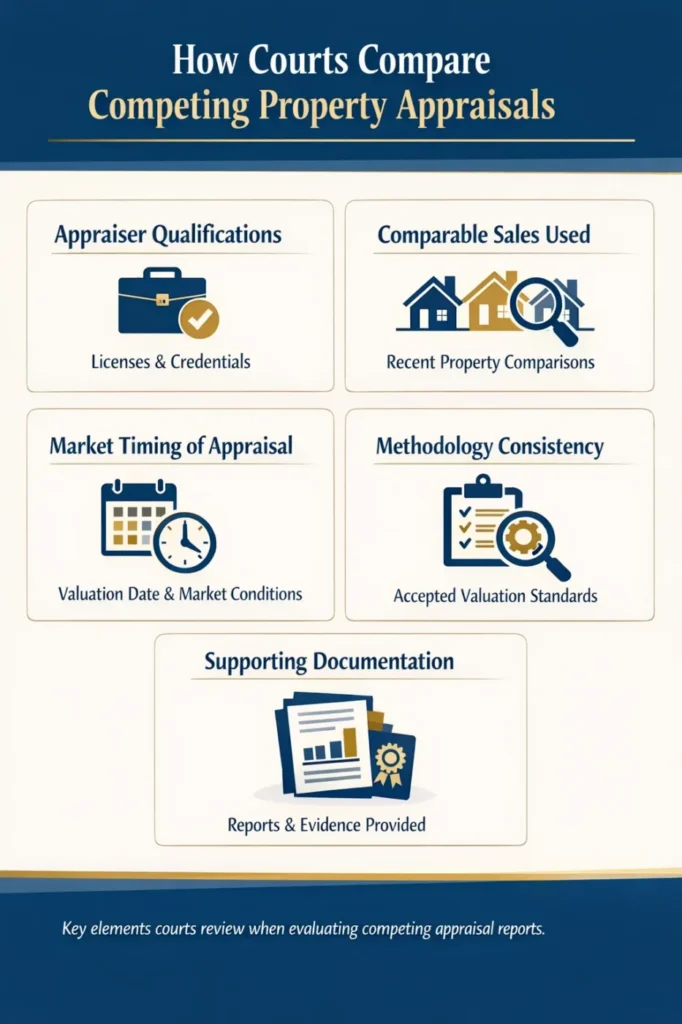
Courts review multiple factors when determining which appraisal is more reliable. Judges examine both the process used and the supporting evidence within each report.
Key review factors often include:
- Appraiser qualifications and professional certification
- Documentation supporting comparable sales
- Consistency with recognized appraisal standards
- The timing of the appraisal relative to separation or trial
Source: North Carolina Judicial Branch – Equitable Distribution
North Carolina courts explain that property value plays an important role when dividing marital assets during divorce. Information provided by the state court system outlines how judges evaluate property values as part of the equitable distribution process.
Courts analyze whether the appraisal methodology aligns with recognized valuation practices and whether the supporting evidence accurately reflects the property’s fair market value.
Role Of Comparable Sales In Appraisal Accuracy
Comparable sales play a central role in determining home value during divorce-related property evaluations. These sales represent similar properties recently sold within the same geographic area and housing market.
Courts reviewing appraisal reports may examine how closely comparable homes match the subject property and whether the selected sales reflect recent market activity.
Appraisers adjust comparable property prices to reflect measurable differences between homes.
Typical adjustment factors include:
- Square footage differences – Larger homes often sell for more, so appraisers adjust values based on size differences.
- Property condition or renovations – Upgrades such as remodeled kitchens or structural repairs may increase a home’s market value.
- Lot size and location features – Larger lots or desirable neighborhood locations may raise property value comparisons.
- Age of the property – Newer homes or those with updated systems may be valued differently than older properties.
Appraisal accuracy can influence broader financial considerations in divorce, including matters related to child support when overall financial resources are evaluated.
When Courts May Order an Independent Property Appraisal
In some situations, a judge may determine that existing appraisal reports are inconsistent or incomplete. When this occurs, the court may require an independent appraisal to obtain a clearer and more neutral estimate of the property’s value.
In a home appraisal North Carolina divorce dispute, an independent valuation may be considered when competing property valuation NC reports differ significantly or rely on conflicting data.
Courts may review the reliability of comparable sales, appraisal methods, and supporting documentation before deciding whether another valuation is necessary. Courts may order an additional appraisal when:
- The valuation gap between reports is substantial – A large difference in values may raise concerns about the accuracy of one or both appraisals.
- Comparable sales appear inconsistent – Judges may review whether the selected comparable properties truly reflect similar homes in the same market area.
- Appraisal methods differ significantly – Courts may examine whether recognized valuation approaches were used consistently in each report.
- Evidence supporting the valuation is limited – Insufficient documentation or data may lead the court to request another appraisal.
Independent appraisals can provide additional clarity before final property valuation decisions are made in divorce proceedings.
Know More: Source of Funds: When Spouses Dispute Property Ownership Histories Late in NC Cases
Property Division Context For Home Valuation Disputes
Home valuation directly affects the financial balance of a divorce settlement. Courts integrate property values with other assets when distributing marital property, making accurate valuation important for determining financial equity between spouses.
Property valuation may influence:
- Asset distribution between spouses
The value assigned to the home can affect how other marital assets are balanced between both parties. - Mortgage responsibility allocation
Courts may consider the home’s value when deciding which spouse remains responsible for mortgage obligations. - Buyout calculations when one spouse keeps the home
A reliable appraisal helps determine the amount required if one spouse buys out the other’s share. - Total marital estate value
Because homes are often a major asset, their valuation can significantly affect the overall estate value.
Valuation disputes often arise in broader property division discussions, where courts review financial evidence and may rely on expert valuations to understand the true value of marital assets better.
Understanding How Does Courts Evaluate Competing Appraisals
Competing home valuations are common when spouses submit different appraisal reports during divorce proceedings. Courts evaluate the methodology, supporting documentation, and professional standards applied by each appraiser when reviewing these reports.
In a home appraisal North Carolina divorce case, judges consider credibility, the accuracy of comparable sales, and whether the valuation approach follows recognized appraisal practices.
These factors help courts determine fair market value and assess how the property contributes to the overall marital estate during equitable distribution.
Speak With North Carolina Divorce Attorneys
If you have questions about how property valuation affects your divorce, the North Carolina Divorce Attorneys at Martine Law can provide guidance on how courts evaluate competing appraisals and financial evidence. You may call +1 (704) 255-6992 or visit the Contact Us page to discuss your situation.
FAQs
Can a judge choose one appraisal over another in a divorce case?
Yes. Judges may choose one appraisal if they determine it provides a more reliable estimate of the property’s value. Courts typically review the appraiser’s qualifications, the comparable sales used, and the methodology applied. If one report follows recognized appraisal standards more closely, the court may rely on that valuation when determining property division.
Do both spouses have the right to obtain their own property appraisal?
Yes. Each spouse may hire an independent appraiser to evaluate the marital home. The separate appraisals sometimes produce different results because professionals may use different comparable sales or valuation adjustments. When this occurs, the court reviews both reports and determines which estimate most accurately reflects the property’s fair market value.
Can financial control by one spouse affect property valuation issues?
Yes. When one spouse manages or restricts access to financial information, gathering documentation related to property value may become more complex. Courts may review financial records and disclosures when assessing assets during divorce proceedings. In situations involving financial imbalance, courts may also examine financial access issues discussed in interim support matters.
Does a home appraisal North Carolina divorce process affect property division decisions?
Yes. A home appraisal North Carolina divorce process helps courts determine the fair market value of real estate included in the marital estate. Accurate valuation allows judges to compare property values with other marital assets when applying equitable distribution rules. Reliable appraisal reports help ensure that the financial value assigned to the property reflects current market conditions.
