
Quick Summary
If you swap parenting time informally, the enforceability of parenting plan North Carolina orders may become unclear during disputes. Courts rely on the written custody order, not verbal agreements. Informal custody schedule changes NC can influence enforcement questions and how judges review parenting schedule compliance.
Swapping parenting time without court approval can affect the enforceability of parenting plan North Carolina custody orders when disagreements arise. If parents adjust exchanges informally but later disagree about what schedule applies, courts generally rely on the written custody order rather than verbal agreements.
Informal custody schedule changes NC often occur when parents try to accommodate school events, work schedules, or travel conflicts. However, these adjustments do not replace the official parenting plan approved by the court. When disputes develop later, judges may review the custody order, communication records, and parenting calendars to determine whether the order was followed. North Carolina Divorce Attorneys at Martine Law assist families by explaining how parenting schedules and custody orders are interpreted under North Carolina law.
What Are Informal Parenting Time Schedule Changes
Informal parenting time schedule changes occur when parents temporarily adjust custody exchanges without formally modifying the court order. These arrangements often involve trading weekends, switching pickup days, or adjusting holiday schedules.
Although these adjustments may seem cooperative, the written custody order still governs the legal parenting schedule. Even when parents agree to swap parenting time temporarily, the court-approved order remains the enforceable document if disagreements arise later.
In many families, these arrangements occur for convenience. However, the expectations described in court-approved parenting time schedules in North Carolina custody orders still define the enforceable parenting arrangement.
Informal custody schedule changes NC may appear practical in the short term, but courts do not treat verbal agreements or text conversations as formal modifications of the parenting plan.
General guidance about custody orders and parenting responsibilities is available through the North Carolina Judicial Branch overview of child custody laws.
Why Do Courts Enforce Written Parenting Plans
Courts enforce written parenting plans because they provide clear expectations for both parents and promote stability for children. A custody order defines parenting time, exchange procedures, and decision-making authority.
When disagreements arise about parenting exchanges, judges usually review the written custody order to determine whether either parent followed the approved schedule. Because the court issued the order, it remains the primary document used to evaluate compliance.
Written parenting plans also reduce confusion about responsibilities. Parents know when exchanges should occur and what schedule applies during holidays, school breaks, and regular parenting time.
How Can Informal Parenting Swaps Affect Enforcement
Informal parenting swaps can complicate enforcement requests if a parent later claims the custody order was violated. When the schedule changes outside the written order, the timeline of events may become difficult to verify.
Judges often review communication records and documentation to determine whether the schedule change was mutually agreed upon or whether one parent ignored the order.
Courts may examine several factors, including:
- Text messages confirming schedule adjustments
- Emails discussing parenting exchanges
- Parenting calendars showing exchange dates
- Records showing repeated changes to the schedule
When documentation is unclear, courts usually rely on the written custody order rather than the informal arrangement. Informal custody schedule changes NC may therefore weaken enforcement claims if parents disagree about what schedule was followed.
After reviewing these possible complications, some people find it helpful to speak with a divorce lawyer to understand how parenting schedule adjustments may affect enforcement questions.
Know More – The Status Quo Effect: How Temporary Parenting Schedules Determine Final Custody in NC
When Do Informal Schedule Changes Lead To Disputes
Informal parenting schedule adjustments can lead to disputes when parents later disagree about which schedule should apply. Temporary arrangements may appear cooperative initially, yet misunderstandings can develop if expectations are not documented clearly.
North Carolina courts generally evaluate disputes by reviewing the official custody order. If one parent believes the other repeatedly ignored the written schedule, the court may review whether enforcement or modification requests are appropriate.
Informal custody schedule changes NC sometimes occur repeatedly over time. When parents begin following a different routine than the one described in the custody order, disagreements may arise about what arrangement should control.
Parents who face repeated scheduling conflicts sometimes address these issues through child custody modification requests under North Carolina family law so the court-approved parenting plan reflects the child’s actual routine.
Modification requests are addressed under North Carolina General Statute §50-13.7 regarding custody order changes.
How Does Documentation Influence Parenting Plan Enforcement
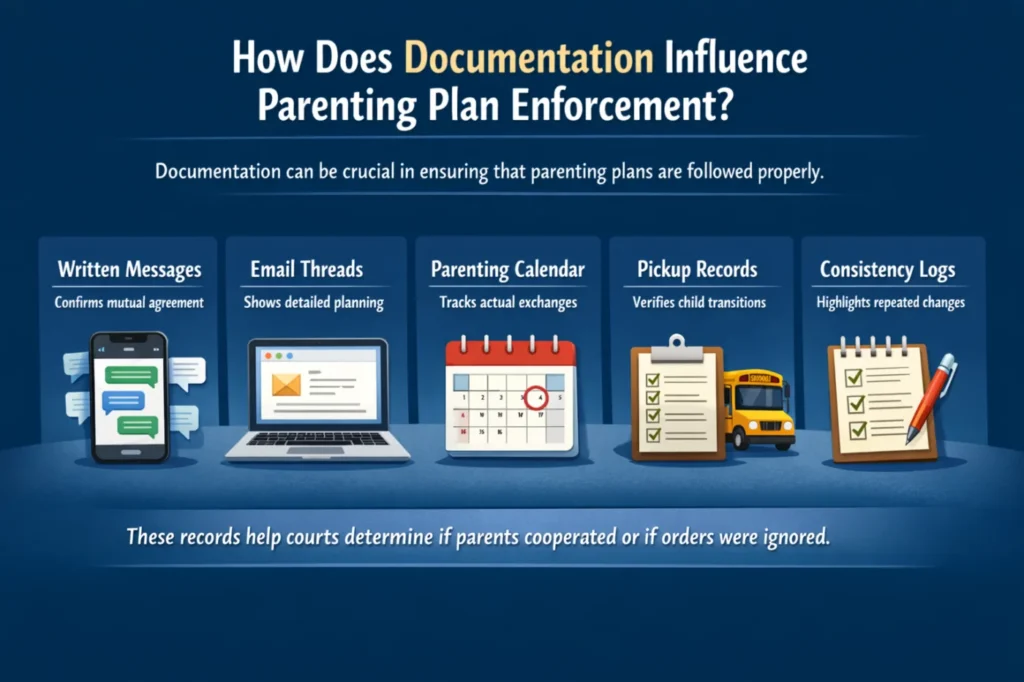
Documentation often plays an important role when courts review parenting schedule disputes. Judges frequently examine communication records to determine whether schedule changes were mutually agreed upon.
Clear documentation may help clarify what occurred when parenting exchanges were adjusted. Parents sometimes maintain written records showing when schedule changes occurred and how exchanges were handled.
Examples of documentation courts may review include:
Source: NC General Statute §50-13.2
These records may help courts determine whether parents cooperated in adjusting parenting time or whether the custody order was ignored.
How Does Enforceability Of Parenting Plan North Carolina Affect Parenting Stability
The enforceability of parenting plan North Carolina custody orders plays an important role in maintaining predictable parenting schedules. Courts rely on written orders because they provide a stable structure for parenting exchanges and clarify each parent’s responsibilities.
When parents regularly swap parenting time informally, confusion may arise if disagreements develop later. Even cooperative arrangements can create uncertainty about which schedule applies if enforcement issues occur.
For parents sharing custody responsibilities, understanding how courts interpret parenting plans can help prevent misunderstandings about enforcement and compliance. Clear communication and documentation can help clarify schedule adjustments if disputes arise.
How Parenting Schedule Adjustments Affect Custody Enforcement
Swapping parenting time informally can seem practical when schedules change because of work, school, or travel. However, North Carolina courts continue to rely on the written custody order when reviewing compliance, enforcement requests, and modification petitions.
Informal custody schedule changes NC sometimes occur in cooperative co-parenting arrangements. Even so, these adjustments do not replace the official parenting plan unless the court approves a modification. When disputes arise, judges often review the written order along with communication records and parenting calendars.
Understanding how parenting plans are enforced helps parents recognize when informal changes may create confusion about custody schedules. Maintaining documentation and clear communication may help clarify temporary arrangements if disagreements arise later.
Discussing Parenting Plan Enforcement With A Divorce Lawyer
Questions about parenting time swaps sometimes arise when schedules change frequently. If you would like general guidance about how custody orders are interpreted in North Carolina, North Carolina Divorce Attorneys at Martine Law may explain how parenting plans and enforcement procedures work. You may call +1(704)-255-6992 or visit the Contact Us page for additional information.
FAQs
Can parents change parenting schedules without court approval?
Yes. Parents may temporarily adjust parenting schedules by mutual agreement. However, informal custody schedule changes NC do not modify the custody order issued by the court. If disagreements occur later, judges usually review the written parenting plan rather than verbal arrangements. Because the order remains controlling, courts evaluate whether each parent followed the schedule approved in the custody order.
Do informal parenting agreements change a custody order?
No. Informal parenting agreements do not change a custody order. Courts enforce the written parenting schedule unless a judge formally modifies the order. Temporary arrangements between parents may help manage scheduling conflicts or unexpected obligations. However, these adjustments do not replace the official custody order, and judges usually evaluate compliance using the court-approved parenting plan.
Can missed parenting exchanges lead to enforcement actions?
Yes. Repeated missed parenting exchanges may lead to enforcement actions if a parent believes the custody order was violated. Courts review communication records, parenting calendars, and exchange documentation when evaluating these claims. Evidence showing missed exchanges may also become relevant during North Carolina contempt hearings involving proof of missed visitation when judges assess whether the order was followed.
Do text messages count as evidence in custody disputes?
Yes. Courts may review text messages and email communication when they document parenting exchanges or schedule adjustments. These records can help establish whether both parents agreed to a temporary change or whether the custody order was ignored. Judges often examine these communications alongside calendars and other records to clarify how parenting exchanges were handled.
Does the enforceability of parenting plan North Carolina depend on informal agreements?
No. The enforceability of parenting plan North Carolina custody orders depends on the written order approved by the court. Informal agreements between parents may help address temporary scheduling issues, but they do not replace the legal parenting plan. When disputes occur, judges typically evaluate compliance using the official custody order rather than informal arrangements.
