

Quick Summary
Repeated late pick ups custody in North Carolina disputes can raise questions about a parent’s reliability and consistency with court-ordered schedules. Courts often examine patterns of delay, communication between parents, and the effect on the child’s routine before deciding whether custody arrangements or parenting schedules should change.
When parenting schedules are set in a custody order, both parents are expected to follow the agreed exchange times. However, repeated delays in picking up or dropping off a child can sometimes lead to disputes between parents.
In many situations, patterns of lateness may raise concerns about reliability and whether the existing schedule continues to support the child’s routine and stability.
In late pick ups custody in North Carolina disputes, courts may review whether the delays are occasional or part of an ongoing pattern. Judges typically look at how the timing issues affect school schedules, supervision, and communication between parents.
North Carolina Divorce Attorney at Martine Law often helps parents understand how courts evaluate these concerns and what factors may influence a judge’s decision in custody matters.
Why Courts Review Repeated Parenting Exchange Delays
Courts review repeated delays because parenting schedules are designed to support consistency in a child’s daily routine. When exchange times are not followed, the disruption may affect school attendance, childcare arrangements, and the child’s sense of stability.
Parenting schedules are commonly addressed within broader child custody arrangements that outline each parent’s responsibilities and exchange times.
In late pickup custody dispute NC situations, judges may consider whether the delays show a pattern that interferes with the child’s schedule or the other parent’s responsibilities. Courts generally focus on practical effects rather than isolated incidents.
Some factors judges may evaluate include:
- Whether delays happen frequently or occasionally
- The length of time a parent arrives late
- Whether communication occurs before the delay
- The effect on school, childcare, or supervision
- Whether the delays create conflict between parents
These considerations help the court determine whether parenting schedules are functioning as intended.
Common Reasons Parenting Exchanges Become Inconsistent
In many custody cases, delays happen for practical reasons rather than intentional violations. In late pick ups custody in North Carolina situations, work schedules, transportation problems, and communication issues often play a role.
However, when the pattern becomes frequent, courts may evaluate whether the parenting schedule still works effectively for both parents and the child.
Typical reasons exchange delays occur include:
- Traffic or commuting conflicts
- Work schedules that change frequently
- Miscommunication about exchange locations
- Confusion over school pickup arrangements
- Lack of coordination between parents
If delays become consistent, parents sometimes seek clarification through custody modifications or schedule adjustments.
Know More – How Temporary Custody Schedules Cement Long-Term Outcomes in NC Courts
How Judges Evaluate Patterns Of Parenting Reliability
When a pattern of delays develops, courts focus on reliability rather than isolated mistakes. Judges typically review documentation and communication records to determine whether the behavior affects the child’s well-being.
Courts often evaluate the following indicators when considering parenting reliability:
- Consistency in following exchange times
- Efforts were made to notify the other parent about delays
- Transportation arrangements and supervision plans
- Whether the child misses school or activities
- Whether lateness causes ongoing disputes between parents
If repeated delays interfere with a child’s routine or stability, courts may consider adjustments through child custody modifications to ensure the parenting schedule better supports the child’s needs.
After reviewing these factors, some people find it helpful to speak with a family law attorney about how these rules may apply to their situation.
Possible Legal Outcomes When Parenting Delays Continue
When repeated delays occur, courts generally focus on solutions that support the child’s stability rather than assigning blame. Judges may consider several possible outcomes depending on the circumstances.
Situation Observed | Possible Court Response |
Occasional or minor delays | The court may leave the schedule unchanged |
Communication issues between parents | Clarified exchange instructions |
Repeated late pickups are causing disruption | Parenting schedule adjustments |
Ongoing conflicts over exchanges | Court-ordered modifications |
These outcomes depend on whether the delays significantly affect the child’s routine or the ability of parents to follow court orders. In some situations, repeated violations may lead to court enforcement actions such as show cause proceedings.
Factors Courts Consider In Parenting Reliability
Courts reviewing parenting schedule disputes often look at patterns that show whether exchanges are reliable and consistent. In late pick ups custody in North Carolina situations, judges may examine whether repeated delays indicate ongoing scheduling problems or communication breakdowns between parents.
These factors help courts understand how a parent’s actions during exchanges affect the child’s routine and the functioning of the parenting schedule.
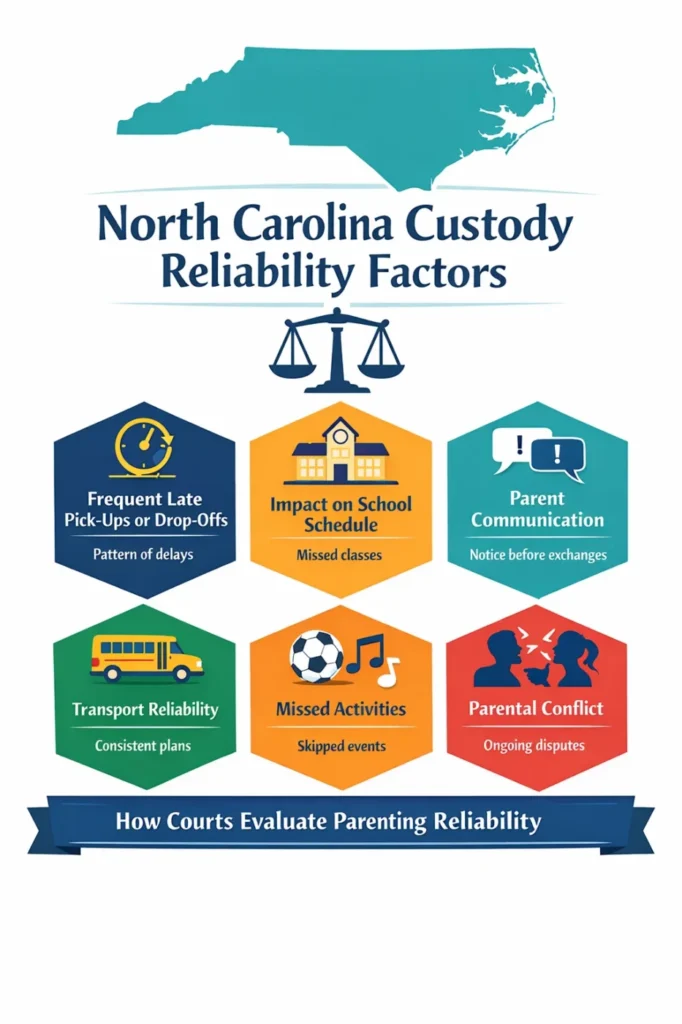
Common reliability factors courts may evaluate include the frequency of late pickups or drop-offs, whether delays affect the child’s school schedule, and whether parents communicate in advance when problems occur.
Source: North Carolina General Statute § 50-13.2 – Custody Factors
Judges may also consider transportation reliability, missed activities, supervision concerns, and whether repeated delays create ongoing conflict between parents.
When these factors are reviewed together, courts can determine whether the current parenting schedule supports stability for the child or whether adjustments may be necessary.
Steps Parents Often Take To Address Ongoing Delays
When parenting exchange delays become ongoing, many parents attempt to resolve the issue before seeking court involvement. Clear communication and documentation often help clarify misunderstandings and reduce conflict between parents.
Some common steps parents take include:
- Keeping a record of exchange times
Parents may document pickup and drop-off times to identify patterns and create a clear timeline of events. - Communicating delays in advance when possible
Notifying the other parent before an expected delay can help reduce misunderstandings and prevent unnecessary disputes. - Adjusting pickup locations or schedules
Parents may agree to modify exchange locations or times when work schedules, transportation, or school routines create ongoing challenges. - Reviewing the custody order for clarity
Checking the existing custody order can help parents confirm the specific terms governing parenting exchanges and responsibilities. - Requesting a court modification if issues continue
When delays persist and begin affecting the child’s routine, parents sometimes consider requesting changes through the court.
If exchange problems continue despite these efforts, reviewing Parenting Time & Schedules may help clarify how parenting exchanges are expected to work under North Carolina custody arrangements.
Understanding Parenting Reliability In North Carolina Custody Cases
Parenting schedules exist to support consistency and stability in a child’s life. When repeated delays occur during exchanges, courts may examine whether those patterns affect the child’s routine, communication between parents, or compliance with custody orders. Judges typically focus on reliability, documentation, and the practical impact of the delays rather than isolated mistakes.
In late pick ups custody in North Carolina situations, courts often review whether delays form a consistent pattern and whether adjustments to the parenting schedule would better support the child’s needs. Each case depends on its facts, including communication between parents and the frequency of missed exchange times.
Speak With a North Carolina Custody Attorney
North Carolina Divorce Attorneys at Martine Law assist parents in reviewing repeated delays or scheduling concerns. For guidance about how these factors may apply to your situation, you may call +1 (704) 255-6992 or visit the Contact Us page.
FAQs
Can repeated late pick-ups affect custody decisions in North Carolina?
Yes. Repeated delays can influence custody decisions if they disrupt a child’s routine or demonstrate ongoing difficulty following the parenting schedule. In late pick ups custody in North Carolina cases, courts typically examine patterns of lateness, communication between parents, and how the situation affects school, childcare, or daily stability. If delays become consistent and disruptive, a judge may review whether adjustments to the custody schedule are necessary.
Do occasional late exchanges usually lead to court action?
No. Occasional delays usually do not lead to court intervention if they are rare and do not interfere with the child’s routine. Courts generally focus on ongoing patterns rather than isolated incidents. However, when delays become frequent or create repeated scheduling conflicts, parents may seek clarification or adjustments through the court.
Can a parent document exchange problems for court review?
Yes. Parents often keep records of exchange times, messages, and missed pickups when disputes arise. Documentation can help show whether delays occur occasionally or form a recurring pattern. In most cases, courts may review this information if a parent requests enforcement or modification of a custody order related to parenting schedule violations.
Will courts automatically change custody because of late pickups?
No. Courts do not automatically change custody because of late pickups. Judges evaluate whether delays significantly affect the child’s routine or the ability of parents to follow the custody order. Legal procedures, such as how superseding emergency custody orders may override prior permanent custody judgments in North Carolina and affect ongoing parenting schedule enforcement disputes, may become relevant when courts review how existing orders interact with new concerns.
