

Quick Summary
Your marital lifestyle in North Carolina divorce evaluation can influence how courts review financial responsibilities, property division, and potential spousal support. Judges often look at spending patterns, standard of living, and financial habits during the marriage to determine fairness. When reviewing financial records, courts may assess whether the lifestyle maintained during the marriage affects support considerations and the overall division of marital assets.
Marital lifestyle and spending patterns can influence how courts review financial fairness during divorce. In a marital lifestyle North Carolina divorce evaluation, judges may consider the standard of living maintained during the marriage when reviewing spousal support and property division issues.
Financial records, household spending patterns, and long-term financial decisions may illustrate how the couple managed money while married. These factors can provide context when courts analyze support needs and equitable distribution outcomes.
North Carolina Divorce Attorneys at Martine Law explain that understanding lifestyle patterns helps clarify how courts evaluate financial circumstances during divorce proceedings.
Marital Lifestyle Considerations In North Carolina Divorce Cases
Marital lifestyle refers to the financial standard of living established during the marriage. Courts may review this lifestyle when examining financial responsibilities after separation.
In North Carolina divorce cases, judges sometimes evaluate spending habits and household financial patterns to determine whether the marital standard of living influences spousal support or property distribution considerations.
Housing And Living Arrangements During Marriage
Courts may review the type of housing maintained during the marriage, including home ownership, rental arrangements, or property expenses. Housing conditions can reflect the overall standard of living experienced by the household.
Regular Household Expense Patterns During Marriage
Regular household expenses may include utilities, groceries, insurance, and routine family costs. These recurring expenses help demonstrate the financial structure maintained during the marriage.
Travel And Leisure Spending Habits During Marriage
Travel, vacations, and recreational activities may illustrate how discretionary income was used. Courts may examine these expenses to understand lifestyle expectations developed during the relationship.
Education And Childcare Financial Responsibilities During Marriage
Education costs and childcare expenses may show long-term financial priorities within the household. These expenditures can help courts assess how financial resources supported family responsibilities.
Major Purchases Made During The Marriage
Large purchases such as vehicles, home improvements, or luxury items may reflect significant financial decisions made during the marriage. Courts sometimes review these transactions when investigating possible hidden assets during equitable distribution proceedings.
Spending Habits And Financial Patterns During Marriage
Spending patterns can illustrate how financial decisions were made throughout the marriage. These patterns help courts interpret the financial roles of each spouse.
Financial records such as bank statements, credit accounts, and household budgets may show how money was used during the relationship.
Typical spending categories reviewed may include:
Spending Category | Examples Courts May Review |
Housing Costs | Mortgage, rent, utilities |
Lifestyle Expenses | Travel, entertainment |
Family Expenses | Childcare, school costs |
Personal Purchases | Vehicles, luxury items |
Reviewing these financial patterns provides context for evaluating financial expectations established during the marriage.
Role Of Standard Of Living In Support Decisions
The marital standard of living may influence how courts evaluate financial needs following separation. Courts sometimes review lifestyle conditions to determine whether spousal support discussions are appropriate.
Under North Carolina law, judges may consider how the couple lived during the marriage when evaluating support-related financial circumstances, which can become relevant in discussions involving spousal maintenance.
Household Income Levels During The Marriage
Courts may review the level and consistency of household income maintained during the marriage. Income history can help illustrate the financial resources available to support the marital lifestyle.
Financial Dependency Between The Spouses
Financial dependency may arise when one spouse relied on the other for primary income or financial stability. Courts may examine this relationship to understand how financial responsibilities were structured during the marriage.
Long-Term Financial Contributions Within Marriage
Courts may consider each spouse’s long-term contributions to the household, including income generation or financial management. These contributions can help explain how the marital standard of living was supported.
Changes In Financial Conditions After Separation
Changes in income, expenses, or employment after separation may affect financial circumstances. Courts may review these changes when evaluating whether financial support considerations should be reviewed further.
Financial Records Courts Review In Divorce Proceedings
Courts rely on financial documentation to understand marital spending habits. These records provide objective evidence of financial patterns established during the marriage.
Courts typically review financial documents that show income, expenses, and asset ownership during the marriage, particularly when evaluating issues related to property division.
These records help verify spending patterns and provide a clearer picture of the financial lifestyle maintained by the household.
Bank Statements Showing Income And Spending Activity
Bank statements may reveal patterns of deposits, withdrawals, and routine spending. Courts may review these records to understand how money flowed through household accounts during the marriage.
Credit Card Statements Reflecting Consumer Spending
Credit card records can show discretionary spending and regular household purchases. These statements may help illustrate lifestyle choices and financial habits maintained by the couple.
Tax Returns Indicating Household Income History
Tax returns often provide a clear overview of annual income and financial reporting. Courts may review these documents to verify earnings and assess the financial stability of the household during the marriage.
Investment Account Records And Asset Growth
Investment account statements may demonstrate how financial assets were managed or accumulated over time. These records can help courts evaluate savings strategies and financial planning within the marriage.
Household Budgets Or Expense Tracking Records
Household budgets or expense reports may outline how income was allocated toward daily needs and long-term planning. These documents can provide additional insight into financial priorities and spending decisions throughout the marriage.
Relationship Between Lifestyle And Property Distribution Outcomes
Lifestyle patterns can sometimes intersect with property distribution decisions. Courts may examine how assets were used, maintained, or managed during the marriage when evaluating equitable distribution. Spending habits and financial decisions during the marriage may help provide context when courts review property classification and ownership history.
In North Carolina, property division follows the equitable distribution framework established under state law. This framework allows courts to review different types of property and determine whether they should be included in the distribution process.
Property Categories Considered In Distribution Decisions
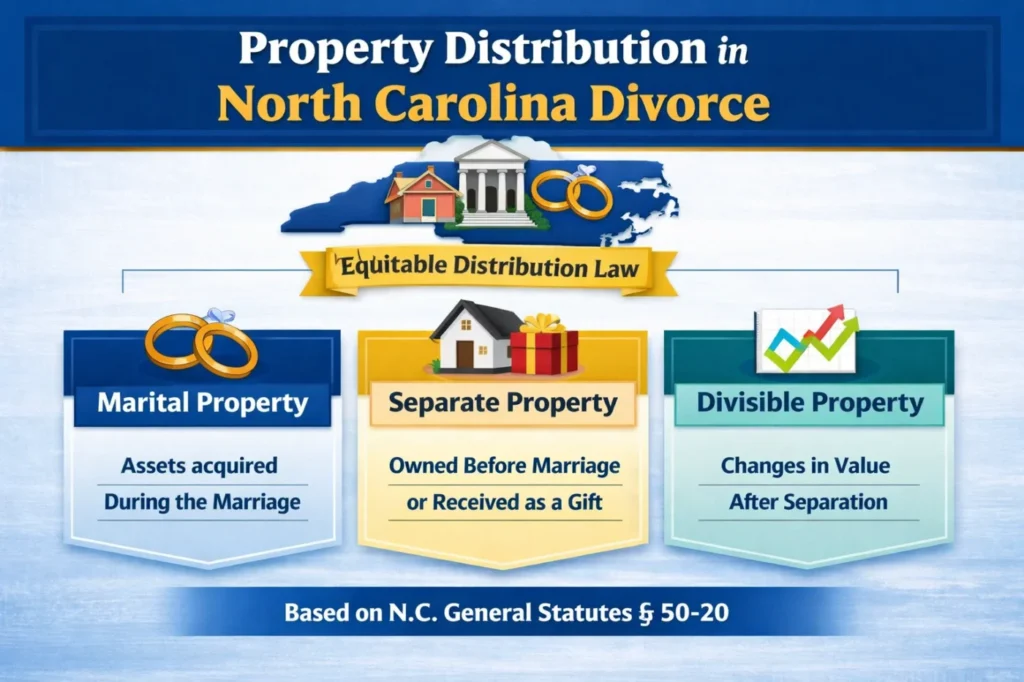
Source: North Carolina Judicial Branch – Equitable Distribution Guidance
Courts reviewing property distribution typically classify assets into three categories that help determine how property is evaluated during divorce proceedings:
- Marital Property refers to assets acquired by either spouse during the marriage.
- Separate Property generally includes property owned before the marriage or received individually through inheritance or gifts.
- Divisible Property refers to changes in value or assets that arise between separation and final distribution.
Understanding these classifications helps explain how courts analyze financial records and asset ownership when applying equitable distribution rules.
When Lifestyle Evidence Appears In Support Discussions
Lifestyle evidence may appear when courts examine whether spousal support discussions are relevant. Spending history can help demonstrate the financial expectations established during the marriage.
These financial patterns may help explain:
- Household dependency levels
- Financial roles within the marriage
- Spending obligations were maintained during the relationship
When courts review spousal support lifestyle NC considerations, the marital lifestyle may help illustrate the economic conditions experienced during the marriage.
Know More – Post Separation Support: Why the PSS Hearing Sets the Tone for Alimony
Financial Context And Long-Term Household Planning
Lifestyle patterns often reflect broader financial planning within the household. Courts may examine whether spending habits align with the financial resources available during the marriage.
Courts reviewing marital finances may look at long-term financial decisions made during the marriage. These decisions can show whether the household maintained consistent financial planning or relied on short-term spending patterns.
Household budgeting practices and financial planning strategies are commonly used to evaluate long-term financial stability, similar to approaches described in federal budgeting guide resources on managing household finances.
Relevant planning factors may include:
- Long-term savings strategies
- Education or retirement planning
- Household debt management
- Income stability during the marriage
These elements can help courts understand how financial decisions were made and whether they shaped the marital lifestyle considered in the divorce review process.
Financial Context Of Marital Lifestyle In Divorce Evaluations
Marital lifestyle North Carolina divorce reviews focus on understanding the financial environment that existed during the marriage. Courts may consider spending patterns, household financial decisions, and the standard of living established by the couple when examining spousal support discussions and property division outcomes.
Lifestyle evidence does not determine the outcome by itself, but it can provide context when courts review financial documentation and long-term financial habits. Spending records, asset classifications, and income history may help illustrate how the marriage functioned economically before separation.
Speak With A North Carolina Divorce Attorney
If you want to better understand how marital lifestyle North Carolina divorce evaluations may apply to your situation, you may speak with the North Carolina Divorce Attorneys at Martine Law at +1 (704) 255-6992 or visit the Contact Us page for additional information.
FAQs
Does marital lifestyle affect spousal support in North Carolina?
Yes. Courts may review the marital lifestyle in North Carolina divorce history when evaluating financial circumstances related to spousal support. The standard of living maintained during the marriage can provide context about expenses, financial dependency, and long-term household expectations. Judges typically review this information together with income levels, available resources, and statutory considerations before determining whether support discussions apply.
Can spending habits influence property division outcomes?
Yes. Spending habits can sometimes provide a financial context during divorce proceedings. Courts may examine how marital assets were used, maintained, or spent during the marriage. Financial documentation, such as bank statements or credit records, may illustrate household financial behavior and help courts understand the economic circumstances surrounding property division discussions.
What financial documents show marital lifestyle during divorce?
Financial documents can demonstrate how a couple managed money during the marriage. Courts may review bank statements, tax returns, credit card records, loan documents, and household expense reports when evaluating financial patterns. These materials help illustrate spending habits, recurring obligations, and the financial conditions maintained during the relationship, which may become relevant when reviewing financial disclosures during property division proceedings.
Does the court consider luxury spending during marriage?
Yes. Courts may review luxury spending if it reflects the financial standard maintained during the marriage. Travel costs, high-value purchases, entertainment expenses, or luxury services may be examined alongside regular household expenses. These records help courts understand how discretionary income was used and whether those spending patterns reflect the lifestyle maintained during the relationship.
