

Quick Summary
When parents disagree about a child’s faith or cultural traditions, courts review how those choices affect the child’s stability and welfare. In religious upbringing custody North Carolina disputes, judges generally focus on the child’s best interests rather than choosing one belief system over another. Understanding how courts approach cultural dispute in custody NC situations helps you see how parenting decisions, family routines, and upbringing practices may be evaluated.
Parents sometimes hold different religious or cultural views about how a child should be raised. In custody disputes, courts evaluate whether those differences affect the child’s routine, stability, and overall well-being.
In religious upbringing custody North Carolina cases, judges generally focus on the child’s best interests rather than choosing between competing beliefs. These disputes may arise when parents disagree about religious practices, cultural traditions, or parenting values after separation.
North Carolina Divorce Attorneys at Martine Law often explain that courts review parenting conduct, communication between parents, and the child’s environment when evaluating these situations.
How Courts Evaluate Parenting Values In Custody Disputes
In custody disputes involving religion or culture, judges evaluate how parenting values influence a child’s daily life and development. Courts do not decide which belief system is correct. Instead, the focus is on how each parent’s practices affect the child’s well-being.
North Carolina courts apply the best interests of the child standard when making custody decisions. This means the court reviews evidence about the child’s environment, routines, and parental involvement before deciding what arrangement supports stability and healthy development under the custody statute.
Role Of Religious Upbringing In Parenting Decisions
Religion can influence decisions about education, holidays, dietary practices, and community involvement. In religious upbringing custody North Carolina matters, courts examine how these choices affect the child rather than evaluating the beliefs themselves.
Judges generally focus on the child’s routine, stability, and overall development when reviewing how religious practices fit into parenting decisions. Disagreements about religious practices sometimes arise when parents share decision-making authority under shared custody. arrangements.
Courts may review factors such as:
- Whether the child has been consistently raised in a specific faith tradition
- How religious activities fit into the child’s schedule and school obligations
- Whether participation supports emotional or social stability
- Whether disagreements between parents disrupt the child’s routine
The court’s role is not to choose one religion over another. Instead, the evaluation centers on whether parenting practices provide a stable and supportive environment for the child.
Cultural Traditions And Parenting Practices In Custody
Cultural background can shape parenting approaches, family expectations, and traditions. When a cultural dispute in custody NC arises, courts examine how those traditions relate to the child’s life and family relationships.
Examples of cultural factors sometimes raised in custody cases include:
- Language used at home
- Participation in cultural holidays or traditions
- Extended family involvement
- Expectations about education or community activities
Courts generally treat cultural identity as one part of the broader parenting environment rather than as a deciding factor on its own. Cultural disagreements may also intersect with parental decision-making authority under legal custody arrangements.
Best Interest Standard Used In North Carolina Custody
The best interest standard is the primary legal framework used by North Carolina courts when resolving custody disputes. Judges review multiple aspects of a child’s life to determine which parenting arrangement supports stability, safety, and healthy development.
Religious upbringing or cultural traditions may be considered when they influence the child’s daily environment or family routines.
Courts evaluate several practical factors when applying this standard, including the child’s relationships, home environment, and each parent’s ability to provide consistent care. The table below highlights common considerations that may appear in custody evaluations:
Court Consideration | What Judges Review |
Child’s stability | Consistency in routines, school attendance, and daily environment |
Parent-child relationship | Emotional bond, involvement in education and activities |
Parenting cooperation | Ability of parents to communicate and make joint decisions |
Religious or cultural routines | Whether traditions support or disrupt the child’s schedule |
Home environment | Safety, supervision, and stability in each household |
These considerations help courts assess how different parenting approaches may affect a child’s stability and overall well-being.
When parents cannot agree on religious participation or cultural events, the court may review how these issues affect the child’s routine and overall parenting structure. In some cases, custody orders or parenting time schedules clarify how parents coordinate holidays, religious ceremonies, or community traditions so conflicts are reduced.
When Religious Differences Affect Parenting Agreements
Disagreements about religious upbringing can arise when parents share decision-making authority. In joint legal custody arrangements, both parents typically participate in major decisions about a child’s upbringing, including religion and related activities.
When parents hold different beliefs or practices, conflicts may develop regarding how those traditions are introduced or maintained.
If parents cannot agree, courts may evaluate how the disagreement affects the child’s routine, stability, and emotional well-being. In some cases, custody orders include guidance addressing:
- Religious education
- Participation in services or ceremonies
- Scheduling conflicts with school or extracurricular activities
These provisions aim to reduce ongoing conflict and provide clearer expectations for both parents.
Evidence Judges Review In Cultural Custody Disputes
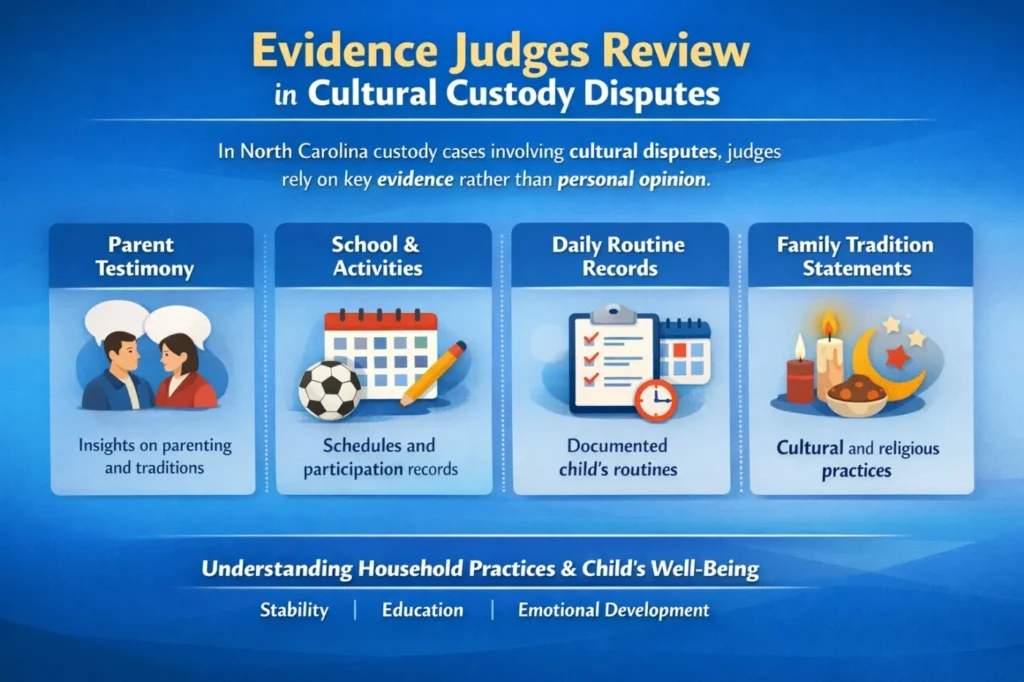
When evaluating a cultural dispute in custody NC proceedings, judges rely on documented evidence rather than personal opinion. Courts review information that explains how parenting practices, traditions, and daily routines influence the child’s environment.
This evidence helps the court understand how each household operates and whether cultural or religious practices support the child’s stability, education, and emotional development.
Source: North Carolina Judicial Branch – Child Custody
Examples of evidence that may appear in custody cases include:
- Testimony from parents or caregivers explaining parenting practices and cultural traditions
- School or activity schedules showing the child’s daily routine and participation
- Documentation describing the child’s routines at home
- Statements about family traditions or religious practices within each household
This information helps judges evaluate how parenting decisions affect the child’s daily life and whether each parent’s household provides a stable environment.
Parenting Communication And Shared Decision Making Expectations
Communication between parents often becomes an important issue when disagreements involve religion or cultural traditions. Courts expect parents with shared custody to attempt cooperation when making major decisions for their children.
In many cases, parenting plans outline how parents will handle decision-making regarding education, religion, and health care. These plans often clarify how parents communicate and resolve disagreements related to a child’s upbringing.
Know More: Best Interest Standards: How North Carolina Judges Decide School Enrollment Disputes
Practical Context Of Religion In North Carolina Custody
Religion can play a role in parenting decisions, but it rarely determines custody on its own. Courts generally focus on whether religious practices support or disrupt the child’s routine and well-being.
If both parents practice different religions, judges may consider how the child has historically participated in religious activities and whether changes would create confusion or instability. In religious upbringing custody North Carolina cases, the court’s role is to evaluate how parenting choices affect the child’s environment rather than judging the beliefs themselves.
Understanding Cultural And Religious Parenting Conflicts
Cultural and religious differences sometimes become part of custody disputes when parents have different expectations about upbringing. Courts reviewing religious upbringing custody in North Carolina typically focus on how parenting values affect the child’s daily life, stability, and relationships. Judges examine evidence about routines, communication between parents, and the child’s environment before making decisions.
These cases often involve complex family dynamics, and the outcome depends on how parenting practices influence the child’s well-being rather than which belief system is preferred.
Getting Guidance On North Carolina Custody Issues
If you want to understand how these custody principles may apply to your situation, you may speak with North Carolina Divorce Attorneys at Martine Law by calling +1 (704) 255-6992 or visiting the Contact Us page on
FAQs
Can a court choose one religion for a child in custody cases?
Courts usually do not choose one religion over another. Judges focus on how religious practices affect the child’s stability, education, and daily life. If parents disagree about faith-based decisions, the court evaluates whether the conflict disrupts routines or emotional well-being. The goal is to determine how parenting choices support the child’s best interests rather than selecting a specific belief system.
What happens if parents disagree about religious education?
When parents disagree about religious education, the outcome often depends on the custody structure. In joint legal custody arrangements, both parents typically share decision-making authority regarding religion, education, and health care. If the disagreement significantly affects the child’s routine or schooling, a court may review the issue to determine which arrangement supports consistency and stability.
Do cultural traditions influence child custody decisions?
Cultural traditions can appear in custody discussions when they shape a child’s daily environment. Courts may consider traditions involving language, family gatherings, or community participation. However, cultural identity alone does not decide custody. Judges review how those traditions interact with parenting responsibilities, school schedules, and the child’s overall development before making decisions.
Can a custody order include religious guidelines?
Yes. In some cases, custody orders include provisions that address religious participation or scheduling conflicts. These clauses may outline expectations about attending services, participating in ceremonies, or coordinating religious activities with school or parenting time. Such guidelines are often used to reduce conflict between parents and clarify how shared decisions about religion should be handled.
How does the court view religious upbringing custody in North Carolina disputes?
Courts reviewing religious upbringing custody North Carolina disputes focus on the child’s well-being rather than the parents’ beliefs. Judges evaluate evidence showing how religious practices affect the child’s schedule, relationships, and emotional stability. The court may also consider how parents communicate about these decisions and whether the disagreement creates ongoing conflict affecting the child.
Can a child’s existing routine affect custody decisions?
Yes. Courts often review a child’s existing routine when evaluating custody arrangements. If a temporary parenting schedule has been followed consistently, judges may consider how that schedule supports the child’s stability and daily life. In some cases, existing routines influence how final custody decisions are structured. This concept is sometimes discussed as the status quo effect in custody cases.
