

Quick Summary
In custody disputes, school attendance in custody NC cases may become relevant evidence when courts evaluate a child’s stability and daily routine. Subpoenaed school records can reveal patterns of absences, tardiness, or academic concerns, which may influence residential placement decisions during custody evaluations.
When parents disagree about where a child should primarily live, courts review many forms of evidence to understand what arrangement best supports the child’s well-being. In some cases, school attendance in custody NC matters may become relevant when one parent subpoenas school records to show patterns affecting the child’s daily routine.
Attendance records can reveal issues such as repeated tardiness, chronic absences, or disruptions to a child’s academic stability. Judges often examine whether those patterns relate to parenting schedules, transportation issues, or household structure.
Understanding how courts evaluate these records helps parents see why school documentation sometimes becomes part of custody proceedings.
North Carolina Divorce Attorney at Martine Law often assists individuals seeking clarity on how evidence, such as school records, may be interpreted in custody disputes.
Why School Attendance Evidence Matters In Custody Cases
In North Carolina custody proceedings, courts focus on the child’s best interests when deciding residential placement. School attendance records may become relevant if they help demonstrate stability or disruption in the child’s daily life.
When one parent believes attendance problems reflect a broader parenting concern, they may use subpoena school records custody NC procedures to obtain official documentation from the child’s school. These records can provide objective information about:
- Absences and tardiness patterns
- Communication between parents and school staff
- Academic performance linked to attendance
- Behavioral or disciplinary reports
Judges review this information alongside other factors, including parenting schedules and each parent’s ability to support the child’s education. According to the custody decisions, focus on arrangements that best support a child’s welfare.
Parents involved in custody disputes often seek guidance from legal services regarding child support and custody matters.
How Courts Evaluate School Records In Placement Decisions
Courts examine whether school records reveal consistent attendance or ongoing problems that could affect a child’s academic progress. A pattern of missed school days may raise questions about transportation, supervision, or scheduling conflicts when determining physical custody arrangements.
Judges often consider several related issues:
- Whether absences occur primarily during one parent’s custodial time
- If tardiness reflects logistical challenges between homes
- Whether the parent communicates with teachers or administrators
- How attendance affects academic performance
A single absence or illness rarely determines a custody outcome. However, repeated attendance problems may become part of a broader evaluation of parenting routines and the child’s educational stability.
When Subpoenas Are Used For School Documentation
School attendance records are not automatically included in custody cases. Instead, one parent or their attorney may request them through a subpoena if they believe the records contain relevant evidence.
In some school attendance in custody NC disputes, these documents help the court understand how a child’s daily education routine may be affected. A subpoena allows the court to require a school to provide official documents, such as:
- Attendance logs
- Teacher communications
- Academic reports connected to absences
- Administrative notes about attendance concerns
These records help establish a clear timeline of events rather than relying only on testimony. In some situations, they may support or challenge claims about whether a parenting arrangement affects the child’s school routine.
Understanding the process for issuing subpoenas can be helpful when preparing for custody litigation, particularly during discovery.
How Courts Evaluate School Attendance In Custody
In North Carolina custody cases, school attendance can provide insight into a child’s daily stability and the level of parental involvement in education.
Courts may review patterns such as repeated absences, tardiness, or academic disruption when determining how a parenting arrangement affects the child’s routine.
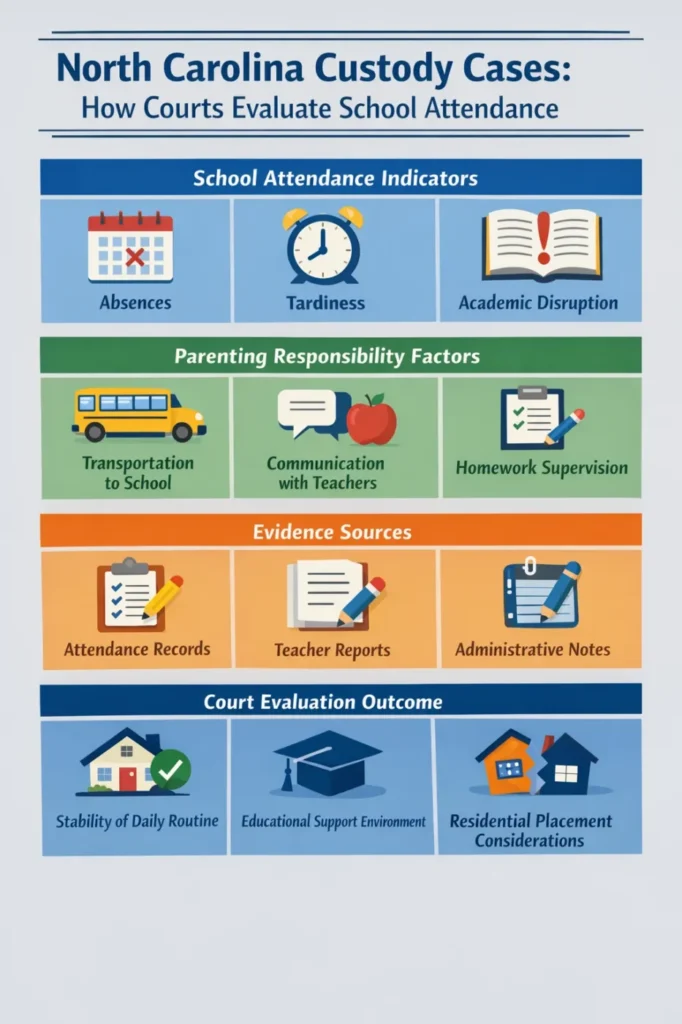
Source: North Carolina General Statutes § 50-13.2 – Who is Entitled to Custody; Best Interest of Child
Judges often evaluate multiple factors connected to school attendance, including:
- Attendance indicators: absences, tardiness, and patterns affecting academic consistency
- Parenting responsibilities: transportation to school, teacher communication, and homework supervision
- Supporting evidence: attendance logs, teacher reports, and administrative notes
These records help the court understand how each parent supports the child’s educational environment and daily routine.
When attendance concerns appear in documentation, judges may consider whether adjustments to custody or residential placement would better support the child’s educational stability.
Other Custody Factors Judges Consider With Attendance
School attendance alone rarely determines custody outcomes. Instead, courts evaluate attendance as part of a broader picture of the child’s living environment and daily routine.
In school attendance in custody NC matters, judges often review how educational routines fit within each parent’s household structure. Other factors often reviewed include:
- The consistency of each parent’s caregiving routine
- The child’s adjustment to school and community
- Communication between parents regarding education
- Each parent’s involvement in school activities
Attendance records may reinforce or challenge claims about which home environment better supports the child’s education. Because of this, educational documentation sometimes becomes one piece of a larger evidentiary record in custody proceedings.
After reviewing these factors, some people find it helpful to speak with a family law attorney about how the rules apply to their situation.
Know More – What Are the Consequences of Being Unprepared for an NC Temporary Custody Hearing?
How Custody Cases Address Educational Stability Concerns
When judges evaluate residential placement, they often focus on the child’s ability to maintain a stable daily routine. Regular school attendance can be one indicator of that stability.
Courts may look for evidence showing that a parent consistently:
- Ensures the child arrives at school on time
- Communicates with teachers about academic concerns
Supports homework and study routines - Coordinates transportation when parenting schedules change
These elements can demonstrate a parent’s involvement in the child’s education and overall structure at home. Legal principles may also affect custody decisions, such as the clean hands doctrine.
Understanding Residential Placement Decisions In Custody Disputes
Residential placement decisions determine where a child primarily lives and how parenting time is structured between parents. In contested custody cases, courts review a wide range of evidence to decide which arrangement best supports the child’s daily stability.
When school attendance in custody NC cases becomes part of the evidence, judges typically evaluate whether educational routines remain consistent across both households. Attendance records, communication with teachers, and transportation arrangements can all influence how the court interprets the child’s academic environment.
Get Professional Help From a North Carolina Custody Attorney
North Carolina Divorce Attorneys at Martine Law work with parents navigating custody disputes and evidence-related issues in family court. For guidance about how these factors may apply to your situation, you may call +1 (704) 255-6992 or visit the Contact Us page.
FAQs
Can a judge review school attendance records in a custody case?
Yes. A judge may review attendance records if they are presented as evidence during a custody dispute. In many school attendance in custody NC cases, these records help show patterns of absences or tardiness that relate to a child’s daily routine. Courts typically examine them alongside other factors affecting stability, including parenting schedules and communication with school officials.
Do parents need a subpoena to obtain school records?
Yes, in many custody disputes, schools require a subpoena or court order before releasing detailed student records. Education privacy laws generally limit who can access student information without formal authorization. During litigation, a subpoena allows the court to obtain relevant attendance logs, communications, or reports so the judge can review objective documentation when evaluating issues related to the child’s education and routine.
Can attendance problems affect residential placement decisions?
Yes, in some situations, attendance records may influence how courts evaluate residential placement. Repeated absences, frequent tardiness, or school disruptions can raise questions about a child’s daily structure. Judges typically review attendance patterns together with other parenting factors, such as transportation arrangements, supervision, and communication with teachers, to determine whether the child’s educational stability is being supported.
Are school attendance issues always caused by one parent?
No, attendance challenges are not always caused by one parent. Absences may occur because of illness, transportation delays, extracurricular activities, or scheduling conflicts between households. Courts usually review long-term patterns rather than isolated events. The focus is on whether the child’s overall educational routine remains consistent and whether both parents are supporting school participation and communication with educators. These questions may also arise during school disputes involving enrollment decisions
