

Quick Summary
When your child requires therapy, medical care, or specialized education services, custody planning often involves additional coordination. In many special needs custody NC situations, courts review therapy schedules, individualized education programs, and caregiving responsibilities to ensure parenting plans support the child’s routine, treatment access, and long-term development across both households.
In many special needs custody NC situations, courts review individualized education programs, therapy schedules, and caregiving responsibilities to determine whether a parenting arrangement supports the child’s stability. These factors may shape how parenting time is divided and how parents share responsibility for important decisions affecting the child’s daily life.
In North Carolina, family courts focus on the best interests of the child when reviewing custody arrangements. When a child receives special education services or medical treatment, judges may evaluate how both parents support those services and whether the parenting plan allows consistent participation in school programs and therapy appointments.
North Carolina Divorce Attorneys at Martine Law often assist parents who are navigating custody matters involving educational services, healthcare coordination, and long-term planning for children with special needs. Understanding how courts evaluate these factors can help parents approach custody discussions with clearer expectations and more effective preparation.
What Makes Special Needs Custody Cases More Complex?
Custody cases involving children with medical or developmental needs often require more detailed parenting plans. Courts reviewing special needs custody NC matters examine how therapy, education services, and caregiving responsibilities function across both households.
A child receiving specialized services may require coordinated support that includes therapy appointments, school accommodations, or behavioral programs. Parenting plans must often account for these responsibilities so the child’s routine remains stable despite living in two homes.
Judges may consider several caregiving factors when evaluating custody arrangements:
- Consistency of therapy attendance and medical appointments
- Participation in school services or special education meetings
- Ability of each parent to manage daily care routines
- Coordination with teachers, therapists, and healthcare providers
These factors help courts determine whether the parenting arrangement supports the child’s development and wellbeing over time. Parents sometimes review how courts apply the: Know More – Best Interest Standard in North Carolina Custody Decisions
How Individualized Education Programs Affect Custody Decisions
Individualized education programs can influence custody decisions when parents disagree about educational services or school placement. Courts may review how parents participate in the child’s academic planning and support services. An IEP custody dispute NC situation may arise when parents disagree about school placement, therapy services, or educational strategies.
Under federal education law, an individualized education program outlines accommodations, therapy services, and academic support designed to meet a student’s needs. Courts reviewing custody cases may examine whether both parents support the child’s participation in these services.
Educational coordination can involve several responsibilities. Parents may attend IEP meetings with school administrators, communicate regularly with teachers or school counselors, support the classroom accommodations outlined in the plan, and ensure the child consistently participates in specialized educational programs. Courts sometimes review these participation patterns to determine how actively each parent contributes to the child’s academic support system.
When parents disagree about educational decisions, judges may evaluate whether the custody arrangement allows both parents to remain involved in school planning and communication with educators. In some situations, these disagreements overlap with questions about legal decision-making authority in physical custody, which courts review when determining responsibilities related to education and healthcare decisions.
Parents seeking information about special education services can review guidance from the North Carolina Department of Public Instruction.
How Do Therapy and Medical Care Shape Parenting Plans?
Therapy schedules and healthcare routines often influence how parenting time is structured in custody plans. Courts reviewing special needs custody NC cases may consider whether both parents can maintain consistent participation in treatment programs.
Children receiving physical therapy, behavioral therapy, speech therapy, or mental health counseling may require regular appointments that affect weekly schedules. Parenting plans sometimes incorporate these appointments so that treatment continues without disruption.
Common therapy considerations include:
- Transportation responsibilities for appointments
- Coordination with healthcare providers
- Access to insurance coverage for treatment services
- Communication between parents regarding medical updates
These factors may influence how parenting schedules are designed. In some cases, parents review how custody arrangements interact with parenting time responsibilities through services. Courts generally focus on whether the parenting arrangement supports ongoing treatment while maintaining stability in the child’s routine.
Parents can review general information about child custody procedures through the North Carolina Judicial Branch.
What Role Does Parental Cooperation Play in These Custody Cases?
Parental cooperation is often especially important in custody cases involving special education or medical needs. Children who rely on structured routines typically benefit when parents coordinate schedules, exchange information, and maintain consistent approaches to care.
Courts may review whether parents communicate with teachers, therapists, and healthcare providers in a cooperative manner. Consistent communication helps ensure that educational accommodations and treatment recommendations are followed in both households.
When parents struggle to cooperate, educational planning may become more complicated. Courts may then review documentation showing which parent communicates with professionals, supports therapy schedules, and ensures that school accommodations are properly implemented.
How Do North Carolina Courts Assign Educational Decision Authority?
In some custody cases, disagreements arise about educational services or school placement. Courts may address these conflicts by determining which parent has authority to make certain decisions.
Educational decision authority may depend on several factors, including whether the parents share joint legal custody, which parent communicates most consistently with educators, and whether ongoing disagreements interfere with the child’s educational services. Courts may also review whether stable educational planning is possible when both parents participate in decision-making.
If disagreements significantly affect educational progress, courts may grant one parent final decision authority regarding schooling or therapy participation. This approach helps ensure that educational services outlined in the child’s plan can be implemented without ongoing disputes.
Parents reviewing educational decision authority may also find it helpful to review general child custody decision factors courts examine when evaluating parenting arrangements.
What Factors Do Judges Review in Special Needs Custody Cases?
North Carolina courts evaluate multiple factors when reviewing custody arrangements involving children with additional educational or medical needs. These factors help determine whether the parenting plan supports the child’s long-term stability.
Judges may consider:
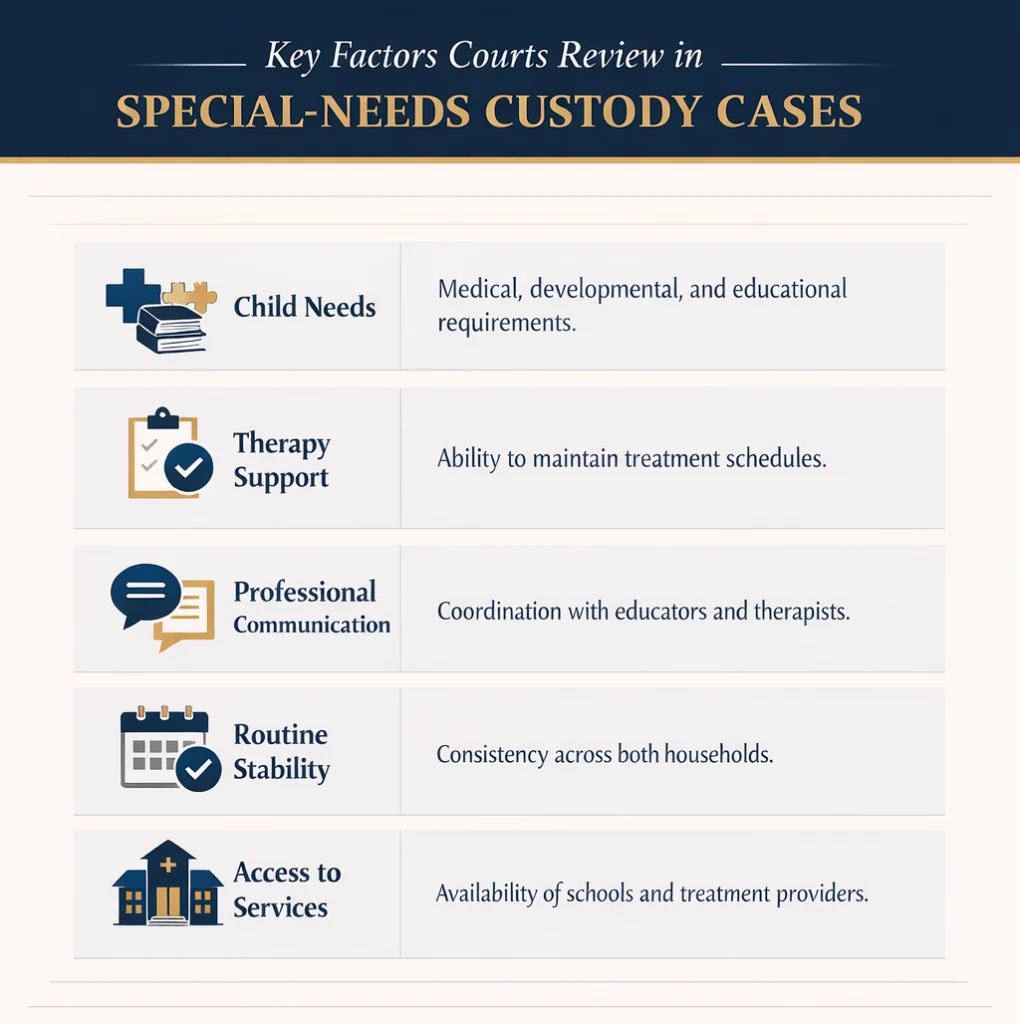
Source: Center for Parent Information and Resources
These considerations help courts determine whether a custody arrangement promotes stability and allows the child to receive necessary support services.
How Do Parenting Plans Address Long-Term Care Needs?
Parenting plans for children with special needs may include provisions that address long-term educational or medical requirements. Because therapy schedules and school services may change over time, courts often encourage parents to create plans that allow flexibility while maintaining stability.
For example, parenting plans may include procedures for sharing educational information, attending school meetings, or coordinating medical appointments. These provisions help parents remain involved in important decisions affecting the child’s development.
Long-term planning may also address transportation responsibilities, communication expectations, and methods for resolving disagreements about educational or treatment decisions.
How Special-Needs Custody Planning Shapes Parenting Arrangements in North Carolina
Custody cases involving children with educational or medical needs often require parenting plans that account for therapy schedules, school accommodations, and consistent caregiving routines. Courts reviewing these cases may evaluate individualized education programs, medical treatment plans, and the level of cooperation between parents when determining whether a custody arrangement supports the child’s stability.
Because educational planning and therapy coordination play such an important role in a child’s development, parenting schedules may need to accommodate appointments, school services, and communication with professionals. When parents maintain consistent routines and cooperative communication, children receiving specialized support often experience greater stability across both households.
If you want to explore how custody arrangements may address therapy schedules, school services, or educational planning, North Carolina Divorce Attorneys at Martine Law can provide general information about how these cases are handled. You may call +1(704)-255-6992 or visit the Contact Us page to review available guidance.
FAQs
Can therapy schedules affect custody decisions in North Carolina?
Yes. Courts may review therapy schedules when evaluating custody arrangements. If a child attends ongoing therapy sessions, parenting plans may incorporate transportation responsibilities, appointment times, and coordination between parents. Judges may consider whether both households support consistent treatment access and whether the schedule allows the child to attend therapy without disruption while maintaining stability in daily routines and caregiving responsibilities.
Do individualized education programs influence custody cases?
Yes. Individualized education programs may become relevant when parents disagree about school placement, services, or academic accommodations. Courts may review how both parents participate in school planning and whether the custody arrangement supports the child’s educational services. Judges sometimes consider communication with teachers, attendance at IEP meetings, and whether the parenting schedule allows consistent participation in the programs outlined in the child’s education plan.
Can parents disagree about therapy decisions for their child?
Yes. Parents sometimes disagree about therapy participation when they hold different views about treatment needs or scheduling. Courts may examine medical recommendations, communication between parents, and the child’s developmental or emotional needs. When these disagreements arise in special needs custody NC situations, judges may review evidence to determine whether therapy participation supports the child’s overall wellbeing and daily functioning.
Can custody orders change if a child’s needs evolve?
Yes. Custody orders may be reviewed when a child’s medical, educational, or developmental needs change over time. Courts sometimes consider whether updated therapy schedules, treatment plans, or educational services require adjustments to parenting arrangements. Parents exploring how custody modifications work may review how courts evaluate substantial changes in circumstances when modifying custody orders.
Can school professionals be involved in custody cases?
Yes. School professionals may sometimes provide documentation or testimony related to a child’s educational services or academic needs. Teachers, counselors, and administrators may share information about IEP implementation, classroom accommodations, or attendance patterns. Courts may review these records to better understand how the child’s educational routine functions and how each parent supports the services outlined in the child’s education plan.
