

Quick Summary
Using an unapproved caregiver can affect how courts evaluate parenting time requests. In third party caregiver custody NC situations, judges look at safety, consistency, and compliance with court expectations when deciding whether to expand or limit parenting time.
When you rely on someone else to care for your child, that decision can influence how a court evaluates your parenting arrangement. In third party caregiver custody NC cases, judges often look at whether caregivers were approved, consistent, and appropriate under the circumstances.
Using an unapproved caregiver custody North Carolina situation may raise questions about judgment, communication, and adherence to court expectations. Knowing how courts assess these situations can help you evaluate potential risks before making decisions that may impact your case.
North Carolina Divorce Attorney at Martine Law helps individuals understand how caregiving decisions can affect custody outcomes, including requests for more parenting time.
What Courts Review When Caregivers Are Used
Courts review how caregivers are selected and whether their involvement supports the child’s well-being. In third party caregiver custody NC cases, the focus is not only on who provided care but also how that decision aligns with the existing custody arrangement.
Judges typically evaluate:
- Whether the caregiver was approved or known to the other parent
- The duration and frequency of caregiver use
- Whether the arrangement affects supervision or safety
- Consistency with prior agreements or court orders
If an unapproved caregiver custody North Carolina situation creates confusion or conflict, the court may question whether the arrangement supports the child’s stability. Guidance from child custody resources helps clarify how these decisions are evaluated under North Carolina law.
How Unapproved Caregivers Influence Parenting Time Requests
Using an unapproved caregiver can directly affect your request for increased parenting time. Courts look at whether your parenting time is being personally exercised or delegated to others.
Impact On Responsibility And Parenting Consistency
When you request more parenting time, courts expect that you will personally provide care. If caregiving is frequently delegated, judges may question whether additional time serves the child’s best interests.
This can lead to concerns such as:
- Reduced direct parent-child interaction
- Over-reliance on third parties
- Lack of consistency in supervision
In third party caregiver custody NC evaluations, consistent parental involvement often weighs more heavily than convenience.
Effect On Parent Communication And Coordination
Using an unapproved caregiver custody North Carolina situation may also raise communication concerns. Courts often expect parents to share information about who is caring for the child.
If one parent is not informed, it may suggest:
- Lack of cooperation
- Difficulty following shared custody expectations
- Increased potential for disputes
These concerns often connect with broader parenting responsibilities between both parents, including how financial obligations are managed through child support, which can also be affected by consistency in caregiving and communication.
After reviewing these factors, some people find it helpful to speak with a family law attorney about how the rules apply to their situation.
Comparison Of Approved Versus Unapproved Caregiver Use
Courts often compare how approved and unapproved caregivers are used when evaluating parenting arrangements. This distinction helps judges assess communication, consistency, and whether the caregiving structure supports the child’s overall stability.
Factor | Approved Caregiver | Unapproved Caregiver |
Parent Communication | Shared and transparent | Often unclear or disputed |
Court Perception | Supports cooperation | May raise concerns |
Parenting Time Requests | More likely supported | May be limited or questioned |
Child Stability | Consistent expectations | Possible disruption |
Legal Risk | Lower | Higher scrutiny |
In third party caregiver custody NC cases, these differences can directly influence how courts view parenting behavior and whether adjustments to custody or parenting time are appropriate.
Situations involving changes to caregiving arrangements are often reviewed alongside potential child custody modifications, especially when patterns affect the child’s routine or parental cooperation.
Legal Standards Courts Apply In North Carolina
Courts apply the “best interest of the child” standard, but in caregiver-related situations, the analysis becomes more focused. Judges look at how your parenting time is used in practice and whether caregiver involvement supports or replaces your role.
In third party caregiver custody NC cases, courts often consider:
- Whether you are personally providing care during your scheduled time
- How often a third party is used instead of direct parenting
- Whether the caregiver arrangement is consistent and predictable
- If the other parent is informed or affected by the arrangement
In unapproved caregiver custody North Carolina situations, these factors help courts decide whether additional parenting time would improve stability or create further concerns about supervision and involvement.
Know More – What Are the Consequences of Being Unprepared for an NC Temporary Custody Hearing?
When Caregiver Use Becomes A Legal Concern
Not every caregiver situation creates a problem. However, certain patterns may raise legal concerns in third party caregiver custody NC cases.
These include:
- Frequent use of unapproved caregivers without notice
- Caregiver involvement replacing parental time
- Conflicts arising between parents about supervision
- Inconsistencies in caregiving arrangements
If an unapproved caregiver custody situation in a North Carolina situation becomes a pattern, the court may reconsider whether adjustments to parenting time are appropriate.
In some situations, ongoing conflicts around caregiving decisions can overlap with broader concerns such as custody interference, especially when one parent feels excluded from decision-making.
Legal Factors Courts Review In Caregiver Use
Courts evaluate caregiver use by looking at how the arrangement affects the child’s stability, safety, and consistency. The infographic below outlines the key factors judges consider when reviewing third party caregiver custody NC situations.
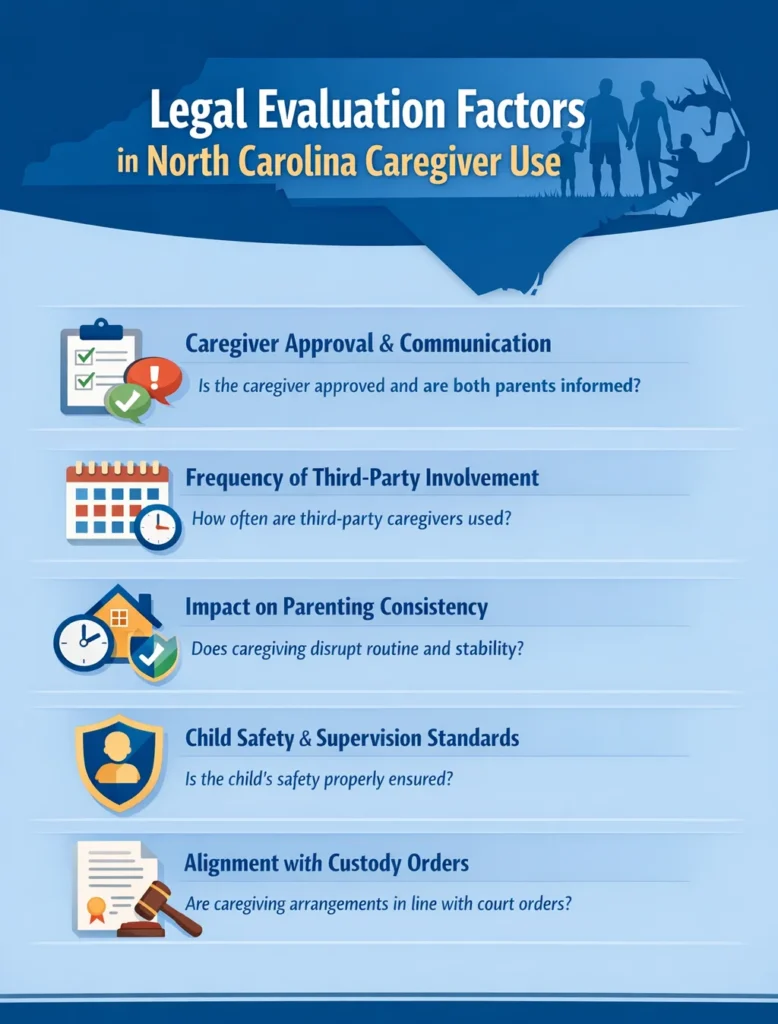
Source: North Carolina General Assembly – Custody Factors (§ 50-13.2)
These factors typically include:
- Whether the caregiver was approved and clearly communicated between parents
- How often third-party caregivers are used and for how long
- Whether caregiving supports or replaces direct parental involvement
- The level of supervision and safety provided in the arrangement
- Whether the caregiver setup aligns with existing custody orders
By reviewing these elements together, courts determine whether caregiver use supports the child’s best interests or raises concerns about parenting consistency and cooperation.
How Courts Balance Flexibility And Parenting Structure
Courts recognize that occasional caregiver use is often necessary, but they also expect parenting arrangements to remain stable and predictable for the child. In third party caregiver custody NC situations, judges balance flexibility with consistency by evaluating:
- Daily flexibility needs
Short-term caregiver use for work or scheduling is generally acceptable. - Direct parental involvement
Courts expect you to personally spend time caring for your child whenever possible. - Impact on the child’s routine
Frequent changes in caregivers can disrupt stability and daily expectations. - Consistency in caregiving patterns
Repeated reliance on others may raise concerns about long-term parenting roles.
Unapproved caregiver custody North Carolina concerns often arise when flexibility becomes a pattern that replaces parenting responsibilities rather than supporting them.
Using Unapproved Caregivers And Parenting Time Outcomes
When courts evaluate requests for more parenting time, they look closely at how your current time is being used. In third party caregiver custody NC cases, consistent personal involvement often strengthens your position.
If caregiving decisions show:
- Responsible supervision
Your child is properly cared for, with safe and appropriate oversight. - Clear communication
The other parent is informed about who is caring for the child and when. - Stable routines
Your child follows consistent schedules for school, activities, and daily care.
These factors may support a more favorable view of your parenting time request. However, repeated unapproved caregiver custody North Carolina issues can lead to limitations or closer court scrutiny if concerns about consistency or involvement arise.
Evaluating Caregiver Use In Parenting Time Decisions
Using a caregiver is part of many parenting arrangements, but how and when you rely on others can affect your custody case. In third party caregiver custody NC situations, courts look at communication, consistency, and whether you are actively involved during your parenting time.
Repeated use of an unapproved caregiver custody North Carolina arrangement may raise concerns about judgment and cooperation, especially when requesting more time.
Understanding these factors helps you evaluate how your current arrangement may be viewed in court. North Carolina Divorce Attorney at Martine Law provides guidance on how caregiving decisions may affect your case and what steps may support your parenting goals.
Speak With A Family Law Attorney
If you want to understand how caregiver use may affect your parenting time, you can contact North Carolina Divorce Attorneys at Martine Law at +1 (704) 255-6992 or visit the Contact Us page.
FAQs
Can using a caregiver reduce my parenting time?
Yes. If the court finds that you are not personally exercising your parenting time, it may question whether additional time is appropriate. In third party caregiver custody NC cases, judges often focus on how much direct involvement you have with your child. Frequent reliance on others may suggest that increasing your parenting time would not necessarily benefit the child’s stability or routine.
Do I always need approval for a caregiver?
No. Occasional caregiving does not always require formal approval. However, repeated use of an unapproved caregiver custody North Carolina situation without informing the other parent can raise concerns. Courts may look at whether communication is consistent and whether the arrangement affects the child’s routine, supervision, or the other parent’s ability to stay informed about who is providing care.
Does the court consider who the caregiver is?
Yes. Courts consider the caregiver’s relationship to the child, reliability, and ability to provide appropriate supervision. The identity of the caregiver can influence how the arrangement is viewed, especially when consistency is a key factor. A trusted and familiar caregiver may raise fewer concerns than someone unfamiliar, particularly if their involvement affects the child’s routine or overall stability. Courts often weigh this against status quo expectations.
Can caregiver use affect custody modifications?
Yes. Patterns of relying on others instead of personally providing care may be reviewed during custody modification requests. Courts examine whether your current parenting time reflects active involvement. If caregiving replaces your role too often, it may affect how the court evaluates changes. You can review this custody modifications article to better understand how these factors are considered.
