

Quick Summary
If new financial information, custody concerns, or failed negotiations arise during your case, a change divorce strategy NC may become necessary. Understanding when to pivot legal strategy divorce NC helps you respond to new developments while staying within court deadlines and procedural rules. Acting at the right time can protect your position in property division, support claims, and custody decisions.
Divorce cases can shift as new financial disclosures, custody disputes, or settlement breakdowns occur. When these developments arise, a change divorce strategy in NC may be necessary to protect your financial interests, parental rights, and long-term goals. Courts allow adjustments during litigation, but those changes must follow procedural rules and meet court deadlines.
Because timing and documentation influence how courts evaluate requests, strategic decisions should align with the stage of the case. Understanding when to pivot legal strategy divorce NC helps ensure that new information is addressed effectively without disrupting your case. North Carolina Divorce Attorneys at Martine Law can review your situation and help determine whether modifying your legal approach supports your objectives moving forward.
When Does A Change Divorce Strategy Make Sense During Litigation?
A change divorce strategy NC becomes appropriate when new information or procedural developments significantly alter the direction of the case. Courts allow parties to amend pleadings, request continuances, or adjust settlement positions in certain circumstances, but those decisions must be supported by facts, proper timing, and procedural compliance.
Litigation strategy is not static. It evolves as financial disclosures are exchanged, custody concerns develop, and judicial expectations become clearer.
Common triggers include:
- Undisclosed Financial Information
Discovery of hidden income, undervalued assets, or undisclosed business interests may require expanded discovery through subpoenas, depositions, or financial analysis. Courts evaluate whether additional requests or amendments are timely and justified under procedural rules. - Escalating Custody Concerns
Relocation proposals, school changes, or safety allegations can shift the case from negotiation to formal evidentiary hearings focused on the child’s best interests. - Material Changes Affecting the Child
When parenting circumstances or stability factors materially change during litigation, recalibrating the legal approach may be necessary to protect parental rights. - Settlement Breakdown
If mediation efforts fail, the strategy typically transitions toward trial preparation, including strengthened documentation, witness preparation, and structured presentation of evidence.
At this stage, pivot legal strategy divorce NC decisions focus on courtroom readiness rather than compromise.
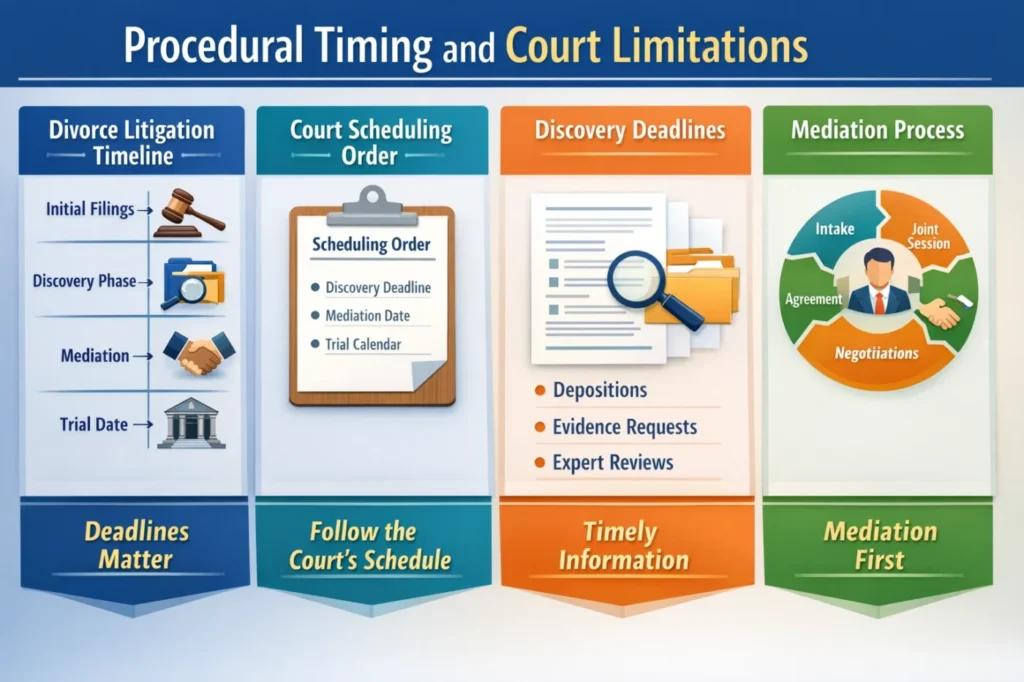
Procedural Timing and Court Limitations
Strategic flexibility exists within defined boundaries. Courts operate under scheduling orders that control discovery deadlines, mediation requirements, and trial settings.
Once those deadlines pass, the ability to introduce new claims or evidence may become restricted. A successful pivot requires awareness of these procedural constraints.
Amending claims or counterclaims is possible in many situations, but judges assess whether the requested change would unfairly prejudice the opposing party or cause unnecessary delay. If a party seeks to add new allegations or defenses late in the process, the court evaluates whether the information supporting the amendment was reasonably available earlier.
A pivot legal strategy divorce NC request must therefore demonstrate diligence and legitimate cause. Discovery deadlines are equally important. Interrogatories, document requests, and depositions must typically be completed within court-ordered timelines.
If new financial concerns arise after discovery closes, reopening that phase requires judicial approval.
Judges consider whether the requesting party exercised reasonable diligence and whether reopening discovery would disrupt the case schedule. This makes early evaluation critical when new information surfaces.
Mediation requirements also influence strategy. North Carolina courts law frequently requires mediated settlement conferences before trial.
Even if negotiations collapse, mediation deadlines and trial preparation timelines remain in place. A shift from settlement-focused negotiation to litigation preparation must occur without violating scheduling obligations.
Procedural compliance protects credibility with the court and preserves strategic flexibility.
Source: North Carolina Rules of Civil Procedure and North Carolina Judicial Branch
Strategic Shifts in Property, Support, and Custody Claims
Adjusting strategy mid-divorce often involves reassessing substantive claims. Equitable distribution disputes may intensify when asset values fluctuate or appraisals conflict.
Real estate markets, business valuations, and retirement account balances can change during extended litigation. In these situations, a pivot legal strategy divorce NC analysis may involve updated financial documentation, expert consultation, or revised settlement proposals grounded in current valuations.
Alimony and financial support arguments can also evolve. Income changes, job loss, promotions, or newly discovered employment benefits may materially affect support calculations.
Courts examine factors such as earning capacity, dependency, and marital standard of living. When financial circumstances shift, strategic reassessment may require presenting supplemental documentation or vocational evidence to support revised positions.
Custody and parenting time disputes may require even greater flexibility. If a child’s needs change or parental conduct raises new concerns, parents may transition from negotiating parenting plans to seeking judicial intervention.
Evidence such as school performance records, medical documentation, and communication history may become central to the case. Strategic shifts in custody matters require careful documentation and alignment with the child’s best interests.
If you need guidance applying these financial or custody changes to your case, reaching out to a divorce attorney will help you understand how timing and documentation affect your position.
Risks of Delaying a Strategic Adjustment
Waiting too long to modify your approach can significantly narrow available options. Courts prioritize procedural efficiency and consistent case management. When a party delays action, late changes may appear tactical rather than necessary, which can affect credibility before the judge.
Consequences may include exclusion of untimely evidence, denial of amended pleadings, higher litigation expenses, and weakened negotiating leverage. In custody matters, allowing a temporary custody structure to remain unchallenged may gradually influence how courts view stability and continuity.
A well-timed change divorce strategy NC decision considers not only the substance of new information but also the procedural posture of the case. Acting promptly preserves rights, strengthens credibility, and demonstrates diligence.
Courts are more receptive to adjustments when parties address concerns early and support their requests with clear documentation rather than waiting until deadlines or trial settings make modification more difficult.
Evaluating Whether to Pivot Legal Strategy Divorce NC
Before implementing a shift, several factors require analysis. The strength of existing evidence must be reassessed to determine whether additional proof is necessary.
The likelihood of settlement should be realistically evaluated, particularly if negotiations have stalled. Trial preparation timelines must be reviewed to ensure compliance with scheduling orders.
Financial costs associated with extended litigation should be considered alongside the potential benefit of strategic modification. The emotional and practical impact on children also remains central when custody is involved.
Changing direction is not always the optimal solution. In some cases, refining the current strategy may yield better results than a full pivot legal strategy divorce NC adjustment. Strategic discipline involves distinguishing between reaction and calculated response.
Careful review of pleadings, discovery progress, and judicial expectations allows for informed decision-making that supports long-term objectives.
Ultimately, the decision to implement a change divorce strategy NC should balance procedural timing, evidentiary strength, and practical consequences. When grounded in documentation and aligned with court requirements, strategic adjustments can strengthen a case rather than disrupt it.
Making Timely Strategic Decisions in Divorce
Divorce litigation can evolve as new information emerges or negotiations break down. A change divorce strategy NC may be necessary when financial disclosures shift, custody concerns intensify, or settlement efforts fail.
However, procedural deadlines and court limitations make timing critical. Strategic adjustments must be supported by facts and filed promptly to avoid prejudice or delay.
Evaluating whether to pivot legal strategy divorce NC requires reviewing evidence strength, court scheduling orders, and long-term objectives. When your case direction no longer aligns with your goals, obtaining structured legal guidance can clarify next steps.
North Carolina Divorce Attorneys at Martine Law can assess how procedural rules and case developments affect your position. Call +1 (704) 255-6992 or visit our Contact Us page for guidance and to book your consultation.
FAQ About Changing Divorce Strategy in NC
Can switching attorneys impact the overall direction of my divorce case?
Yes. Changing attorneys can influence case strategy, especially if the new lawyer identifies procedural gaps or alternative approaches. However, the court’s existing deadlines and orders remain in place. A new attorney must work within the current posture of the case while evaluating whether adjustments to claims, negotiation tactics, or trial preparation are appropriate.
Does the judge view multiple strategy changes negatively?
Judges generally focus on whether changes are supported by legitimate developments rather than on how many times a party adjusts course. Frequent shifts without clear justification may affect credibility. However, a properly supported change divorce strategy NC decision based on new financial disclosures or custody concerns is typically evaluated on its merits rather than frequency.
Can social media activity affect the need to adjust my legal strategy?
Yes. Social media posts can become evidence in custody or financial disputes. Statements about income, parenting time, travel, spending, or lifestyle may conflict with court filings or sworn testimony. If new information appears online, it may require adjusting documentation, revisiting settlement positions, or strengthening courtroom preparation to address potential credibility issues.
Can financial experts influence whether I should adjust my divorce strategy?
Yes. Accountants, business valuation professionals, and vocational experts may uncover information that changes how assets or income should be presented. The expert findings can strengthen or weaken certain claims, which may justify recalibrating negotiation positions or trial preparation. Reviewing expert input carefully helps determine whether a strategic shift is necessary.
Can settlement offers impact future litigation strategy?
Yes. Formal settlement offers can influence negotiation dynamics and may later be referenced in court proceedings. If financial disclosures or custody circumstances change after an offer is made, reevaluating your position may prevent unintended concessions. If you need clarity on how an existing proposal affects your case strategy, you may contact North Carolina Divorce Attorneys at Martine Law at +1 (704) 255-6992 or visit our Contact Us page.
